The nonwoven industry turns fibres into engineered fabrics without weaving or knitting — producing the hygiene products, wipes, medical textiles and filter media used worldwide. In every major nonwoven process, one component sits at the heart of the production line: the mesh conveyor belt. It forms the web, drains the water, carries the fabric through bonding and drying, and largely decides the final quality and productivity of the line.
PFM Screen supplies polyester mesh conveyor belts engineered specifically for the nonwoven industry — including wetlaid, spunlace, airlaid and spunbond / meltblown processes. Their open-mesh design allows air and liquids to pass through freely, so webs drain faster, dry faster and bond more evenly — with a smooth, stable surface that protects delicate fibres.
A nonwoven line depends on its belt for four critical jobs. First, the belt forms and supports the fibre web as it is laid down. Second, it drains or draws process water and air through the web — the open mesh is the working surface of the process. Third, it carries the web through bonding, whether by water jets, hot air or thermal treatment. Fourth, it must release the finished fabric cleanly, without marking or sticking. A belt that does all four well raises line speed, cuts waste and improves product quality — that is why belt choice is a productivity decision, not just a spare part decision.
Step 1 Web Forming Fibres are laid onto the belt to form a uniform web — wet, dry or melted. | Step 2 Dewatering / Airflow Water drains or air is drawn through the open mesh, right through the web. | Step 3 Bonding Water jets, hot air or heat bond the fibres into a strong fabric on the belt. | Step 4 Drying & Release The fabric dries on the belt and releases cleanly for winding and cutting. |
01 Air & Liquid Permeability Open mesh lets air and liquids pass through — faster drying, better drainage | 02 Strength & Durability Polyester monofilament handles heavy loads and high-speed operation | 03 Fully Customizable Mesh sizes, widths and configurations tailored to each production process | 04 Easy to Clean Open design makes debris removal simple — keeps the line hygienic |
 ● Dewaters the fibre suspension like a paper machine wire ● Fine, marking-resistant surface for uniform web formation ● High drainage for faster line speeds and even basis weight | 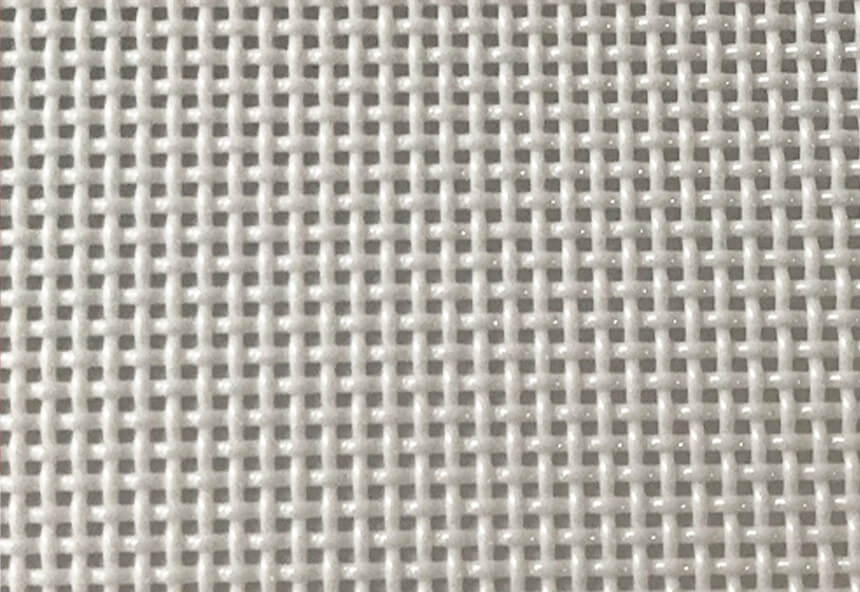 ● Supports the web under high-pressure water jets ● Excellent drainage and jet resistance for clean entanglement ● Smooth surface keeps the fabric mark-free |
 ● Uniform open area for even airflow through the web ● Supports the web during vacuum air-forming ● Stable, flat surface for consistent web weight |  Spunbond / Meltblown Mesh Belt ● Carries the web through thermal bonding and drying ● Heat-resistant, dimensionally stable mesh for through-air systems ● Clean, anti-marking surface for hygiene-grade products |
| Process | What the Belt Must Do | PFM Screen Recommendation |
|---|---|---|
| Wetlaid | Drain water and form an even, mark-free web | Fine-mesh wetlaid belt with high drainage |
| Spunlace | Support the web under high-pressure jets and drain water | Strong, smooth spunlace belt with jet resistance |
| Airlaid | Uniform airflow through the web during forming | High-open-area airlaid belt with even permeability |
| Spunbond / Meltblown | Carry the web through thermal bonding and drying | Heat-resistant, dimensionally stable mesh belt |
| Through-air drying | Pass hot air through the belt and web | High-permeability, heat-resistant mesh belt |
* General selection guide. Our engineers confirm the exact mesh, width and configuration for your process, machine model and product grade.
Hygiene & Wipes ● Baby diapers, feminine hygiene and incontinence products ● Household and industrial wipes ● Spunlace, airlaid and spunbond fabrics | Medical & Protective ● Surgical gowns, masks and drapes ● Medical-grade spunbond and meltblown fabrics ● Hygiene-critical production environments |
Filtration Media ● Air and liquid filter media ● Meltblown filter layers ● Uniform web formation for consistent filtration | Industrial & Technical ● Automotive headliners and insulation ● Geotextiles and construction fabrics ● Furniture and bedding materials |
PFM Screen manufactures its nonwoven mesh conveyor belts from high-quality polyester monofilament — strong, durable and dimensionally stable even under heavy loads and high-speed operation. Belts can be customized with different mesh sizes, belt widths and configurations to handle everything from delicate hygiene webs to heavy-duty technical fabrics, and the open mesh design makes them easy to clean for hygienic production lines.
Whether your line is wetlaid, spunlace, airlaid, spunbond or meltblown, our engineers recommend the belt that balances permeability, surface smoothness and heat resistance for your product. See the product pages for full specifications:
Q1: Why are mesh conveyor belts essential in nonwoven production? They form and support the fibre web, drain water or draw air through it, carry it through bonding and drying, and release the finished fabric cleanly — so the belt directly determines line speed, waste level and product quality. |
Q2: Which nonwoven processes do PFM Screen mesh belts support? Wetlaid, spunlace (hydroentanglement), airlaid and spunbond / meltblown processes, as well as through-air drying and thermal bonding systems. |
Q3: Why use polyester mesh belts instead of metal belts? Polyester monofilament belts are lighter, drain and breathe better, resist marking of delicate webs, handle chemical treatments well and are easy to clean — ideal for hygiene-sensitive nonwoven products. |
Q4: What is through-air bonding / drying and why does permeability matter? Hot air is blown through the belt and the web to bond fibres or dry the fabric. The more open and uniform the mesh, the faster and more evenly the air passes — cutting energy use and improving product consistency. |
Q5: How do I choose the right belt for my process? Tell us your process (wetlaid, spunlace, airlaid or spunbond/meltblown), machine model, web weight and working temperature. Our engineers recommend the mesh, width and configuration that balance permeability, surface smoothness and heat resistance. |
Q6: Can the belt be customized? Yes. Different mesh sizes, belt widths and configurations are available, tailored to delicate hygiene materials or heavy-duty technical fabrics — and to your exact machine dimensions. |
Q7: How are the belts cleaned and maintained? The open mesh design gives easy access to the belt surface, so debris and contaminants are simple to remove — protecting the hygiene of the line and preventing damage to the materials being transported. |
Q8: How do I get a quote or sample? Send your process type, machine model, belt width/length and product grade to polyestermesh@pfmscreen.com or WhatsApp +86 153 6967 9157 for a factory-direct quotation and sample swatch. |
Get a Custom Nonwoven Mesh Belt Specification Within 24 Hours Share your process type, machine model, belt width/length and product grade — PFM Screen will recommend the right mesh conveyor belt and send a factory-direct quotation. WhatsApp: +86 153 6967 9157 Email: polyestermesh@pfmscreen.com |
