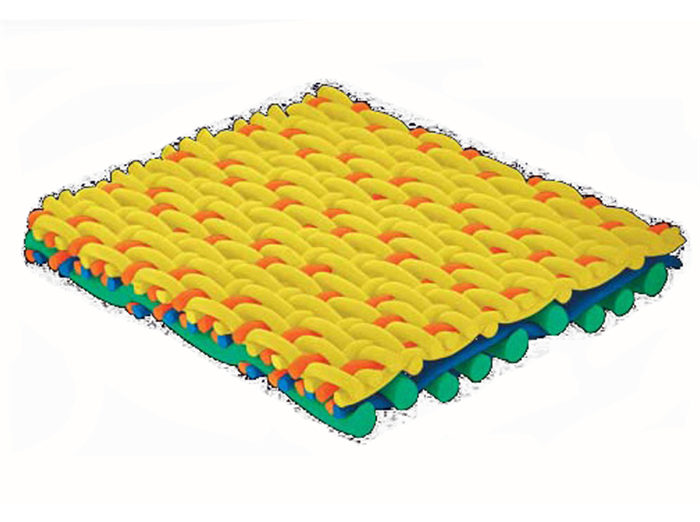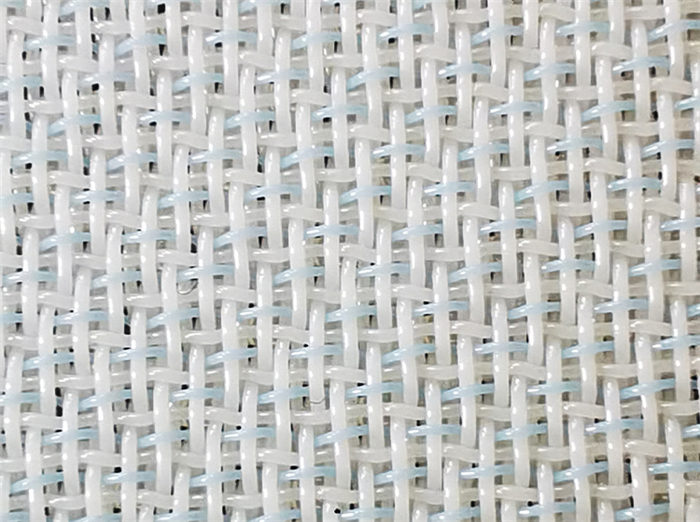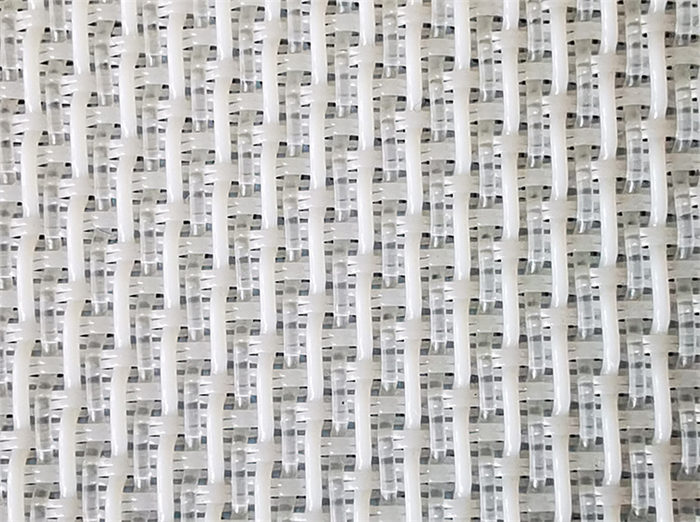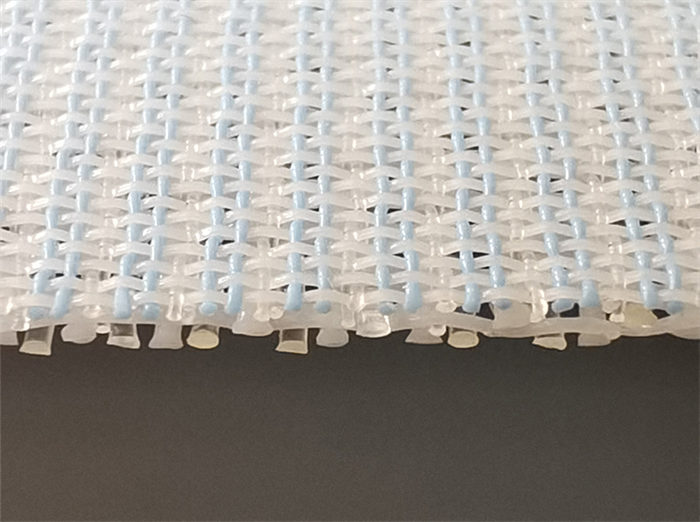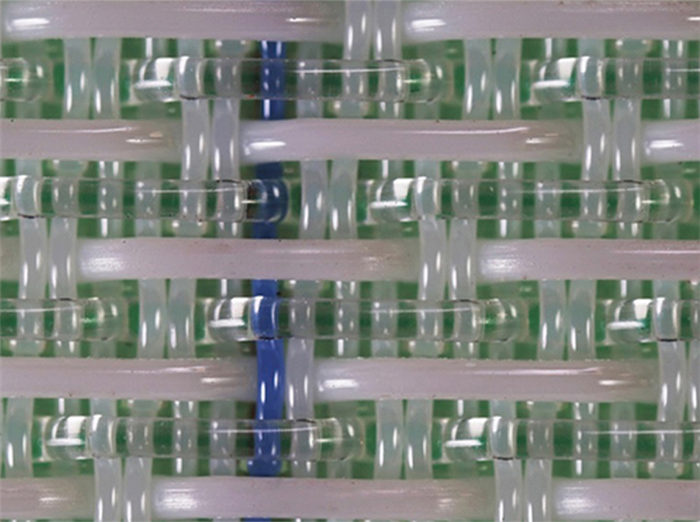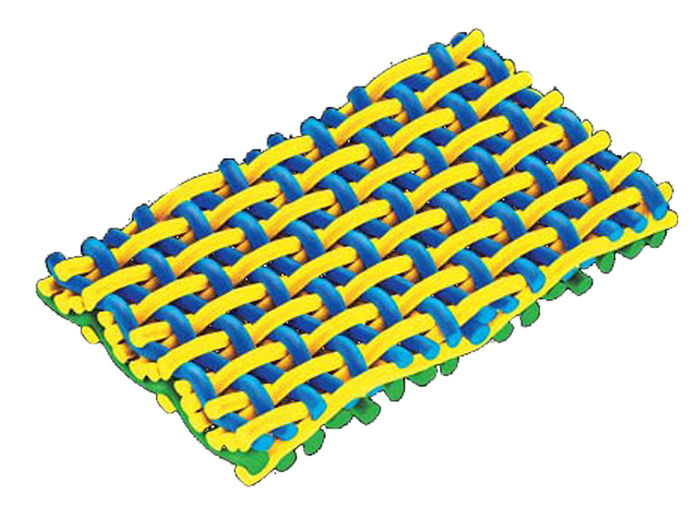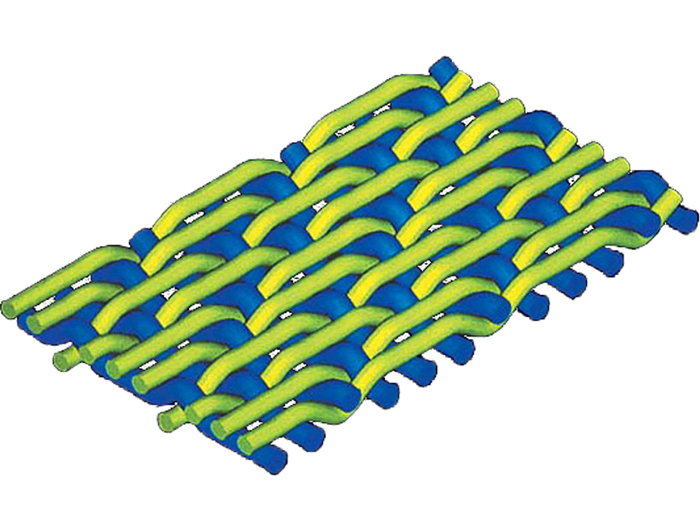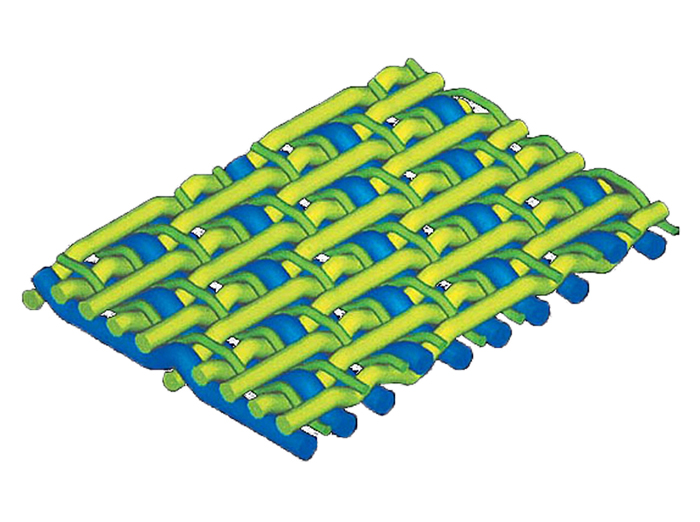
PFM Screen's Triple Layer Forming Fabric is a three-ply construction consisting of two independent single-layer fabrics — a fine-yarn paper-side layer and a coarse-yarn machine-side layer — bound together by binding yarns. The dual-ply structure achieves the ultimate balance: the finest possible paper-side forming surface (maximizing Fiber Support Index and minimizing wire mark) and the longest possible machine-side wear life, simultaneously.
Description
PFM Screen's Triple Layer Forming Fabric represents the highest tier of forming fabric technology — a true three-ply construction where two independent single-layer fabrics (paper-side and machine-side) are bound by binding yarns into a unified structure. Unlike double and 2.5 layer fabrics, which share a warp system between paper-side and machine-side yarns, the triple layer's dual-ply architecture allows completely independent optimization of both surfaces: fine monofilament on the paper side maximizes the Fiber Support Index (FSI) and minimizes wire mark for the finest paper grades, while heavy monofilament on the machine side provides maximum abrasion resistance for extended service life on fast-running machines.
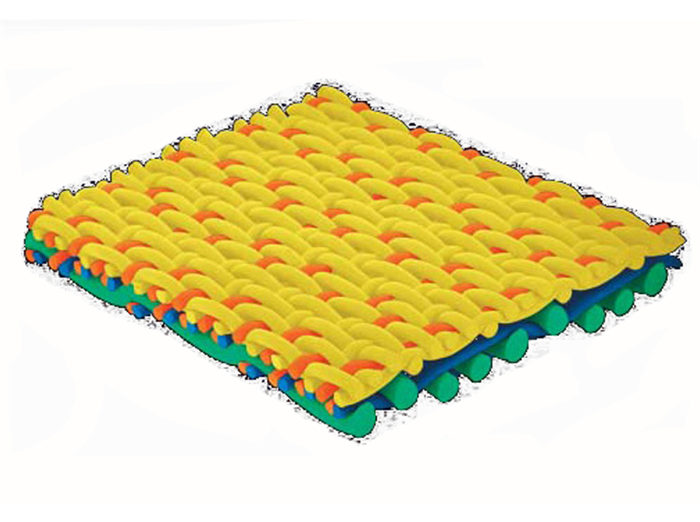 Triple Layer Three-Ply Construction Fine paper-side layer bound to coarse machine-side layer via binding yarns — fully independent optimization of both surfaces | 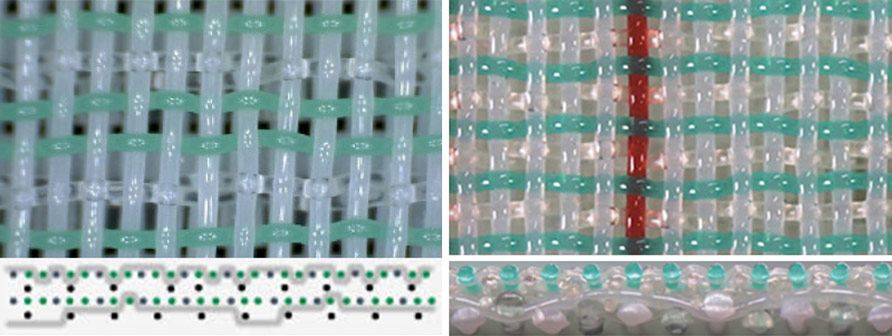 Fine-Yarn Paper-Side Surface (High FSI) Triple layer provides the highest FSI of any forming fabric type — the gold standard for fine printing paper, tissue and cigarette paper |
01 Highest FSI of Any Forming Fabric Fine paper-side yarns completely decoupled from machine-side deliver the maximum Fiber Support Index achievable — the gold standard for cigarette paper, tissue and fine printing | 02 Minimum Wire Mark The finest possible paper-side monofilament diameter and highest practical warp density minimize wire mark intensity — critical for printability and surface quality in premium grades | 03 Maximum Abrasion Life Coarse machine-side yarns handle all abrasive wear from forming section elements without any coupling to paper-side surface quality — longest service life achievable on high-speed machines | 04 Enhanced CD Stability Three-ply weft structure provides superior cross-machine direction dimensional stability — essential for fast-running gap former and twin-wire machines at 600+ m/min |
| Feature | Double / 2.5 Layer | Triple Layer (This Fabric) |
|---|---|---|
| Warp System | Shared between paper side and machine side | Two independent warp systems |
| Weft System | Two weft layers (shared body) | Three-ply weft, two independent fabrics |
| Paper-Side Yarn Diameter | Limited by structural coupling | Fully independent — finest possible |
| Machine-Side Yarn Diameter | Moderate (shared warp constraint) | Fully independent — coarsest possible |
| Fiber Support Index (FSI) | High | Highest achievable |
| CD Stability | Good | Superior (three-ply weft) |
| Drainage 3D Volume | Good | Larger (more internal void space) |
| Typical Speed Range | 200–600 m/min | 300–1,200 m/min |
| Machine Type | OEM Examples | Speed Range | Paper Grade |
|---|---|---|---|
| Gap Former / Twin Wire — Fine Paper | Valmet SymFormer, Voith DuoFormer, Andritz | 300–1,200 m/min | Fine printing, coated |
| Crescent Former — Tissue | Toscotec, Voith CrescenTer, Andritz, Recard | 300–1,200 m/min | Tissue, facial, toilet paper |
| Fourdrinier — Cigarette Paper | Voith, Valmet, Allimand | 300–800 m/min | Cigarette paper, specialty |
| Fourdrinier — Fine Printing | Voith, Valmet, Andritz, GL&V | 300–800 m/min | Premium offset, gravure, security |
* OEM names listed for compatibility reference only. PFM Screen is an independent manufacturer not affiliated with the above OEMs.
Request a Triple Layer Forming Fabric Quote — 24-Hour Response Tell us your machine type, paper grade, running speed and fabric dimensions — PFM Screen will recommend the right triple layer model and quote within one business day. WhatsApp: +86 153 6967 9157Email: polyestermesh@pfmscreen.com |
Feature
Independently Optimized Fine Paper Side Because the paper-side layer of a triple layer forming fabric is completely structurally independent from the machine side, PFM Screen can use the finest possible paper-side monofilament diameter without any constraint from the machine-side structural requirements. This delivers a higher Fiber Support Index and finer, shallower wire mark than any double or 2.5 layer fabric can achieve — essential for cigarette paper, premium tissue and fine printing paper grades where every additional contact point matters. | Coarse Machine-Side for Maximum Wear Life The machine-side layer uses the heaviest monofilament diameter available — completely decoupled from the paper-side structure by the binding yarn system. This coarse machine-side provides the longest possible abrasion resistance against foil blades, suction boxes and forming rolls. On high-speed crescent-former tissue machines and fast gap formers running at 600–1,200 m/min, triple layer fabrics significantly outlast double layer alternatives in side-by-side trials. | Three-Ply Weft — Enhanced CD Stability The three-ply weft structure of triple layer forming fabrics provides greater cross-machine direction (CD) dimensional stability than double layer fabrics. At machine speeds above 500 m/min, CD stability is critical for preventing fabric skewing, tracking problems and uneven wear patterns. The triple layer's superior CD stability reduces tracking adjustments and edge wear — contributing to both longer service life and more consistent paper quality across the full machine width. |
Enlarged 3D Drainage Volume The binding yarn construction creates a larger three-dimensional void space between the paper-side and machine-side fabric layers than is possible in a double layer. This increased internal drainage volume enables gentler, more gradual dewatering — reducing hydraulic shock on the forming fiber mat. At high speeds (500+ m/min), this gentler drainage significantly improves formation uniformity and reduces two-sidedness versus double layer fabrics on the same machine. | Superior Formation Uniformity The combination of maximum FSI, gentler drainage, superior CD stability and enhanced dewatering control in triple layer fabrics produces the most uniform fiber formation of any forming fabric type. For cigarette paper — where formation uniformity directly affects draw resistance, tar filtration and legal compliance — and for fine printing papers where four-color print registration requires absolute formation uniformity, the triple layer is the only fabric type that delivers consistent results across the full machine width. | European Manufacturing & WIS Seaming PFM Screen's triple layer forming fabrics are woven on European TEXO (Sweden, 13.5 m wide) and Jurgens (Germany, 16 m wide) wide-width looms — the highest-precision weaving equipment in the forming fabric industry. All fabrics are heat-set for dimensional stability and endlessly seamed on Austrian WIS automatic seaming equipment. The flat, strong WIS seam eliminates seam-area marking and ensures consistent performance from installation through the full service run. |
| Property | Single Layer | 1.5 Layer | Double Layer | 2.5 Layer | Triple Layer |
|---|---|---|---|---|---|
| Fiber Support (FSI) | Low | Medium-Low | Medium-High | High | Highest |
| Wire Mark | Moderate | Moderate | Low | Lower | Lowest |
| Drainage Rate | Highest | High | Medium | Medium-High | Medium |
| Wear Life | Shortest | Medium | Long | Longer | Longest |
| CD Stability | Good | Good | Very Good | Very Good | Superior |
| Speed Range | 50–700 | 50–400 | 200–800 | 200–600 | 300–1,200 m/min |
| Best For | Tissue, kraft, packaging | Board, liner, corrugated | Print, board, newsprint | Print, newsprint, specialty | Fine print, tissue, cigarette |
Triple Layer vs 2.5 Layer — Which Is Right for Your Grade? PFM Screen's technical team will review your paper grade, machine speed and current fabric performance to determine whether a triple layer upgrade is justified — and quote within 24 hours. WhatsApp: +86 153 6967 9157Email: polyestermesh@pfmscreen.com |
Application
| Paper Grade | Basis Weight | Machine Speed | Key Requirement |
|---|---|---|---|
| Fine Printing Paper (coated, uncoated) | 60–130 g/m² | 300–1,200 m/min | Minimum wire mark, maximum FSI |
| Tissue / Toilet Paper (crescent former) | 12–40 g/m² | 300–1,200 m/min | High FSI, clean sheet release, wear life |
| Cigarette Paper | 20–35 g/m² | 300–800 m/min | Maximum formation uniformity, lowest wire mark |
| Security / Currency Paper | 80–100 g/m² | 300–600 m/min | Perfect formation uniformity, security feature integration |
| LWC / SC Paper (supercalendered) | 40–90 g/m² | 500–1,200 m/min | Low wire mark, high FSI for coating holdout |
| Specialty / Technical Paper | 20–100 g/m² | 300–800 m/min | Grade-specific FSI and formation control |
| Stock Preparation | → | FORMING SECTIONTriple Layer Forming Fabric | → | Press Section | → | Dryer Section | → | Reel |
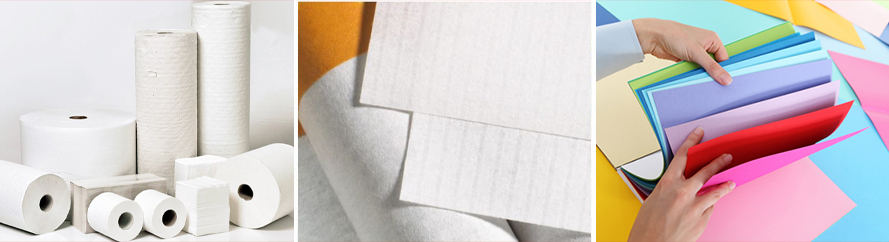
| OEM / Machine | Formation System | Application | Typical Speed |
|---|---|---|---|
| Voith DuoFormer TQv / MasterFormer | Gap former | Fine paper, LWC, SC paper | 500–1,200 m/min |
| Valmet SymFormer MB / OptiFormer Gap | Gap former (twin wire) | Fine paper, coated, newsprint | 500–1,500 m/min |
| Andritz DeltaFormer / HydroFormer | Hybrid / crescent former | Tissue, fine paper | 300–1,000 m/min |
| Toscotec AHEAD / SYD Crescent Former | Crescent former | Tissue, toilet paper | 300–1,200 m/min |
| Voith CrescenTer / ComFormer | Crescent former | Tissue, facial, MF paper | 300–1,200 m/min |
| A.Celli / Recard Crescent Former | Crescent former | Tissue, toilet paper | 300–800 m/min |
* OEM names listed for compatibility reference only. PFM Screen is an independent manufacturer not affiliated with the above OEMs.
Get a Triple Layer Forming Fabric Quote for Your Machine — 24 Hours Send us your machine OEM, formation system (gap former / crescent former), paper grade, running speed and fabric dimensions — PFM Screen will recommend the right triple layer model and quote within one business day. WhatsApp: +86 153 6967 9157Email: polyestermesh@pfmscreen.com |
Specifications
| Model | Warp Dia — Paper Side (mm) | Warp Dia — Machine Side (mm) | Warp (pcs/cm) | Air Perm (m³/m²h) | Machine Speed (m/min) |
|---|---|---|---|---|---|
| 3C5616-475 | 0.13 (fine) | 0.22 (coarse) | 56 | 7,500 | 300–800 |
| 3C5620-315 | 0.13 (fine) | 0.22 (coarse) | 56 | 6,800 | 300–900 |
| 3C3616-410 | 0.11 (fine) | 0.20 (coarse) | 40 | 5,000 | 300–1,200 |
| 3C3620-445 | 0.11 (fine) | 0.20 (coarse) | 40 | 5,200 | 300–1,200 |
| 3C3624-380 | 0.11 (fine) | 0.22 (coarse) | 40 | 5,500 | 300–1,000 |
| 3C5620-330 | 0.13 (fine) | 0.22 (coarse) | 67 | 6,500 | 500–1,200 |
* Warp density range across models: 40–67 pcs/cm. Air permeability range: 5,000–7,500 m³/m²h. All dimensions subject to manufacturing tolerances. Custom warp/weft diameter, mesh count, width and perimeter available on request.
Q1: What is a triple layer forming fabric and how is it different from a double or 2.5 layer? A triple layer forming fabric consists of two completely independent single-layer fabrics — one on the paper side and one on the machine side — bound together by binding yarns. In a double or 2.5 layer fabric, both paper-side and machine-side yarns share a common warp system, which constrains the independent optimization of each surface. In a triple layer, the paper-side and machine-side fabric systems are completely structurally independent — the paper-side uses the finest possible monofilament for maximum Fiber Support Index (FSI), while the machine-side uses the coarsest possible monofilament for maximum wear resistance. This full structural decoupling is what separates triple layer performance from all other forming fabric types. |
Q2: Which paper grades and machine speeds require a triple layer forming fabric? Triple layer forming fabrics are the industry choice for high-speed machines (300–1,200 m/min) producing fine printing paper, tissue (crescent former), cigarette paper, LWC (lightweight coated) paper, supercalendered paper, currency/security paper and specialty technical papers. The triple layer is specified when: (1) machine speed exceeds 500 m/min, where double layer fabrics struggle with CD stability and wear life; (2) the paper grade requires the lowest achievable wire mark (cigarette paper, fine offset, tissue); (3) maximum FSI is needed for premium surface quality; or (4) the application requires the longest possible service life between fabric replacements. For speeds below 300 m/min or grades where FSI is not critical, a 2.5 layer double-layer extra fabric may be more cost-effective. |
Q3: Why does the dual-ply structure of the triple layer deliver superior FSI vs double layer? In a double layer forming fabric, the paper-side weft and machine-side weft are woven from the same continuous warp yarn — meaning the warp diameter must be a compromise between what the paper side needs (fine, for high contact density and low wire mark) and what the machine side needs (coarse, for abrasion resistance). In a triple layer, the paper-side warp is completely independent from the machine-side warp, allowing each to be specified at its optimal diameter for its specific function. This means the paper-side of a triple layer can use finer yarn than is structurally possible in any double layer fabric — directly producing a higher FSI, more fiber crossing contact points per unit area, and a shallower, less intense wire mark pattern in the finished paper. |
Q4: How does the FSI advantage of a triple layer translate to paper quality improvement? The Fiber Support Index (FSI) represents the fraction of fiber crossing points in the forming fiber mat that are supported by the fabric surface during the initial dewatering phase. A higher FSI means fewer fiber junctions collapse into mesh gaps, producing a paper sheet with better formation uniformity, lower wire mark depth, smoother surface texture and better printing surface characteristics. For cigarette paper manufacturers, higher FSI directly translates to more uniform draw resistance and better tar filtration consistency. For fine printing paper, higher FSI reduces coating weight requirements for achieving target smoothness and print density. For tissue, higher FSI improves absorption uniformity and reduces the "pinholes" that cause quality defects in facial and toilet tissue. |
Q5: What machine types is the triple layer forming fabric designed for? PFM Screen's triple layer forming fabrics are designed for high-speed gap former and crescent former machines including: Voith DuoFormer TQv and MasterFormer (gap formers, 500–1,200 m/min), Valmet SymFormer MB and OptiFormer Gap (gap formers, 500–1,500 m/min), Andritz DeltaFormer and HydroFormer (hybrid/crescent formers, 300–1,000 m/min), Toscotec AHEAD and SYD crescent formers (300–1,200 m/min), and Voith CrescenTer and ComFormer crescent formers (300–1,200 m/min). Triple layer fabrics are also used on fast-running Fourdrinier machines (300–800 m/min) producing cigarette paper, security paper and fine printing grades. Contact PFM Screen with your machine OEM, type and running speed for model selection guidance. |
Q6: Why does the triple layer provide better CD stability than double layer fabrics? Cross-machine direction (CD) stability in a forming fabric is determined by the total number of CD (weft) yarn interlocking points per unit length and the rigidity of the CD yarn system. A triple layer forming fabric has a three-ply weft structure — three layers of CD yarns per fabric cross-section, compared to two in a double layer — providing approximately 50% more CD interlocking points. This significantly resists the CD elongation and diagonal distortion (skewing) that occurs in high-speed running, particularly on gap former machines where the forming pressure loads create complex stress states in the fabric. Superior CD stability means the triple layer tracks more consistently, wears more evenly across the width, and maintains accurate MD/CD dimensions throughout its service life — reducing tracking adjustments and edge wear. |
Q7: What are the standard triple layer model options and key dimensions? PFM Screen offers 6 standard triple layer forming fabric models: 3C5616-475 (warp density 56 pcs/cm, air permeability 7,500 m³/m²h, 300–800 m/min), 3C5620-315 (warp density 56 pcs/cm, air permeability 6,800 m³/m²h, 300–900 m/min), 3C3616-410 (warp density 40 pcs/cm, air permeability 5,000 m³/m²h, 300–1,200 m/min), 3C3620-445 (warp density 40 pcs/cm, air permeability 5,200 m³/m²h, 300–1,200 m/min), 3C3624-380 (warp density 40 pcs/cm, air permeability 5,500 m³/m²h, 300–1,000 m/min), and 3C5620-330 (warp density 67 pcs/cm, air permeability 6,500 m³/m²h, 500–1,200 m/min). All models use fine paper-side yarn (0.11–0.13 mm) and coarse machine-side yarn (0.20–0.22 mm). Custom widths, perimeters and specifications are available. Contact PFM Screen with your machine details for model matching. |
Q8: What is the lead time for a custom triple layer forming fabric and what is the minimum order? PFM Screen accepts triple layer forming fabric orders for a single piece with no minimum order quantity. Standard lead time from order confirmation to shipment is 4–6 weeks for standard models, or 6–8 weeks for non-standard warp/weft diameter specifications or very large-width fabrics (above 10 m). PFM Screen's triple layer fabrics are manufactured on European TEXO (13.5 m) and Jurgens (16 m) wide-width looms — capable of producing forming fabrics for the widest paper machines currently in operation. Contact PFM Screen via WhatsApp (+86 153 6967 9157) or email (polyestermesh@pfmscreen.com) with your machine OEM, model number, paper grade, speed, fabric width and perimeter — we will confirm model selection, pricing and lead time within 24 hours. |
Get a Triple Layer Forming Fabric Quote — 24-Hour Response Send us your machine OEM, formation type (gap former / crescent former), paper grade, speed, fabric width and perimeter — PFM Screen will recommend the right triple layer model and respond with pricing within one business day. WhatsApp: +86 153 6967 9157Email: polyestermesh@pfmscreen.com |