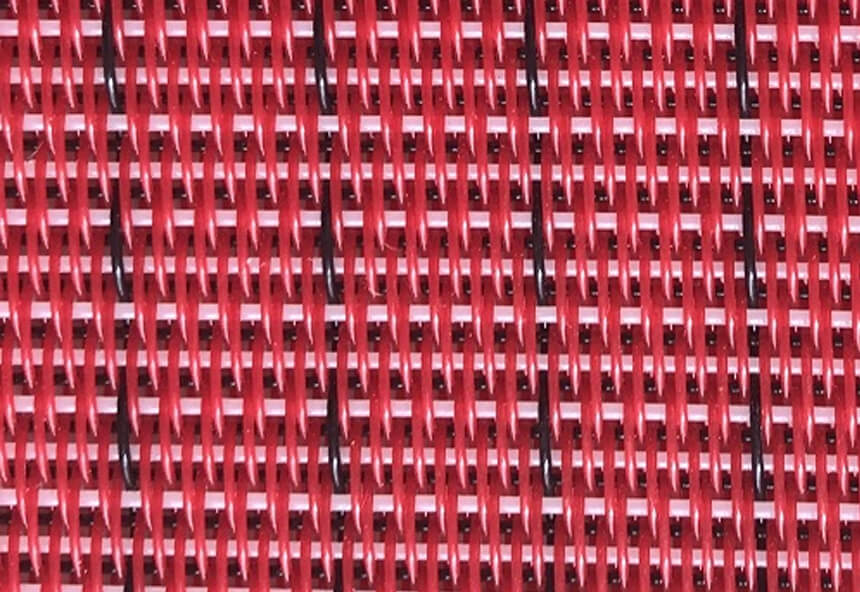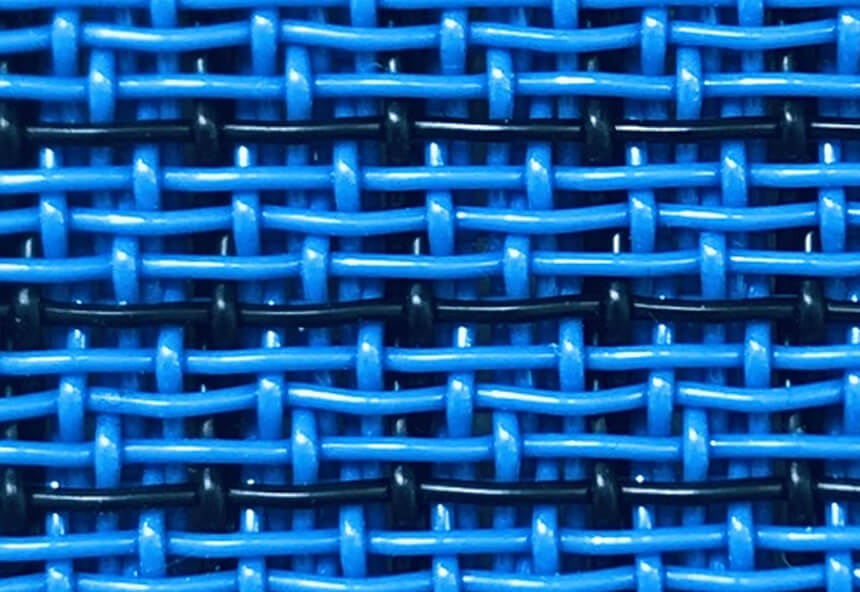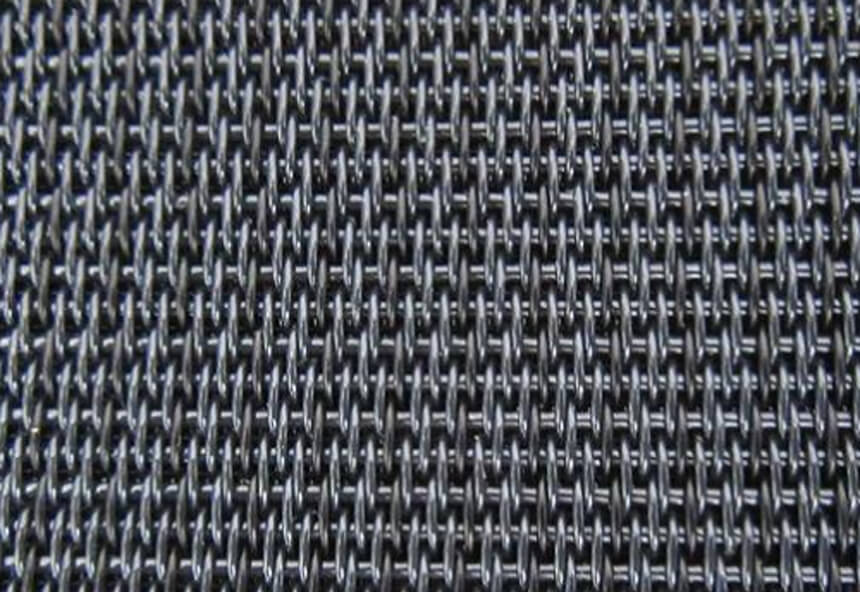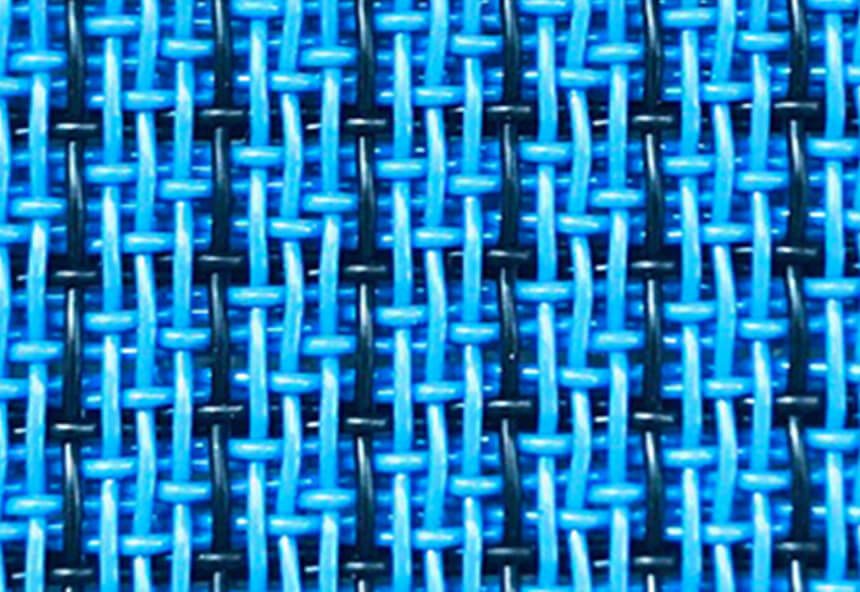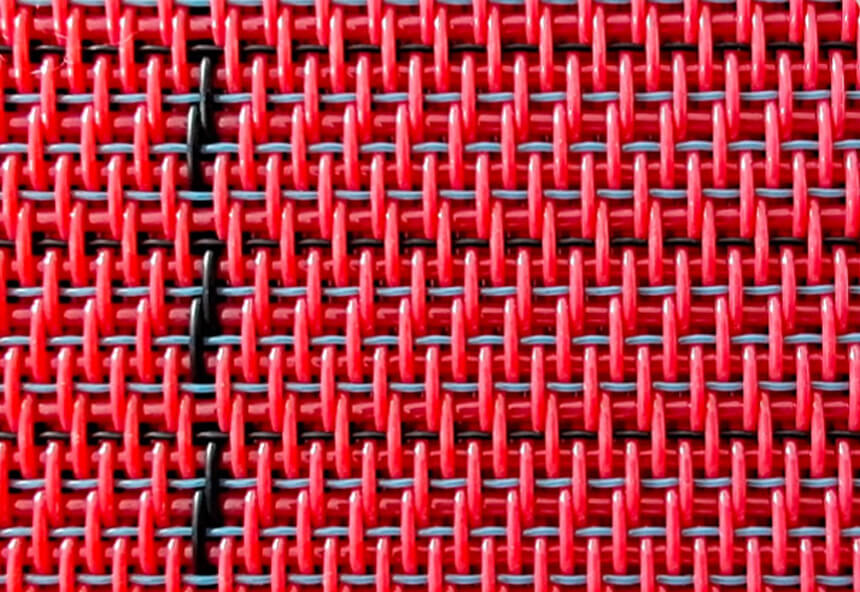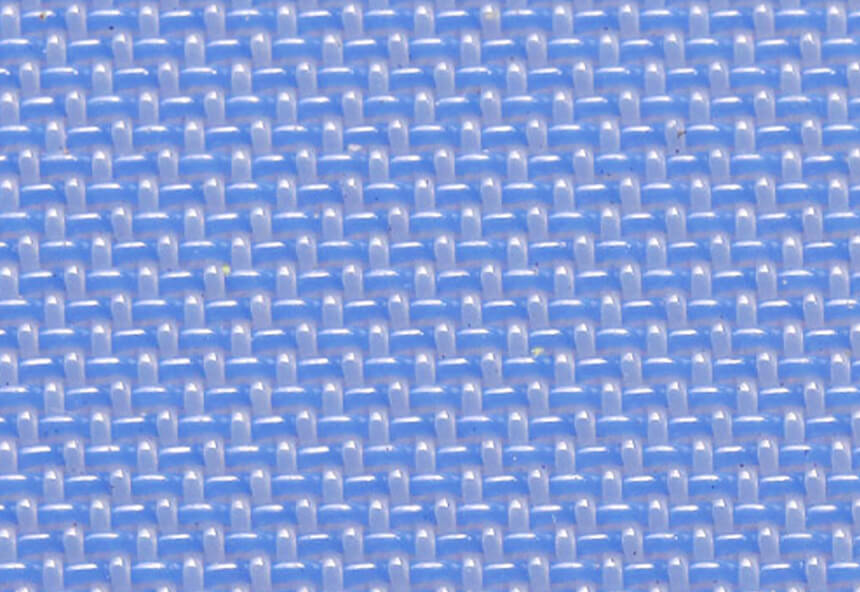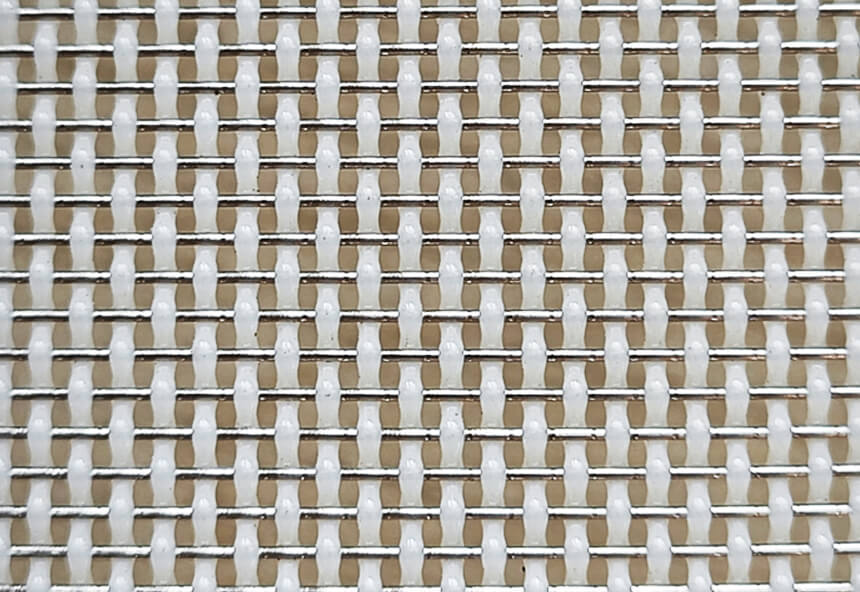
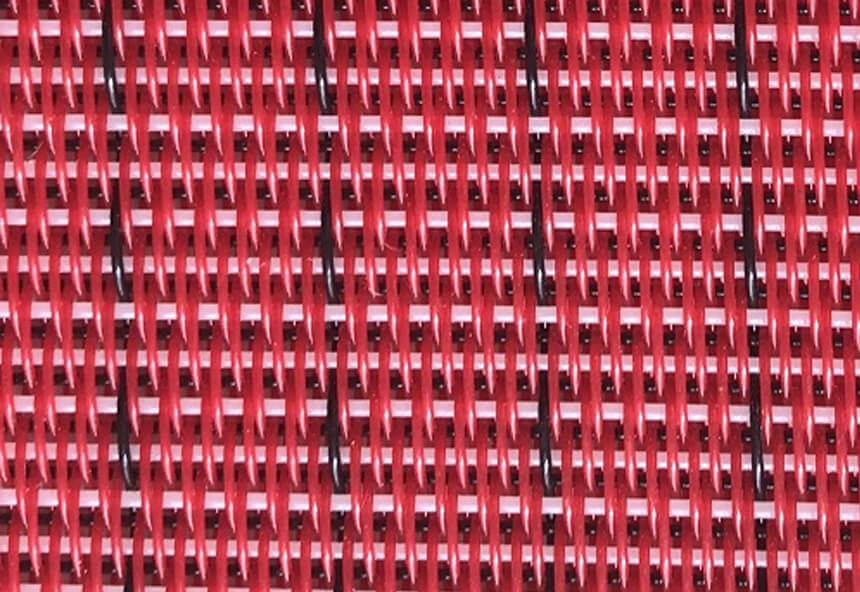
PFM Screen's Airlaid Mesh Belts are precision-woven polyester monofilament conveyor belts engineered as the forming and transport surface in airlaid nonwoven production lines. The open-mesh architecture delivers 600–900 CFM air permeability at 127 Pa, enabling precise vacuum-assisted fiber collection from airlaid forming heads while preventing fiber buildup and cloud spots that degrade sheet uniformity.
Description
PFM Screen's Airlaid Mesh Belts are precision-woven polyester monofilament conveyor belts that serve as the critical forming and transport surface in airlaid nonwoven production lines. In the airlaid process, wood pulp, synthetic fibers, or fiber blends are dispersed by high-velocity air from forming heads positioned above the moving belt — negative-pressure vacuum boxes beneath the mesh draw the airborne fibers downward and collect them into a uniform fiber web. The belt's open-mesh architecture governs fiber deposition uniformity, web basis weight consistency, and final product quality across the entire production width.
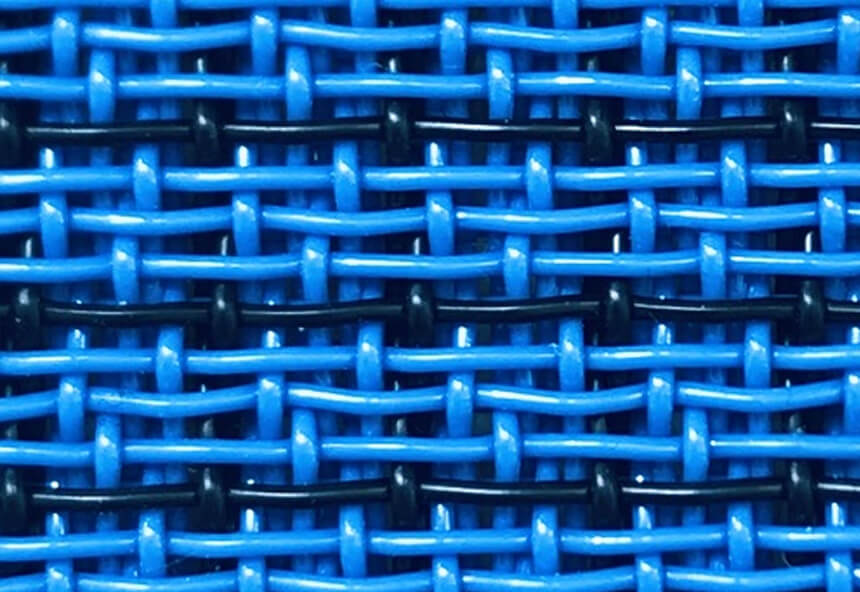
Engineered with 600–900 CFM air permeability at 127 Pa, PFM Screen airlaid belts enable precise vacuum control across the forming section, prevent fiber clumping and cloud-spot defects, and deliver a smooth product-release surface that minimizes pulp adhesion and planned downtime. An integrated antistatic variant (PFM-Airlaid-04) is available with conductive carbon or copper threads woven directly into the mesh — essential for high-speed lines where static charge causes uneven fiber distribution and sheet formation defects.
 |  |
The airlaid forming belt performs five simultaneous functions at production speeds up to 400 m/min — each function depends directly on belt specification:
01 Fiber Collection Vacuum draws air-suspended fibers through open mesh onto the forming surface | 02 Web Uniformity Consistent CFM across width eliminates cloud spots and basis weight streaks | 03 Web Transport Carries the formed web to bonding section without deformation or tension distortion | 04 Static Discharge Antistatic belts dissipate charge — prevents fiber clumping at high-speed forming heads | 05 Product Release Smooth monofilament surface — clean web peel-off with no fiber pull-out or surface damage |
Standard Polyester Airlaid Belt ● Virgin polyester monofilament, single or mixed wire diameter (0.38–0.70 mm) ● Air permeability: 650–900 CFM @ 127 Pa (Models 01, 02, 03, 05, 06, 07) ● Suited for lines where static is managed externally (ionizing bars, humidification systems) ● Lower unit cost; recommended for established lines with proven static performance ● Available in self-joint (endless), spiral seam, or double-layer self-joint configuration | Antistatic Airlaid Belt — Recommended for High-Speed Lines ● Conductive carbon or copper threads interwoven with polyester monofilament (Model PFM-Airlaid-04) ● Permanent electrostatic discharge — no external ionizing equipment required ● Prevents fiber clumping, cloud spots, and forming head contamination at the fiber deposition zone ● Essential for pulp-synthetic fiber blends where mixed charge generation is unpredictable ● Air permeability: 600 CFM @ 127 Pa; 20/15 wire density for controlled vacuum |
The forming belt specification must be matched to the bonding method used downstream — bonding temperature, web basis weight, and fiber type all influence the required CFM and surface properties:
Thermal Bonding (TBAL) Used in hygiene cores, diaper absorbents, and incontinence products. Requires caliper 1.6–2.1 mm for oven heat resistance. Warp/weft mixed-diameter construction provides stability under thermal cycling. Models recommended: PFM-Airlaid-01, 03, 05. | Latex Bonding (LBAL) Used in household wipes and food packaging pads. Smooth release surface prevents latex transfer and web tearing at peel-off. Optional fluorinated surface treatment reduces latex adhesion. Models recommended: PFM-Airlaid-01, 05. | Hydrogen Bonding (HBAL) Pure pulp, no binder — used in dust-free paper (无尘纸) and food-contact absorbent pads. Very low basis weights (20–50 g/m²) require high-CFM belts for adequate vacuum at the forming head. Models recommended: PFM-Airlaid-02, 06, 07. |
Not Sure Which Airlaid Belt Fits Your Line? Share your machine brand, belt width, bonding type, and target basis weight — PFM Screen's engineering team will recommend the optimal model and deliver a quote within 24 hours. WhatsApp: +86 153 6967 9157Email: polyestermesh@pfmscreen.com |
Feature
7 Standard Airlaid Belt Models | 600-900 CFM Air Permeability Range (@ 127 Pa) | 30+ Years in Nonwoven Mesh Belt Manufacturing | 24h Custom Quotation Response Time |
01 — Precision-Uniform Air Permeability PFM Screen's high-precision weaving technology holds CFM variation across belt width to within ±3%, preventing uneven vacuum distribution that causes basis weight streaks and cloud-spot defects. Every belt is tested against its air permeability specification at 127 Pa before shipment — ensuring your vacuum box performs to design parameters from day one. | 02 — High-Strength Polyester Monofilament Woven from 100% virgin polyester monofilament with wire diameters of 0.38–0.70 mm in both warp and weft. Tensile strength is engineered for airlaid forming head tension at 200–400 m/min production speeds — no belt elongation, no tracking drift, and stable mesh geometry through the full production run. | 03 — Integrated Antistatic Thread Option PFM-Airlaid-04 is woven with conductive carbon or copper threads in both warp and weft, achieving permanent electrostatic discharge to ground without external ionizing bars. This eliminates static-induced fiber clumping at the forming head — critical in high-speed pulp lines and dry-climate environments where frictional static charge accumulates rapidly. |
04 — Smooth Web-Release Surface The smooth polyester monofilament surface minimizes fiber entanglement and web adhesion — lightweight airlaid sheets at 20–80 g/m² peel off cleanly without surface tearing or fiber pull-out. Optional fluorinated surface treatment further reduces pulp adhesion for high-speed diaper core and wipe production lines running latex or starch binders. | 05 — Anti-Buildup Open Mesh Design Weave density from 6.5 to 20.5 wires/cm creates a balanced open structure that prevents fiber accumulation inside mesh apertures. Combined with the easy-clean monofilament surface, this reduces planned cleaning intervals and minimizes downtime — particularly important in 24/7 hygiene product lines running wood pulp blends that produce fine fiber dust. | 06 — Stable Lock-Wound Seam Joint Spiral seam joints are machined to match the belt mesh pitch — eliminating thickness irregularity or marking at the join point that could transfer onto the airlaid sheet. Seam wire is lock-wound to prevent jumper wire slippage under tension. Available as self-joint (endless), spiral joint, or double-layer self-joint for high-tension forming sections. |
Request a Technical Datasheet or Belt Sample PFM Screen can provide test samples for forming head evaluation before full-order commitment. Contact us with your current belt specification or production line model for a direct comparison quote. WhatsApp: +86 153 6967 9157Email: polyestermesh@pfmscreen.com |
Application
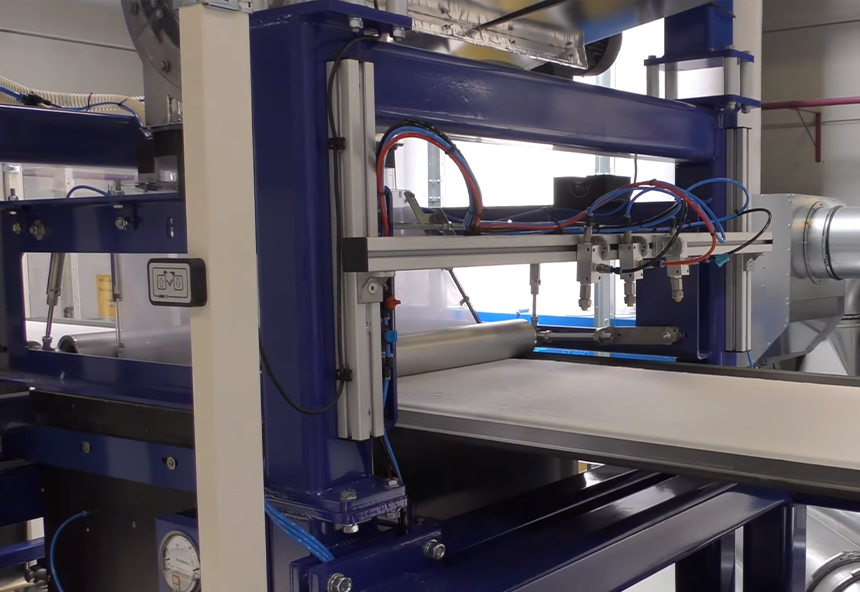
PFM Screen airlaid mesh belts serve as the forming and transport surface across the five major airlaid end-product categories, each requiring a different CFM range, surface treatment, and caliper specification. The correct belt selection directly determines web uniformity, basis weight consistency, and downstream bonding quality.
 |
Hygiene Products — Diapers, Feminine Care, Adult Incontinence The largest global end-use for airlaid nonwovens. The forming belt collects wood pulp and bicomponent fiber blends at 200–400 m/min for thermal bonding (TBAL) downstream. Requires caliper 1.6–2.1 mm and stable tension performance under repeated oven heat cycles. Basis weight range: 60–200 g/m². Recommended models: PFM-Airlaid-01, 03, 05. | Household & Industrial Wipes Airlaid wipes account for approximately 40% of global airlaid production volume. Latex or multi-bonding is applied after forming. Smooth belt release surface is critical — prevents latex transfer and web tearing at peel-off. Optional fluorinated surface treatment available for high-binder-content lines. Recommended models: PFM-Airlaid-01, 02, 05. |
Food Packaging — Tray Liners & Absorbent Meat Pads Hydrogen-bonded airlaid (HBAL) pulp pads used in meat tray liners and food contact absorbents. Very low basis weights (25–60 g/m²) require high-CFM belts (850–900 CFM) for adequate vacuum suction to hold the lightweight web during forming. No binder — the belt surface must be especially clean and non-adhesive. Recommended models: PFM-Airlaid-02, 07. | Dust-Free Paper (无尘纸) & Specialty Absorbents Airlaid dust-free paper demands high-uniformity forming belts with tight CFM consistency across the full width. The antistatic belt variant (PFM-Airlaid-04) prevents wood pulp fiber static buildup — a primary cause of cloud spots and basis weight variation in dust-free paper production. Widely used in medical packaging, cleanroom materials, and electronics-grade absorbents. Recommended models: PFM-Airlaid-04 (antistatic), PFM-Airlaid-06, 07. |
PFM Screen airlaid mesh belts are manufactured to the exact width, seam configuration, and air permeability specification required by all major airlaid line suppliers. Provide your machine model and current belt dimensions — PFM Screen will confirm the correct replacement specification:
| Machine Brand | Country | Key Technology | Bonding Type | Recommended Belt |
| ANDRITZ Dan-Web | Denmark / Austria | Multi-head airlaid forming | Thermal, latex, multi-bonding | PFM-Airlaid-01, 03, 04 |
| M&J Fibretech | Denmark | Wet/dry forming, fiber blending | HBAL, thermal bonding | PFM-Airlaid-02, 07 |
| Oerlikon Neumag | Germany | High-speed hygiene airlaid lines | Thermal bonding | PFM-Airlaid-01, 05 |
| Rando Machine | USA | Randomizer air-lay, fiber blending | Thermal, needle-punch | PFM-Airlaid-03, 04 |
| Voith / Fleissner | Germany | Through-air bonding (TAB) oven lines | Thermal (TAB) | PFM-Airlaid-01, 02 |
* Machine compatibility confirmed upon receipt of your machine model number and current belt dimensions. Custom widths, seam types, and surface treatments manufactured to order.
Tell Us Your Machine Brand — We'll Confirm Belt Fit Send us your machine model, belt width, current belt specification, and end product type — PFM Screen will confirm compatibility and provide full pricing within 24 hours. WhatsApp: +86 153 6967 9157Email: polyestermesh@pfmscreen.com |
Specifications
| Model | Warp Dia. (mm) | Weft Dia. (mm) | Warp Density (wire/cm) | Weft Density (wire/cm) | Weight (kg/m²) | CFM @ 127 Pa | Caliper (mm) |
| PFM-Airlaid-01 | 0.5 | 0.5 | 20.5 | 16 | 1.2 | 700 | 1.8 |
| PFM-Airlaid-02 | 0.43 x 0.70 | 0.7 | 18 | 11 | 1.05 | 900 | 2.1 |
| PFM-Airlaid-03 | 0.52 x 0.50 | 0.3 x 0.70 | 16 | 13 | 1.0 | 750 | 1.6 |
| PFM-Airlaid-04 (Antistatic) | 0.52 x 0.50 | 0.45 x 0.60 | 20 | 15 | 1.01 | 600 | 1.6 |
| PFM-Airlaid-05 | 0.38 x 0.52 | 0.50 x 0.60 | 20.5 | 18 | 1.1 | 650 | 1.45 |
| PFM-Airlaid-06 | 0.5 | 0.5 | 8.5 | 9 | 0.52 | 900 | 0.95 |
| PFM-Airlaid-07 | 0.68 | 0.7 | 7 | 6.5 | 0.62 | 850 | 1.3 |
* PFM-Airlaid-04 incorporates conductive carbon or copper woven threads for antistatic performance. All specifications subject to manufacturing tolerances. Custom wire diameter combinations, widths, lengths, surface treatments, and seam types available on request.
Q1: What exactly is an airlaid mesh belt and what does it do in the production line? An airlaid mesh belt is a porous polyester monofilament conveyor belt that acts as the forming surface in an airlaid nonwoven production line. Wood pulp, synthetic fibers, or fiber blends are dispersed by high-velocity air from forming heads positioned above the moving belt — negative-pressure vacuum boxes beneath the mesh draw the airborne fibers downward and collect them into a uniform fiber web on the belt surface. The belt then transports the web continuously to the bonding section (thermal, latex, or hydrogen bonding oven) without disrupting web integrity. Air permeability (CFM) must be precisely matched to the vacuum box operating pressure to achieve even basis weight distribution across the full production width. |
Q2: Why does an airlaid forming belt need antistatic properties — and when is it mandatory? In the airlaid process, wood pulp and synthetic fibers are transported at high velocity through forming heads, generating significant frictional static electricity on both fiber surfaces and the moving belt. Unchecked static charge causes fibers to repel or cluster unpredictably, resulting in uneven web formation, cloud spots (localized density variations), and forming head contamination. PFM Screen's antistatic airlaid belt (PFM-Airlaid-04) incorporates conductive carbon or copper threads woven directly into the mesh, achieving permanent discharge to ground without external ionizing bars or humidification systems. Antistatic belts are particularly critical in dry-climate plants, at production speeds above 200 m/min, and on lines running mixed pulp-synthetic fiber blends where triboelectric charge generation is unpredictable. |
Q3: What does CFM mean in airlaid belt specifications, and how do I choose the right value? CFM (cubic feet per minute) at 127 Pa measures the volume of air that passes through one square foot of belt surface at a standard pressure differential. In airlaid production, this value must match your vacuum box operating pressure and forming head airflow rate. Higher CFM belts (850–900 CFM: Models 02, 06, 07) support stronger vacuum and are best suited for low basis-weight sheets (20–60 g/m²) such as dust-free paper and food packaging pads, where the vacuum must be strong enough to hold extremely light webs. Lower CFM belts (600–700 CFM: Models 01, 04, 05) provide more controlled, distributed vacuum preferred for heavier hygiene cores (60–200 g/m²) — where excessively high vacuum causes web compaction that reduces absorbency. Contact PFM Screen with your vacuum box pressure setting and target basis weight to receive a CFM recommendation. |
Q4: Are PFM Screen airlaid belts compatible with ANDRITZ Dan-Web production lines? Yes. PFM Screen manufactures airlaid forming belts to the exact width, seam configuration, and CFM specification required by ANDRITZ Dan-Web lines. Dan-Web (founded 1976, acquired by ANDRITZ in 2023) is the world's leading airlaid line OEM — PFM Screen has supplied replacement and upgrade belts for Dan-Web installations across Asia, Europe, and the Americas. PFM Screen belts are equally compatible with M&J Fibretech, Oerlikon Neumag, Rando Machine, and Voith/Fleissner airlaid systems. To confirm exact fit, provide your machine model number and the dimensions of your current forming belt — width, circumference, and seam type — and PFM Screen will confirm compatibility or engineer the correct replacement specification. |
Q5: What seam and joining options are available for airlaid forming belts? PFM Screen offers three seam types for airlaid belts: (1) Self-joint / endless — the belt is woven as a continuous seamless loop; eliminates any seam marking on the web entirely; preferred for the lightest basis-weight sheets (dust-free paper, food pads); (2) Spiral seam joint — a separate spiral wire is interleaved between the warp loops at both belt ends and connected with a pin wire; allows field re-seaming and faster installation; the standard choice for most airlaid lines; (3) Double-layer self-joint — used on high-tension lines where seam durability is paramount. Seam specification is matched to belt width, caliper, and machine tension rating. Provide your production speed and web weight range for a seam recommendation. |
Q6: Can PFM Screen supply airlaid mesh belts specifically for dust-free paper (无尘纸) production? Yes. Dust-free paper (airlaid paper) is a rapidly growing application requiring very high CFM belts with precise, uniform air permeability across the full belt width to achieve even web formation at low basis weights (20–50 g/m²). PFM Screen's antistatic model PFM-Airlaid-04 and high-permeability Models 06 and 07 are the primary specifications for dust-free paper lines. The antistatic variant prevents wood pulp fiber static clumping — the most common formation-quality defect in dust-free paper production, particularly on high-speed lines running 100% wood pulp without synthetic binder. PFM Screen has supplied belts to dust-free paper producers in China and Southeast Asia. Contact us to discuss your machine model, line speed, and target basis weight. |
Q7: How should I clean and maintain an airlaid forming mesh belt to maximize service life? The smooth polyester monofilament surface of PFM Screen airlaid belts is designed for easy cleaning and low-adhesion web release. Routine inline cleaning: oscillating high-pressure water spray nozzles from both belt faces are the most effective option for 24/7 lines. For latex-bonded or starch-contaminated belts, periodic chemical cleaning with a pH 4–9 compatible detergent may be required — consult PFM Screen for approved cleaning agent recommendations. Inspect seam joints and belt tracking alignment monthly; tracking drift is the leading cause of premature belt-edge wear. Avoid sustained high-pressure steam on antistatic belts as heat may affect conductive thread bonding over time. Expected service life is 6–18 months depending on production speed, fiber type, bonding chemistry, and cleaning frequency. |
Q8: What information do I need to provide to get a custom airlaid mesh belt quote? To prepare an accurate quotation, PFM Screen needs the following: (1) Machine brand and model number (e.g., ANDRITZ Dan-Web DW-3000); (2) Belt width (mm) and circumference or length (mm); (3) Current belt model or specification — CFM value, wire diameter, weave density — if available; (4) Bonding technology downstream (thermal, latex, hydrogen, or multi-bonding); (5) Target product type and basis weight (g/m²); (6) Production speed (m/min); (7) Whether antistatic properties are required. If complete specifications are unavailable, share your machine model and end-product type — PFM Screen's engineering team will identify the correct belt specification from our installed belt records. Quote response time: within 24 hours via WhatsApp or email. |
Ready to Order or Request a Sample Belt? Share your belt width, machine brand, end product, and current belt specification — PFM Screen will confirm the specification and deliver a formal quotation within 24 hours. WhatsApp: +86 153 6967 9157Email: polyestermesh@pfmscreen.com |