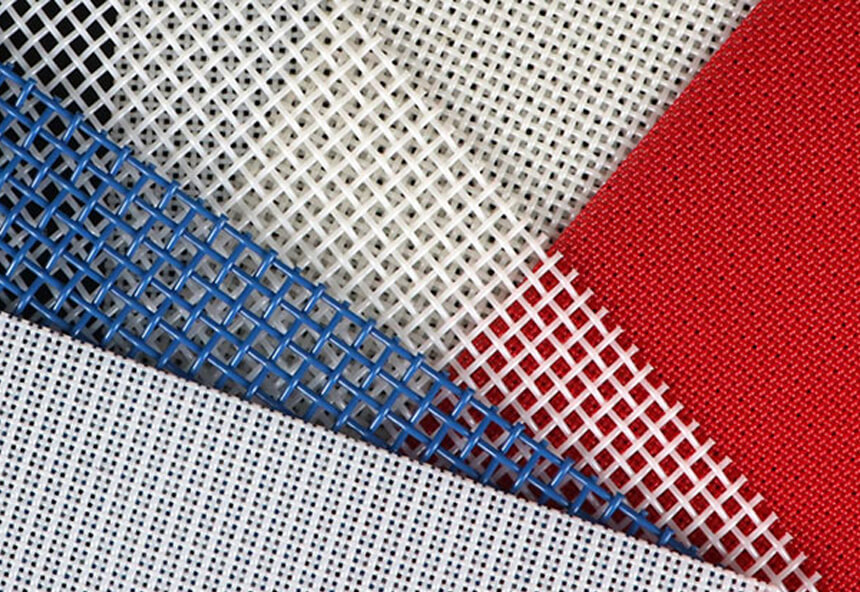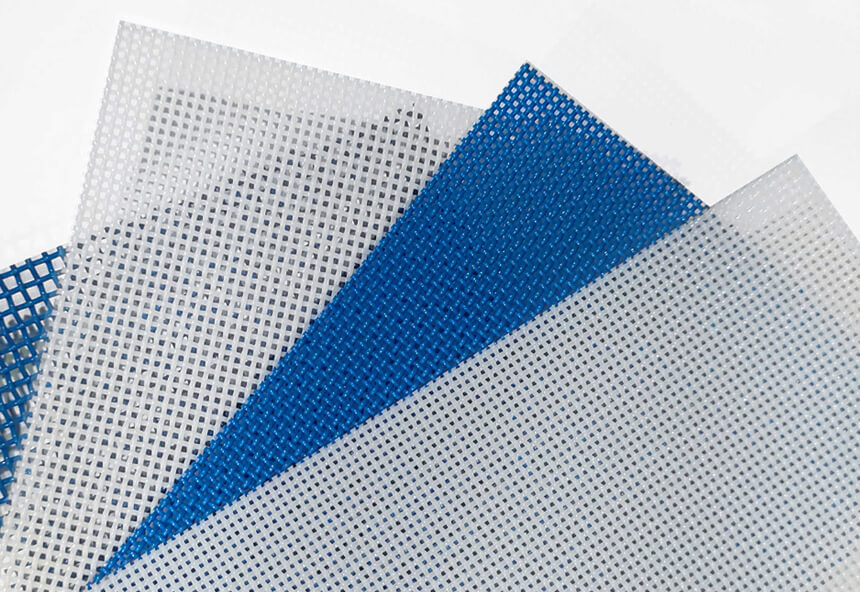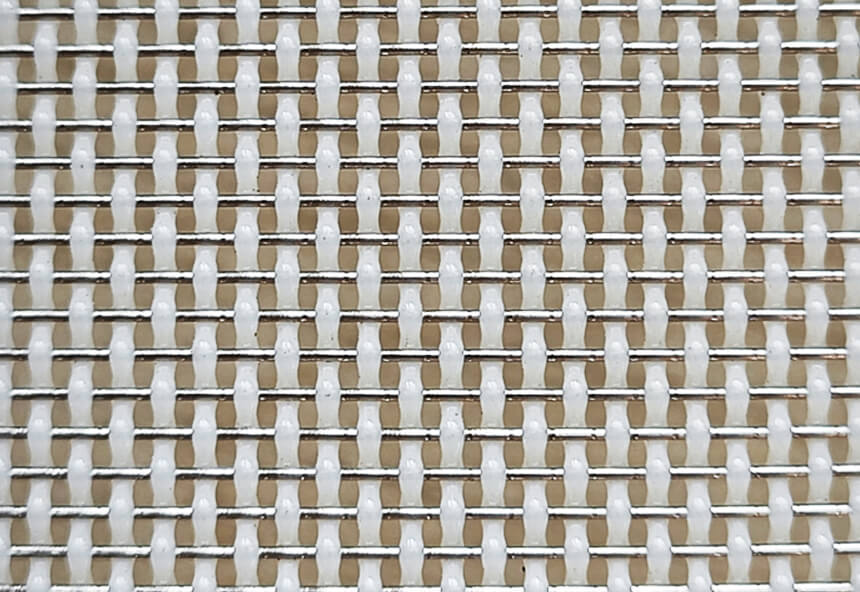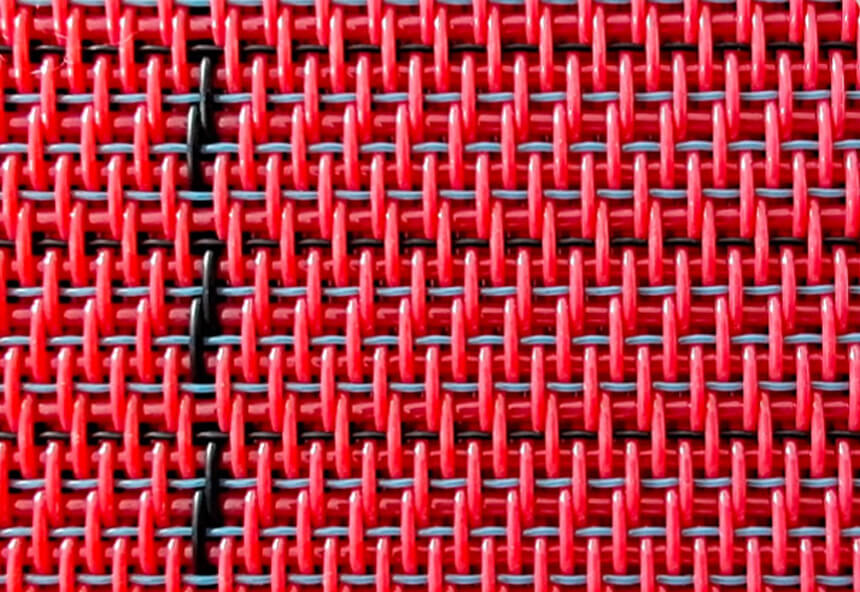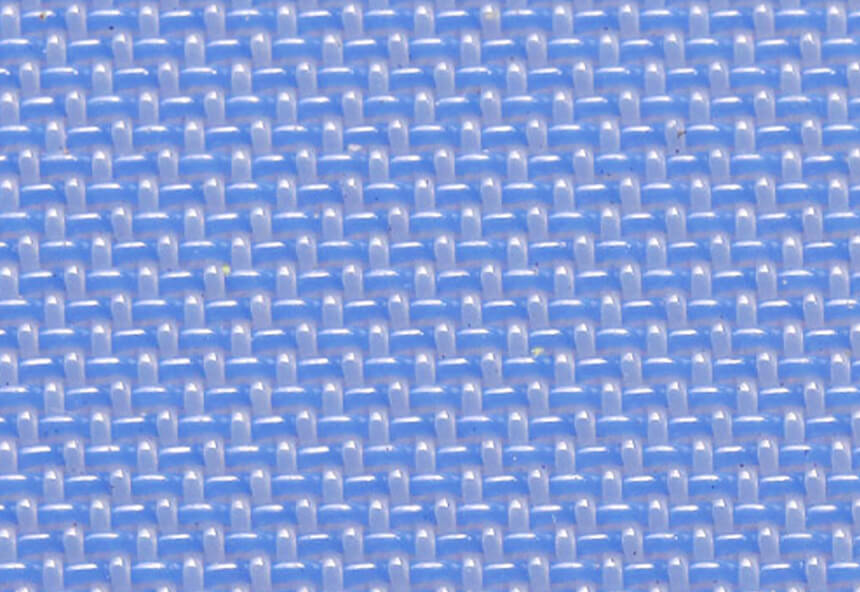
PFM Screen's Hot Air Nonwoven Mesh Belt is a precision-woven polyester monofilament conveyor belt engineered for air-through bonding (ATB) ovens in nonwoven fabric production. It supports and transports the fiber web while allowing 10,000–18,000 m³/m²h of hot air to pass uniformly through the mesh — thermally bonding bicomponent ES fibers into soft, breathable nonwoven materials used in diaper topsheets, sanitary napkins, medical fabrics, and industrial wipes.
Description
PFM Screen's Hot Air Nonwoven Mesh Belt is a precision-woven polyester monofilament conveyor belt engineered for air-through bonding (ATB) ovens in nonwoven fabric production. Operating inside the hot-air oven at continuous temperatures of 150–180°C, it supports and transports the carded fiber web while allowing 10,000–18,000 m³/m²h of hot air to pass uniformly through its open mesh structure — thermally bonding bicomponent ES fibers into the soft, bulky, breathable nonwoven fabrics used in hygiene products, medical textiles, and industrial wipes.
Woven from high-tenacity polyester monofilaments and precision heat-set to lock in dimensional stability, PFM Screen's ATB mesh belts deliver consistent air distribution, mark-free fabric surfaces, and long service life across high-speed continuous production lines. Single-layer and double-layer structures are available to match all major flat-bed ATB oven configurations.
18,000 m³/m²h Max Air Permeability | 180°C Continuous Operating Temperature | 6,500+ mm Max Custom Width | 24 h Response Technical Quote |
Air-through bonding (ATB) is a thermal bonding method that produces soft, lofty, breathable nonwoven fabrics without calendar pressure. A carded fiber web — typically composed of bicomponent ES fibers (polyethylene PE sheath / polyester PET core) or PP/PE blends — is deposited onto the ATB mesh belt and carried through the hot-air oven at controlled speed:
01 Web Laid on Belt Carded ES bicomponent fiber web is deposited onto the ATB mesh belt and enters the oven at controlled line speed | 02 Hot Air Penetrates 150–180°C hot air flows top-to-bottom (or via suction) uniformly through the open mesh and into the fiber web below | 03 PE Sheath Melts Low-melt PE sheath fuses with adjacent fibers at contact points while the PET core remains intact and dimensionally stable | 04 Cool & Release Fabric exits oven, cools, and peels cleanly from the belt surface — retaining full loft, softness, and dimensional stability |
The mesh belt is the critical interface between oven and web. Its air permeability, surface uniformity, and dimensional stability directly determine bonding consistency, fabric quality, and line uptime.
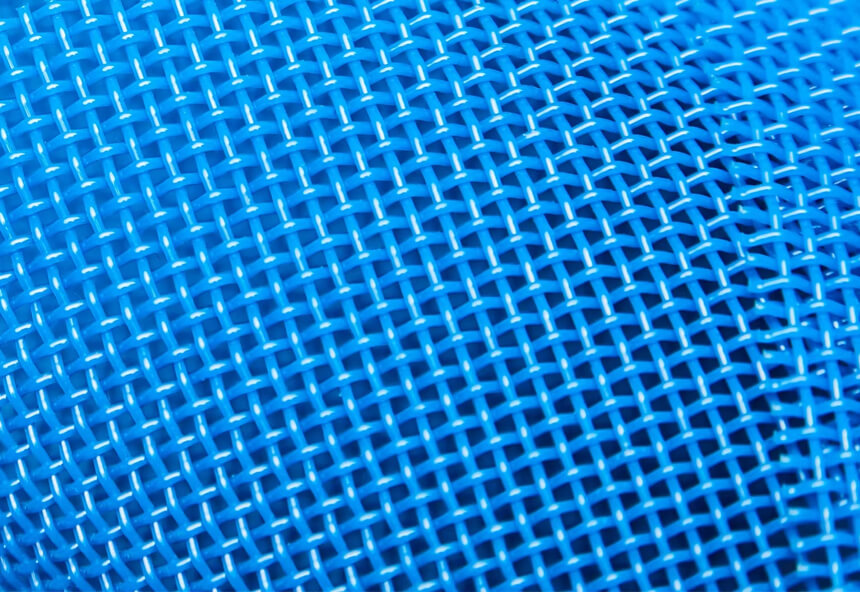
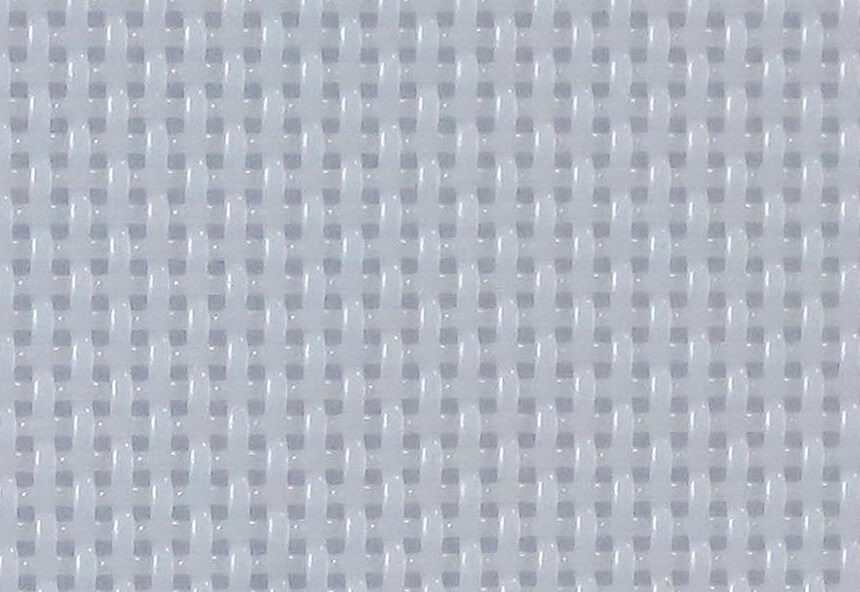
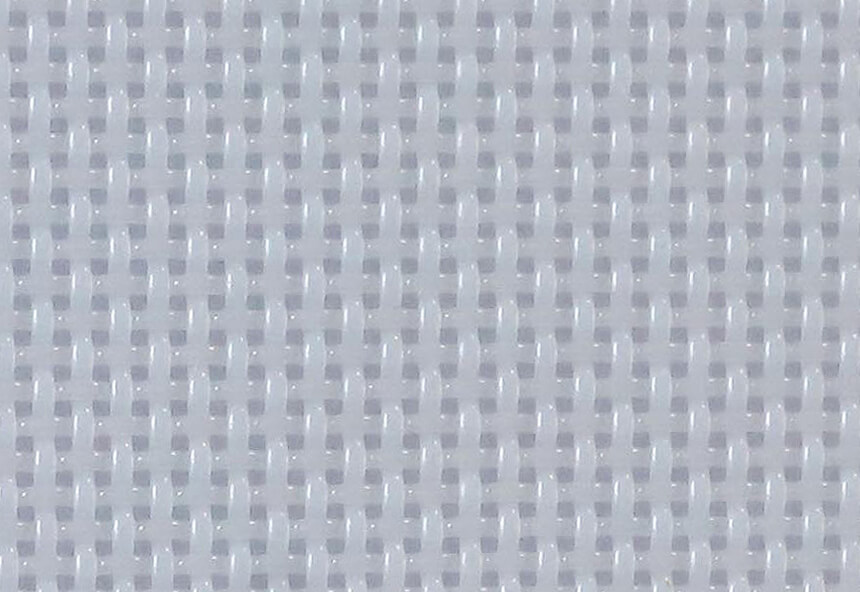 Plain-Weave Polyester Monofilament Structure High-tenacity PET monofilament, precision heat-set for dimensional stability and flat, mark-free surface | 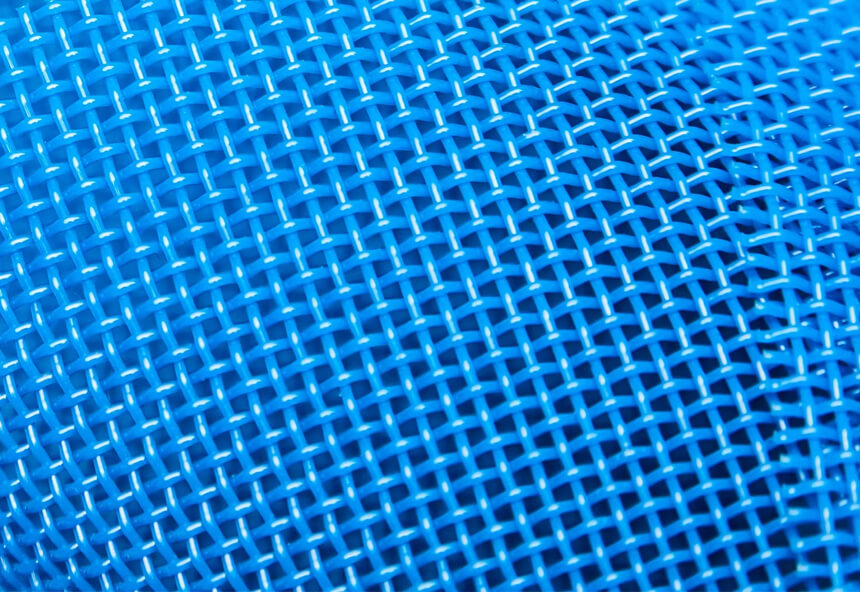 Reinforced Edge & Splice Detail Heat-sealed reinforced edges for tracking stability; endless or mechanical splice options available |
PFM Screen engineers hot air nonwoven mesh belts in two structural configurations. The right choice depends on your oven design, product basis weight, and bonding mechanism:
Single-Layer Structure ● Higher air permeability per unit belt weight — less resistance to hot air flow ● Ideal for lightweight diaper topsheet, sanitary napkin coverstock, and wipes (basis weight 12–50 gsm) ● Standard choice for most flat-bed ATB ovens where the web rests on one conveyor surface ● All four standard PFM-HA series models available in single-layer configuration | Double-Layer Structure ● Greater web support force and structural rigidity for heavier fiber webs ● Preferred for upper + lower belt configurations where the fiber web is sandwiched during bonding ● Suitable for furniture batting, fiberfill, automotive insulation, and high-loft composite nonwovens ● Custom-engineered to your oven design — contact PFM Screen with upper/lower belt dimensions |
Need Help Selecting the Right ATB Belt Structure? Share your oven brand, working width, product basis weight, and fiber type — PFM Screen's engineers will recommend the right belt model and structure within 24 hours. WhatsApp: +86 153 6967 9157Email: polyestermesh@pfmscreen.com |
Feature
PFM Screen's Hot Air Nonwoven Mesh Belts are engineered to the exacting demands of high-speed ATB oven lines — where belt uniformity, air permeability, and thermal stability directly determine nonwoven fabric quality and production throughput. Six performance advantages differentiate PFM Screen's belts from commodity alternatives:
01 — High Air Permeability Air permeability of 10,000–18,000 m³/m²h ensures hot air penetrates the fiber web uniformly across the full belt width — eliminating cold spots and bonding inconsistencies that cause fabric defects and reject rates. | 02 — Continuous 180°C Heat Resistance High-tenacity polyester monofilament maintains structural integrity and mesh geometry at continuous oven temperatures up to 180°C — no creep, no aperture deformation across long production runs. | 03 — Mark-Free Smooth Surface Precision-controlled monofilament diameter and uniform plain weave produce a flat, mark-free surface that supports the fiber web without imprinting mesh patterns into the fabric — critical for high-quality diaper topsheet and sanitary napkin coverstock. |
04 — Outstanding Dimensional Stability Heat-setting treatment locks the monofilament weave structure, minimizing warp and weft elongation or shrinkage under sustained tension and oven temperature — ensuring consistent mesh geometry and air permeability belt-run to belt-run. | 05 — Non-Stick Clean Release Smooth monofilament surface and surface finishing treatment prevent bonded ES fibers from adhering to the belt — enabling clean fabric peel-off after the oven without tearing, stretching, or surface contamination of the finished nonwoven. | 06 — Full Customization Working width from 500 mm to 6,500 mm+, mesh density, wire diameter, joint type (endless or mechanical splice), and sealed edge reinforcement are all configurable to your specific ATB oven brand and production line design. |
For most ATB applications operating at 150–180°C, high-tenacity polyester (PET) monofilament delivers the optimal combination of cost efficiency, dimensional stability, and air permeability. For applications requiring sustained temperatures above 200°C or exposure to aggressive industrial chemicals, PFM Screen also manufactures ATB mesh belts from PPS (polyphenylene sulfide) monofilament:
| Property | Standard PET (Polyester) | PPS (Polyphenylene Sulfide) |
| Continuous Use Temp. | Up to 180°C | Up to 240°C |
| Chemical Resistance | Good (acids and most industrial chemicals) | Excellent (strong acids, alkalis, oxidants) |
| Hydrolysis Resistance | Moderate — avoid steam above 130°C | Excellent |
| Typical ATB Applications | Diaper topsheet, sanitary napkin, hygiene wipes, furniture batting — standard ATB bonding lines | High-temp industrial nonwovens, specialty chemical-resistant fabrics, high-performance filtration substrates |
| Cost Position | Standard — best value for the majority of ATB lines | Premium (higher raw material cost) — specify only when temperature or chemical exposure requires it |
Discuss Material Grade & Mesh Specification With PFM Screen Share your oven brand, operating temperature, working width, and fiber type — our engineers will recommend the optimal monofilament grade and mesh model for your production requirements. WhatsApp: +86 153 6967 9157Email: polyestermesh@pfmscreen.com |
Application
PFM Screen's Hot Air Nonwoven Mesh Belts are the standard conveyor surface in air-through bonding (ATB) ovens across hygiene, medical, filtration, wipes, and technical nonwoven production lines worldwide. The belt's precision-engineered air permeability and smooth surface are the enabling factors for high-speed, mark-free bonding of bicomponent and blended fiber webs across a wide range of final products.
Hygiene Products Diaper topsheets & acquisition-distribution layers (ADL) — ES fiber (PE/PET) bonded at 150–165°C to produce soft, perforated coverstock with controlled loft and liquid permeability. Sanitary napkin coverstock & feminine care fabrics — ATB-bonded PP/PE or PET/PE webs requiring mark-free surfaces and consistent basis weight of 12–30 gsm. | Medical & Protective Textiles Surgical drape and gown substrates — clean, binder-free thermal bonding maintains fiber loft and tactile softness required for skin-contact medical fabrics. Filtration substrate layers — ATB bonding produces open-structured nonwovens with controlled pore geometry for air and liquid filtration. |
Wipes & Cleaning Fabrics Wet wipes & household cleaning fabrics — carded/ATB composite webs for single-use wipes where bulk, softness, and tear resistance are balanced. Industrial & dry cleaning wipes — heavier-basis-weight ATB nonwovens bonded at 170–180°C for durability in high-demand industrial cleaning applications. | Technical & Composite Nonwovens Thermal bonding zone in SMS/SMMS spunmelt lines — ATB belt used in the through-air bonding segment of combined spunbond-meltblown composite production lines. Furniture batting & fiberfill — high-loft polyester batting for pillows, mattress pads, and automotive insulation requiring the open loft that only ATB delivers. |
PFM Screen's Hot Air Nonwoven Mesh Belts are custom-fabricated to the exact working widths, edge reinforcement types, and splice configurations required by all major ATB oven and nonwoven line manufacturers. Current customers include lines from:
| Machine Brand | Country | Typical ATB Line Type | Belt Configuration Notes |
| Trützschler Nonwovens | Germany | T-BOND flat-bed ATB oven; Omega drum thermobonder lines | Flat-bed belt; specify working width & splice type |
| Autefa Solutions | Germany | High-speed carding + flat-bed ATB bonding for hygiene & technical nonwovens | Custom mesh density per fiber denier and line speed |
| Andritz Asselin-Thibeau | France / Austria | Carded & crosslapped ATB lines; composite nonwoven bonding systems | Upper + lower belt configurations available |
| Oskar Dilo | Germany | Thermobonding ovens for needlepunch + thermal hybrid production lines | Reinforced edge with tracking guide rail |
| Oerlikon Neumag | Germany | Spunbond + ATB composite (SMS, SMMS) lines | High-speed lines; confirm exact working width & required open area |
| Bombi Mecanique | France | Hot-air through-bonding ovens for hygiene & high-loft filling nonwovens | Double-layer upper + lower belt; specify oven working width |
| Technoplants | Italy | Carded & crosslapped ATB oven lines for hygiene and wipes | Custom working width; confirm splice and edge reinforcement type |
| Chinese & Asian OEM Lines | China / Korea / Taiwan | Domestic hygiene, wipes, and filling nonwoven ATB lines (various widths) | Fully customizable; provide belt working width and total belt length |
* PFM Screen is not an authorized service partner or OEM supplier of the machine brands listed above. Brand names are referenced for machine compatibility and replacement belt sourcing purposes only. Contact PFM Screen with your machine model and working dimensions for belt specification confirmation.
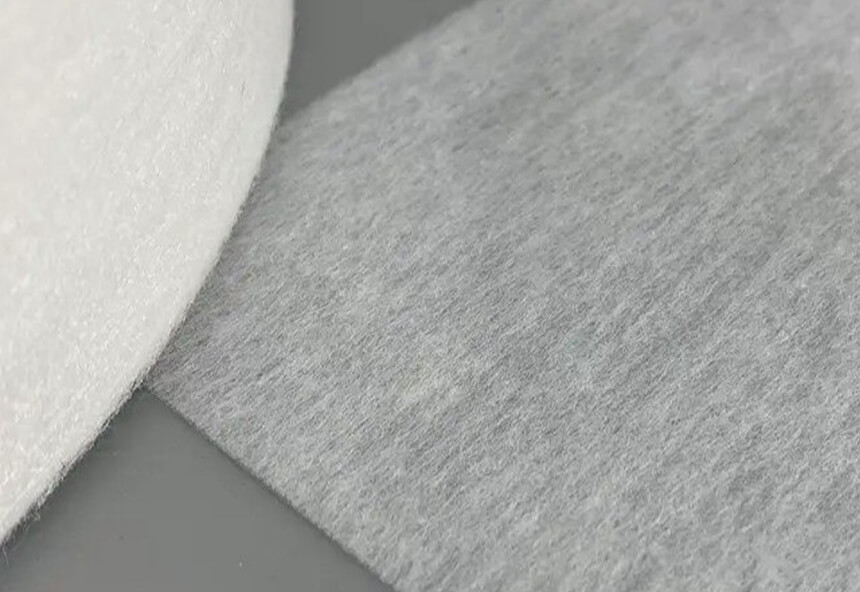
Tell Us Your Machine Brand & Working Width — Quote in 24 Hours PFM Screen manufactures replacement and new ATB belts for all major oven brands. Send your oven model, belt working width, splice type, and required mesh specification — we will reply within one business day. WhatsApp: +86 153 6967 9157Email: polyestermesh@pfmscreen.com |
Specifications
PFM Screen offers four standard hot air nonwoven mesh belt models covering the full range of ATB oven applications. All models are woven in plain-weave square mesh from high-tenacity polyester monofilament and heat-set for dimensional stability. Sorted by air permeability (highest first):
| Model | Wire Dia. (mm) | Mesh Count (wire/cm) | Aperture (mm)* | Open Area (%)* | Air Perm. (m³/m²h) | Typical Application |
| PFM-HA-05602 | 0.6 / 0.6 | 6 x 6 | ~1.07 | ~41% | 18,000 | Diaper topsheet, lightweight coverstock — maximum air permeability |
| PFM-HA-06702 | 0.7 / 0.7 | 6.3 x 6.3 | ~0.89 | ~31% | 11,000 | General ATB hygiene and wipes bonding; heavier monofilament for durability |
| PFM-HA-09502 | 0.5 / 0.5 | 10 x 10 | ~0.50 | ~25% | 10,100 | Fine-denier fiber web; controlled air distribution; finer fabric surface |
| PFM-HA-07502 | 0.5 / 0.5 | 7.5 x 7.5 | ~0.83 | ~39% | 10,000 | Medium-density fiber web; balanced permeability and web support |
| Custom | As required | As required | — | — | As required | Contact PFM Screen with oven model, working width, fiber type, and target air permeability |
* Aperture and Open Area values are calculated from wire diameter and mesh count data based on plain-weave square mesh geometry. Confirm with PFM Screen engineering before final specification. All other data from PFM Screen factory testing. Specifications subject to manufacturing tolerances. Single-layer and double-layer structures available for all models — specify when ordering.
Q1: What is a hot air nonwoven mesh belt and what does it do in an ATB line? A hot air nonwoven mesh belt (also called an ATB conveyor belt or through-air bonding belt) is the precision-woven polyester conveyor surface inside a hot-air oven in a nonwoven fabric production line. It performs two functions: (1) transporting the carded fiber web through the oven at controlled speed, and (2) allowing 150–180°C hot air to pass uniformly through its open mesh structure and into the fiber web. This uniform air distribution thermally melts the low-melt PE sheath of bicomponent ES fibers, creating fiber-to-fiber bonds that form a stable, soft, lofty nonwoven fabric. The belt's air permeability, surface uniformity, and dimensional stability directly determine fabric quality and production consistency. |
Q2: What air permeability is required for diaper topsheet and sanitary napkin coverstock production? For diaper topsheet and sanitary napkin coverstock produced with fine-denier ES fiber webs (typically 1.5–3.0 denier, basis weight 12–30 gsm), ATB mesh belts in the range of 10,000–18,000 m³/m²h air permeability are standard. Higher air permeability — such as PFM-HA-05602 at 18,000 m³/m²h — is preferred for lightweight, low-basis-weight coverstock where rapid, uniform heat transfer is most critical. For medium-basis-weight hygiene nonwovens or composite wipes, the mid-range models (10,000–11,000 m³/m²h) provide the right balance of air flow and web support. Contact PFM Screen with your specific fiber denier, line speed, and basis weight for a model recommendation. |
Q3: When should I specify a single-layer belt vs a double-layer ATB belt? Single-layer belts are the standard choice for the majority of flat-bed ATB ovens used in hygiene, wipes, and standard nonwoven bonding. They offer higher air permeability per unit weight and are ideal for lightweight coverstock. Double-layer belts are used in configurations where a second (upper) belt presses and holds the fiber web against the lower conveyor surface during bonding — typically for heavier-basis-weight products, high-loft batting production, or processes where controlled web compression is part of the bonding mechanism. If you are unsure which structure your oven requires, share your oven brand and model with PFM Screen — our engineers will confirm the correct belt structure for your configuration. |
Q4: Which PFM Screen mesh model is best for ES fiber bonding in a hygiene production line? For standard hygiene applications — diaper topsheet, sanitary napkin coverstock, and lightweight wipes — using fine-denier ES bicomponent fibers at 150–170°C, PFM-HA-05602 (0.6 mm wire, 6 wires/cm, 18,000 m³/m²h) is the most commonly selected model where maximum air permeability and rapid bonding are prioritized. PFM-HA-06702 (0.7 mm wire, 6.3 wires/cm, 11,000 m³/m²h) is preferred where heavier monofilament durability is needed. PFM-HA-09502 (10,100 m³/m²h) suits fine-denier webs requiring more controlled air distribution. Final selection depends on your oven airspeed, belt tension, and product requirements — PFM Screen engineers will confirm the optimal model after reviewing your line specifications. |
Q5: What working widths and joint types does PFM Screen offer for ATB mesh belts? PFM Screen manufactures hot air nonwoven mesh belts in working widths from 500 mm to 6,500 mm+, covering ATB ovens from all major manufacturers including Trützschler, Autefa, Andritz, Dilo, Neumag, Bombi Mecanique, and domestic Chinese OEM lines. Available joint types include: (1) Endless/woven splice — seamless, no hardware, recommended for highest-speed production with critical surface quality requirements; (2) Mechanical pin or clipper splice — for field installation and quick changeover on existing equipment. Reinforced edges are standard on all widths. Please provide oven brand, working width, total belt circumference or length, and preferred splice type when requesting a quotation. |
Q6: Can PFM Screen supply an upper holddown belt for double-belt ATB oven configurations? Yes. Some ATB oven designs use a second (upper) mesh belt positioned above the main conveyor belt to press and hold the fiber web during hot-air bonding — particularly for high-loft batting and fiberfill production. PFM Screen supplies both the lower carrier belt and the upper holddown belt for such dual-belt configurations. The upper belt typically uses the same or slightly lower air permeability than the lower belt depending on oven design. Contact PFM Screen with your upper and lower belt dimensions, current model references, and required air permeability for a full dual-belt specification and quote. |
Q7: What information do I need to provide to get a quotation within 24 hours? To receive a full specification and price quotation from PFM Screen within 24 hours, please provide: (1) Oven/machine brand and model number; (2) Belt working width (mm) and total belt length or circumference (mm); (3) Product being produced (e.g., diaper topsheet, wipes, batting) and fiber type (ES, PP/PE, PET/PE); (4) Oven operating temperature (°C); (5) Preferred mesh model or target air permeability (m³/m²h); (6) Joint type preference (endless splice or mechanical); (7) Required quantity. Send these details to PFM Screen via WhatsApp (+86 153 6967 9157) or email (polyestermesh@pfmscreen.com) for a same-business-day response. |
Q8: How long does an ATB mesh belt last and how do I maintain it? Service life varies by line speed, oven temperature, fiber adhesion tendency, and cleaning frequency — but well-maintained PFM Screen ATB mesh belts typically run 6–18 months in continuous production before replacement. To extend belt life: (1) Clean regularly with high-pressure air blowing or water flushing to clear fiber build-up from mesh openings, especially after processing high-PE-content ES fibers; (2) Avoid sharp kinks in the belt during storage and handling; (3) Monitor belt tracking weekly and adjust tension evenly across the full working width; (4) Inspect edge reinforcement and splice integrity monthly. PFM Screen recommends keeping one spare belt in stock for rapid changeover — replacement belts are typically supplied within 2–4 weeks of order confirmation. |
Ready to Order? Get Your Custom ATB Belt Quote Within 24 Hours Send us your oven brand, working width, mesh model, splice type, and quantity — PFM Screen will respond with a full specification and pricing within one business day. WhatsApp: +86 153 6967 9157Email: polyestermesh@pfmscreen.com |