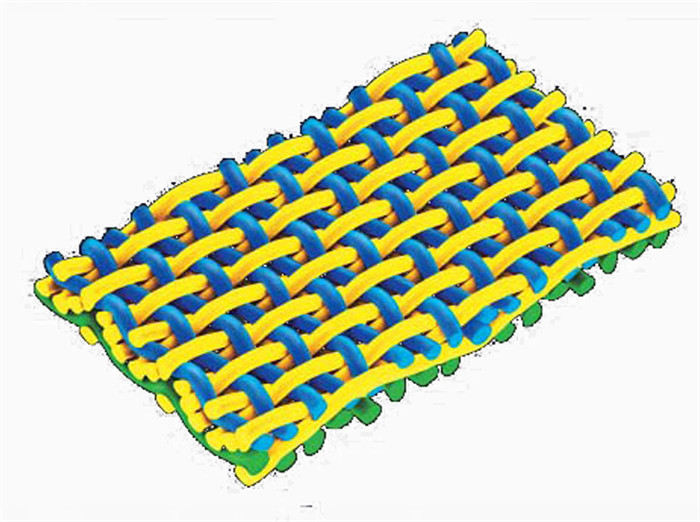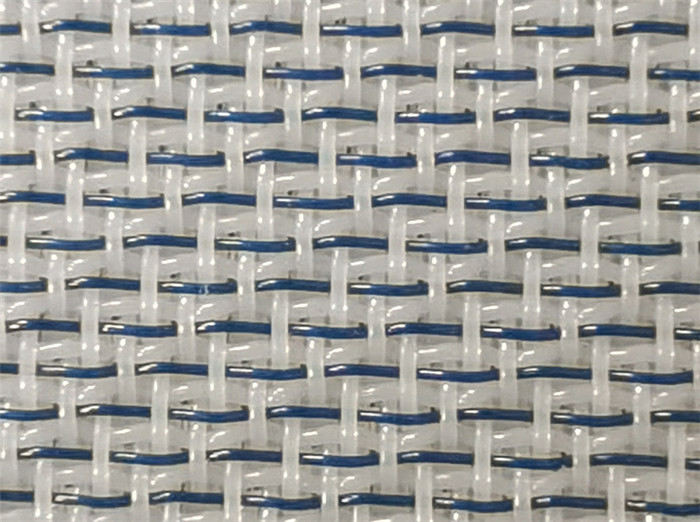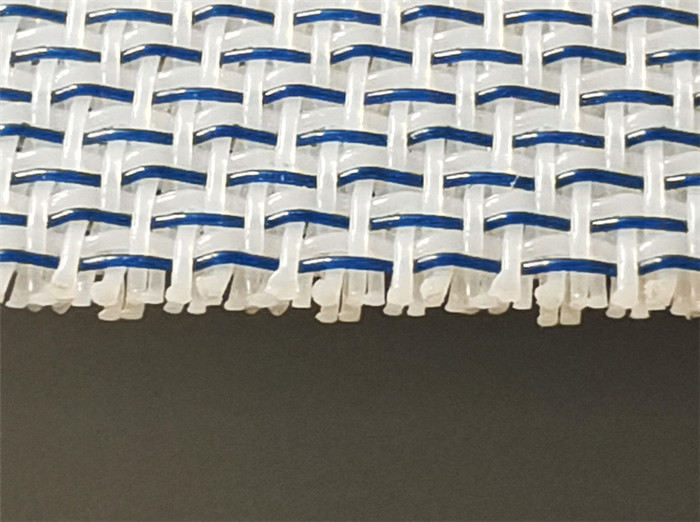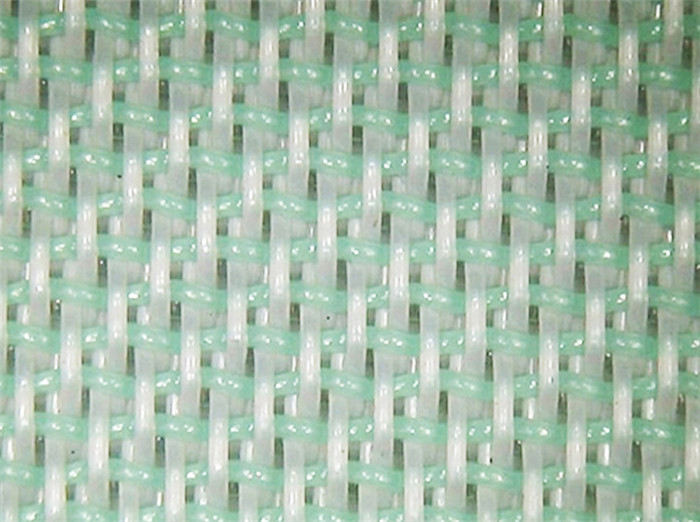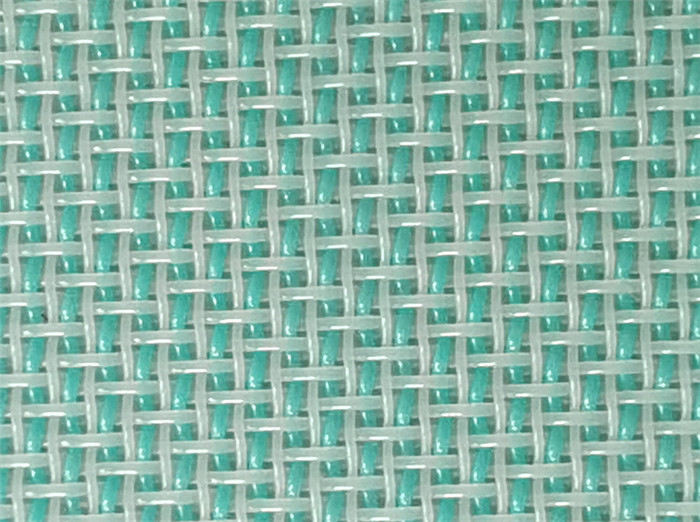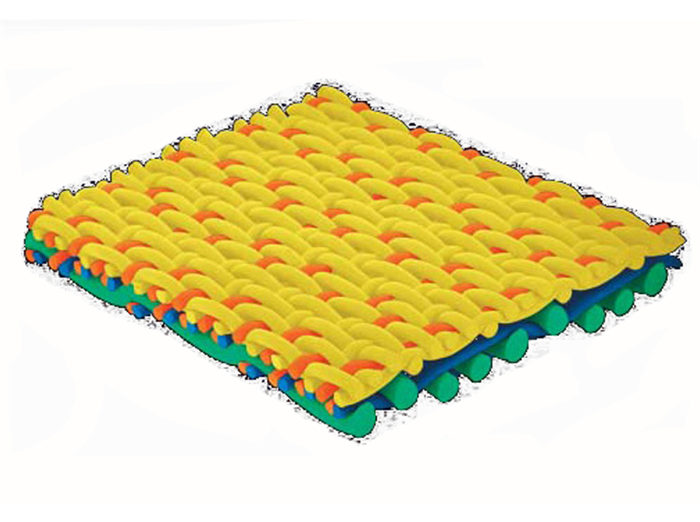
PFM Screen's double layer forming fabrics employ a dual-weft structure where sheet-side and machine-side weft yarns are independently selected, enabling precise control over sheet-side smoothness, wire mark, two-sidedness and fabric life. The three-dimensional pore structure delivers excellent drainage without the direct hydraulic impact on the fiber mat that causes formation problems in single layer fabrics.
Description
PFM Screen's Double Layer Forming Fabrics represent a significant step up from single layer forming fabrics in paper quality performance. In a double layer design, the weft yarn system has a double-layer structure — separate sheet-side and machine-side weft yarns can be independently specified for diameter and material, enabling independent optimization of paper-side surface smoothness and machine-side wear resistance. The resulting three-dimensional void structure provides exceptional drainage while preventing direct hydraulic force from reaching the fiber mat — improving formation uniformity and reducing wire mark in finished paper.
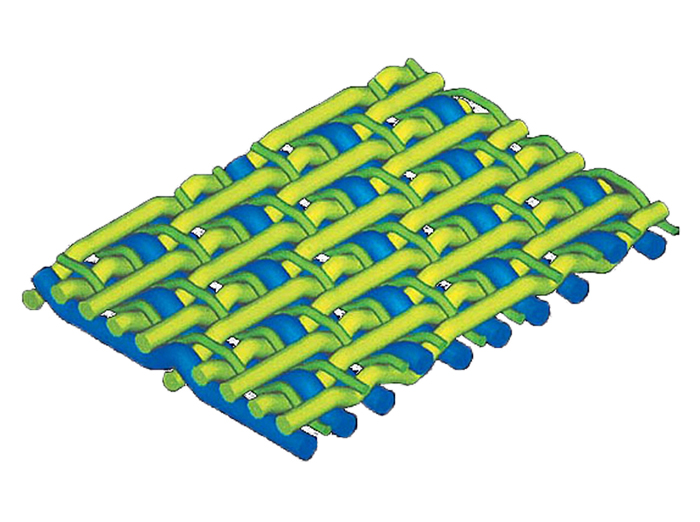
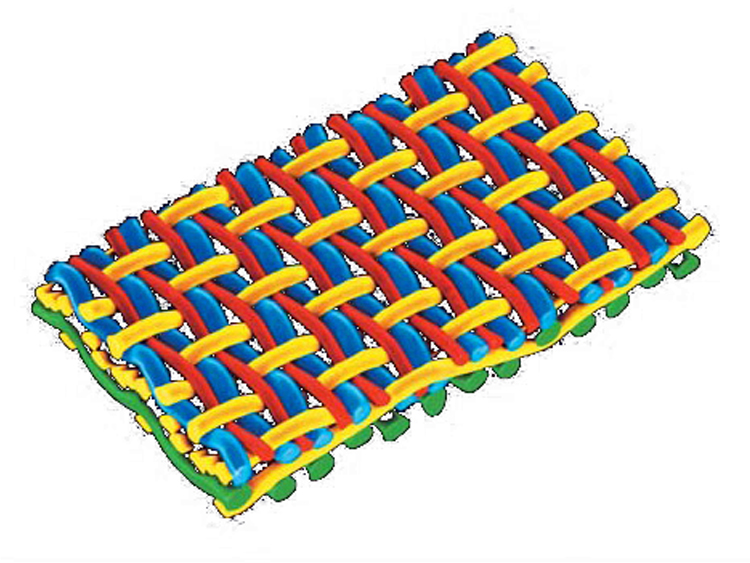
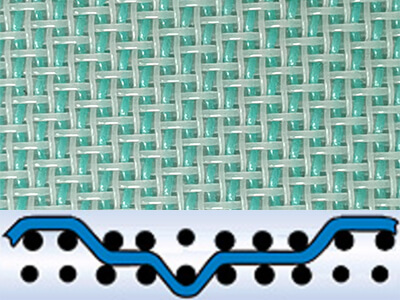 7-Shed Double Layer — Fine Surface · Excellent paper-side surface smoothness · Suitable for grades with wire mark difficulties · Warp density: 60–65 pcs/cm · Air perm: 4,550–5,200 m³/m²h | 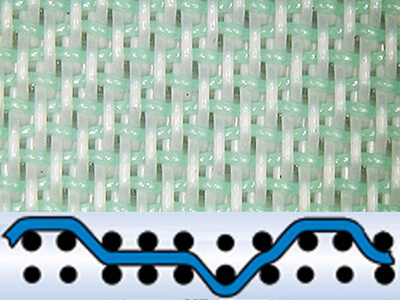 8-Shed Double Layer — Superior Drainage & Wear · One longitudinal + two transverse fiber head sets · Excellent drainage and abrasion resistance · Warp density: 66–70 pcs/cm · Air perm: 4,500–6,200 m³/m²h |
01 Independent Layer Optimization Sheet-side and machine-side weft diameters are independently selected — fine yarns for surface smoothness on top, heavy yarns for wear resistance on the bottom | 02 Reduced Wire Mark Higher warp density (60–70 pcs/cm vs 28–35 in single layer) creates a finer sheet-side surface, significantly reducing wire mark on printing and writing paper | 03 Enhanced Retention The large three-dimensional internal void slows drainage rate, giving fiber fines more time to be retained — reducing filler and fiber loss to the white water system | 04 Improved Fabric Life Separate machine-side weft yarns with large diameter absorb abrasive wear without affecting paper-side surface quality — extending total service life vs. single layer |
| Machine Type | OEM Examples | Speed Range | Recommended Shed |
|---|---|---|---|
| Fourdrinier — Print / Writing | Voith, Valmet, Andritz | 200–600 m/min | 7-Shed |
| Gap Former / Twin Wire | Valmet SymFormer, Voith DuoFormer | 300–800 m/min | 8-Shed |
| Hybrid Former | Andritz, Valmet | 200–600 m/min | 7-Shed or 8-Shed |
| Fourdrinier — Newsprint | Voith, Valmet, GL&V | 500–800 m/min | 8-Shed |
| Fourdrinier — Board / Specialty | Voith, Allimand, A.Celli | 200–500 m/min | 7-Shed |
* OEM brand names listed for compatibility reference. PFM Screen is an independent manufacturer not affiliated with the above OEMs.
Request a Double Layer Forming Fabric Quote — 24-Hour Response Share your machine type (Fourdrinier / gap former / hybrid), paper grade, running speed, fabric width and perimeter — PFM Screen recommends the correct model and quotes within one business day. WhatsApp: +86 153 6967 9157Email: polyestermesh@pfmscreen.com |
Feature
Fine Paper-Side Surface Warp densities of 60–70 pcs/cm on double layer fabrics are nearly double those of single layer fabrics, producing a finer sheet-side lattice. This reduces wire mark on the paper surface and improves printability, smoothness and surface strength — critical for offset printing, gravure printing and specialty papers where surface quality drives product value. | 3D Internal Drainage Architecture The large three-dimensional void space in double layer fabrics (approximately zero flat space) allows water to drain through internal channels without direct hydraulic impact on the forming fiber mat. This gentler drainage mechanism improves formation uniformity, reduces two-sidedness and prevents lint generation — particularly important at machine speeds above 300 m/min where hydraulic forces become significant. | Independent Two-Sidedness Control By selecting different monofilament diameters for sheet-side vs. machine-side wefts, PFM Screen can dial in the two-sidedness (wire-side vs. felt-side difference) for each specific paper grade. Fine sheet-side wefts produce a smoother paper wire side; heavier machine-side wefts provide wear resistance — without the two properties being linked as they are in single layer fabrics. |
High Dimensional Stability MD elongation is controlled to ≤0.6% at 50 N/cm — tighter than single layer fabrics — by the double warp/weft system and European heat-setting process. High dimensional stability means more consistent running length, fewer tensioning adjustments over the service life, and more predictable replacement scheduling. | Suitable for Medium and High-Speed Machines PFM Screen's double layer forming fabrics are engineered for machine speeds of 200–800 m/min — covering both standard Fourdrinier machines and higher-speed gap former / twin wire configurations. The 8-shed double layer with its higher warp density (66–70 pcs/cm) and MD strength ≥900 N/cm is particularly suited to high-speed gap former applications (Valmet SymFormer, Voith DuoFormer) running at 500+ m/min. | Extended Service Life vs Single Layer The independent machine-side weft layer absorbs abrasive wear from foil blades, suction boxes and forming roll contact without affecting the sheet-forming paper-side surface. This wear-layer mechanism extends service life significantly compared to single layer fabrics on the same machine at the same speed — reducing fabric replacement frequency and total fabric cost per tonne of paper produced. |
| Property | 7-Shed Double Layer | 8-Shed Double Layer |
|---|---|---|
| Warp Density (pcs/cm) | 60–66 | 66–70 |
| MD Strength (N/cm) | 800 | 900 |
| Air Permeability (m³/m²h) | 4,550–5,200 | 4,500–6,200 |
| Paper-Side Smoothness | Excellent | Very Good |
| Drainage Performance | Good | Excellent |
| Abrasion Resistance | Good | Excellent |
| Best Applications | Print, wrapping, specialty | Newsprint, board, gap former |
| Elongation (%) | ≤0.6% | ≤0.6% |
7-Shed or 8-Shed for Your Machine? Ask PFM Screen Tell us your paper grade, machine type (Fourdrinier / gap former / hybrid), speed and current fabric life — PFM Screen will recommend the right double layer configuration and quote within 24 hours. WhatsApp: +86 153 6967 9157Email: polyestermesh@pfmscreen.com |
Application
| Paper Grade | Shed | Basis Weight | Machine Speed |
|---|---|---|---|
| Printing / Writing Paper (offset, gravure) | 7-Shed | 60–130 g/m² | 200–600 m/min |
| Wrapping / Packaging Paper | 7-Shed or 8-Shed | 40–100 g/m² | 200–500 m/min |
| Board Grade (coated, uncoated) | 7-Shed | 150–400 g/m² | 200–500 m/min |
| Newsprint | 8-Shed | 40–60 g/m² | 500–800 m/min |
| Onion-Skin / Thin Paper | 7-Shed | 15–40 g/m² | 200–600 m/min |
| Specialty Paper (technical, security) | 7-Shed | 30–120 g/m² | 200–500 m/min |
| Stock Preparation | → | FORMING SECTIONDouble Layer Forming Fabric | → | Press Section | → | Dryer Section | → | Reel |
| OEM / Machine | Formation Type | Application | Recommended Shed |
|---|---|---|---|
| Voith Fourdrinier / DuoFormer | Horizontal / gap former | Printing, writing, newsprint | 8-Shed |
| Valmet SymFormer / OptiFormer | Gap former (twin wire) | Newsprint, LWC, fine paper | 8-Shed |
| Andritz DeltaFormer | Hybrid former | Printing, newsprint | 7 or 8-Shed |
| Voith Fourdrinier (specialty) | Horizontal Fourdrinier | Board, specialty, onion-skin | 7-Shed |
| Allimand / A.Celli Fourdrinier | Horizontal Fourdrinier | Printing, wrapping, specialty | 7-Shed |
| GL&V / Black Clawson Fourdrinier | Horizontal Fourdrinier | Print, writing, packaging | 7 or 8-Shed |
* OEM names for reference only. PFM Screen is an independent manufacturer not affiliated with the above OEMs.
Get Your Double Layer Forming Fabric Quote in 24 Hours Send us your machine OEM, paper grade, formation system (Fourdrinier / gap / hybrid), speed, fabric dimensions and current model — PFM Screen will respond with recommendation and pricing. WhatsApp: +86 153 6967 9157Email: polyestermesh@pfmscreen.com |
Specifications
| Model | Warp Dia (mm) | Weft: Surface/Insert (mm) | Warp (pcs/cm) | Weft (pcs/cm) | Strength (N/cm) | Thickness (mm) | Air Perm (m³/m²h) |
|---|---|---|---|---|---|---|---|
| 56177 | 0.17 | 0.17 / 0.20 | 60 | 48 | 800 | 0.635 | 5,200 |
| 57177 | 0.17 | 0.17 / 0.22 | 65.7 | 49.6 | 800 | 0.635 | 4,550 |
| Model | Warp Dia (mm) | Weft: Surface/Insert (mm) | Warp (pcs/cm) | Weft (pcs/cm) | Strength (N/cm) | Thickness (mm) | Air Perm (m³/m²h) |
|---|---|---|---|---|---|---|---|
| 60188 | 0.17 | 0.18 / 0.20 | 66 | 49 | 900 | 0.68 | 4,500 |
| 62188 | 0.17 | 0.16 / 0.19 | 69.5 | 50.5 | 900 | 0.60 | 6,200 |
* Elongation for all double layer models: ≤0.6% at 50 N/cm. Custom warp/weft diameter, mesh count, width and length available. All values subject to manufacturing tolerances.
Q1: What is a double layer forming fabric and how does it differ from single layer? A double layer forming fabric has two independent weft yarn systems — one optimized for sheet-side surface quality and one optimized for machine-side wear resistance. In a single layer forming fabric, a single weft yarn must compromise between these competing requirements. The double layer design eliminates this compromise: fine-diameter yarns on the sheet side maximize Fiber Support Index (FSI) and minimize wire mark, while coarser yarns on the machine side extend abrasion life. The three-dimensional void structure of the double layer also provides gentler, more controlled drainage compared to single layer fabrics, improving formation uniformity at speeds above 200 m/min. |
Q2: What is the difference between 7-shed and 8-shed double layer forming fabrics? In a 7-shed double layer, the weave has 7 heddle positions, producing a fabric with excellent paper-side surface smoothness and a regular, fine lattice structure — ideal for grades where wire mark is a quality concern, such as printing, writing and specialty papers. In an 8-shed double layer, one additional longitudinal warp heddle position and two transverse fiber head sets are used, creating a fabric where fine fibers are trapped on the top layer while thicker bottom yarns provide abrasion resistance. The 8-shed also provides higher MD strength (900 N/cm vs 800 N/cm) and is preferred for newsprint, board and gap former applications where machine speed and fabric load are higher. |
Q3: Which paper grades require a double layer forming fabric vs a single or triple layer? Double layer forming fabrics are the industry standard for printing paper (offset, gravure), writing paper, wrapping paper, board grades, onion-skin paper and newsprint — grades where wire mark, formation uniformity and retention are important, but where extreme FSI (triple layer) is not required. Single layer fabrics are used for tissue, packaging and kraft grades where drainage rate takes priority over surface quality. Triple layer fabrics are used for the most demanding fine paper and tissue grades on high-speed machines (300+ m/min) where maximum FSI, minimum wire mark and long service life must all be achieved simultaneously. |
Q4: How does a double layer fabric reduce wire mark compared to a single layer? Wire mark severity is directly related to the density and uniformity of the fabric's sheet-contact surface. Single layer forming fabrics have warp densities of 28–35 pcs/cm; double layer fabrics achieve 60–70 pcs/cm — nearly double. This higher density means the fiber mat is supported across a larger number of contact points, reducing the depth at which individual yarn crossing points impress into the fiber mat during dewatering. Additionally, the separate machine-side weft layer of double layer fabrics allows the sheet-side surface to use finer-diameter yarns than would be feasible in a single-layer structure, further reducing the profile height of wire mark. |
Q5: Can PFM Screen's double layer forming fabrics be used on gap formers and twin-wire machines? Yes. PFM Screen's 8-shed double layer forming fabrics (models 60188, 62188) are designed for gap former and twin-wire applications including Valmet SymFormer, Voith DuoFormer and Andritz DeltaFormer configurations. Gap former machines typically run at 300–800 m/min and apply mechanical pressure between two forming fabrics rather than relying purely on gravity and vacuum drainage — requiring fabrics with higher MD tensile strength (≥900 N/cm), tighter elongation control and greater dimensional stability. PFM Screen's 8-shed double layer delivers all of these properties. Contact us with your gap former model and gap geometry for a specific recommendation. |
Q6: What is the typical service life of a double layer forming fabric? Service life varies significantly with machine speed, paper grade, furnish type and forming section condition. On a clean, well-maintained Fourdrinier running at 300–500 m/min with a standard printing paper furnish, a double layer forming fabric typically runs 6–18 months. On newsprint machines at 600–800 m/min, service life is typically 3–8 months due to higher mechanical stress. On board grades at 200–400 m/min, 12–24 months is achievable. Worn or sharp foil blades are the single largest factor in premature wear — ensuring all forming section elements are in good condition can add 30–50% to fabric service life. |
Q7: Can PFM Screen replace my existing Voith, Valmet or Andritz OEM forming fabric? Yes. PFM Screen's double layer forming fabrics are designed as replacement fabrics for paper machines from all major OEM manufacturers including Voith, Valmet, Andritz, GL&V, Allimand and others. PFM Screen is an independent manufacturer and can produce a fabric to the same or improved specification as the OEM original. To order a replacement, provide us with: (1) the machine OEM and model; (2) the current forming fabric model/part number if known; (3) the fabric width and perimeter; (4) your paper grade and machine speed. PFM Screen will confirm compatibility and quote within 24 hours. |
Q8: What is the minimum order and lead time for a custom double layer forming fabric? PFM Screen accepts single-fabric custom orders with no minimum order quantity. Standard lead time for a custom double layer forming fabric is 3–5 weeks from order confirmation, depending on fabric width, perimeter and whether any non-standard monofilament diameters are required. Custom warp density, weft diameter selection and material (PET/PA blended weft for special applications) are available. Contact PFM Screen via WhatsApp (+86 153 6967 9157) or email (polyestermesh@pfmscreen.com) — we will provide a detailed quotation and production timeline within 24 hours of receiving your specifications. |
Get a Custom Double Layer Forming Fabric Quote in 24 Hours Send us your machine OEM, shed configuration (7-shed / 8-shed), paper grade, speed, fabric dimensions and annual quantity — PFM Screen will respond with full specification and pricing within one business day. WhatsApp: +86 153 6967 9157Email: polyestermesh@pfmscreen.com |