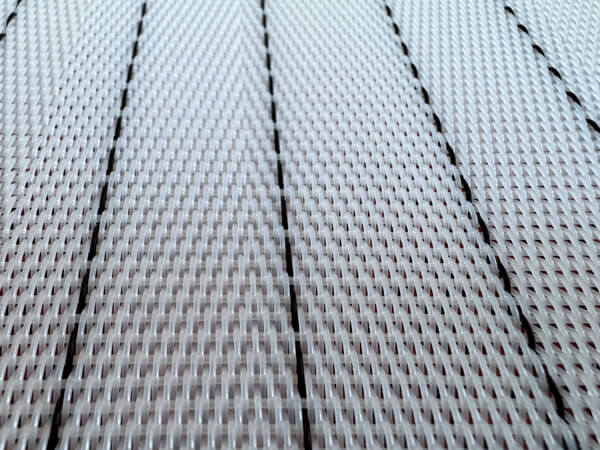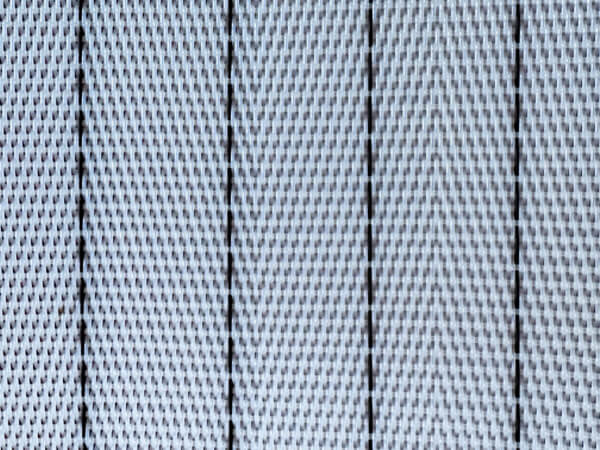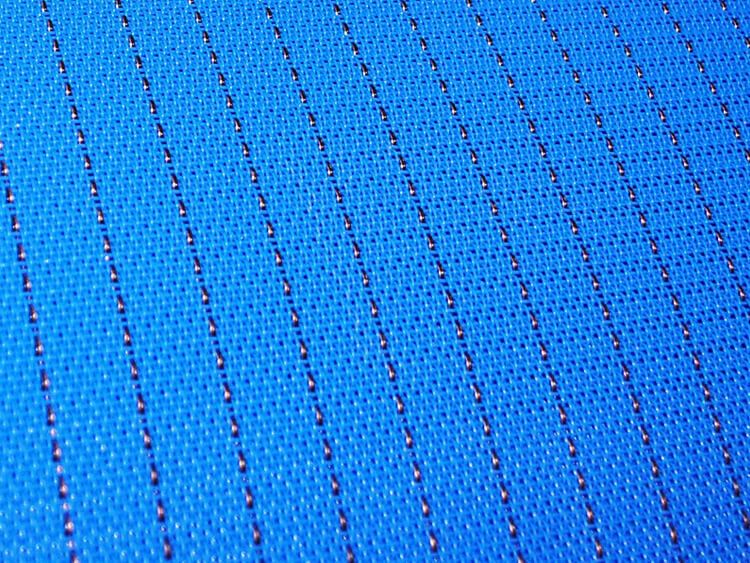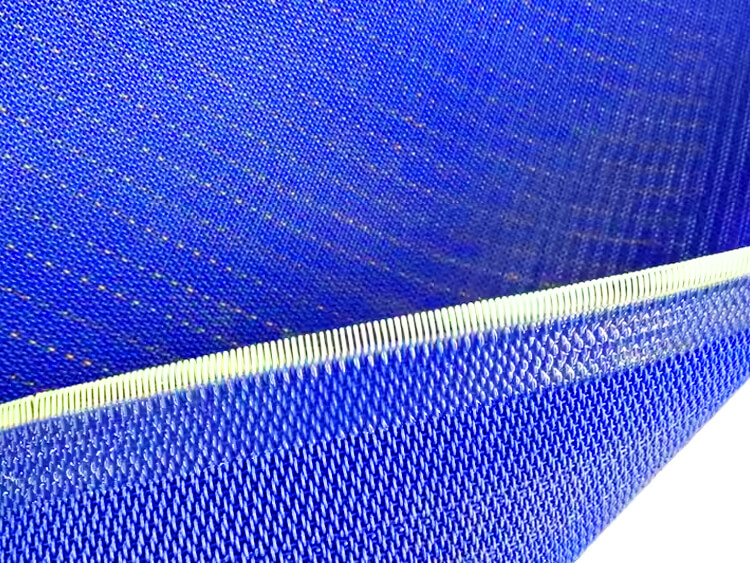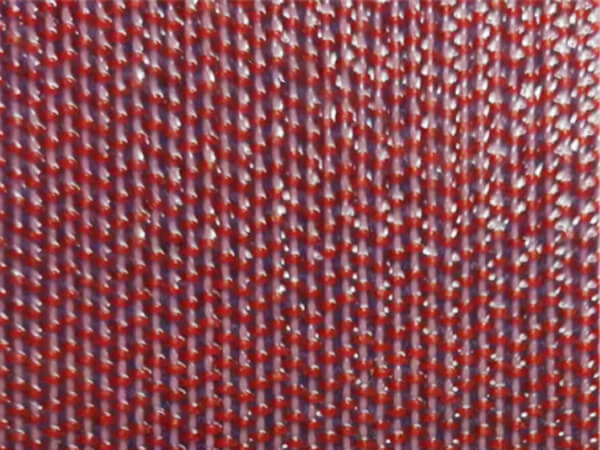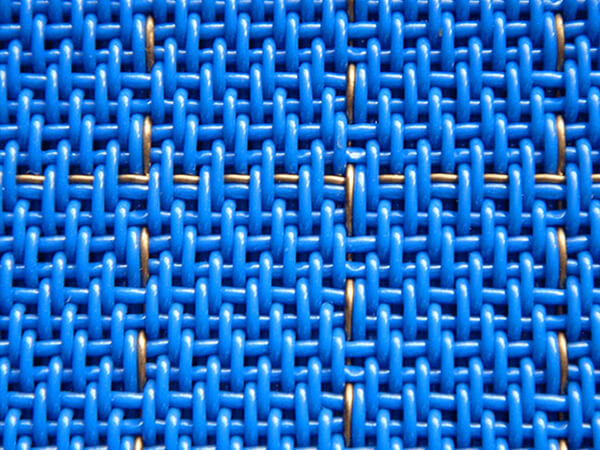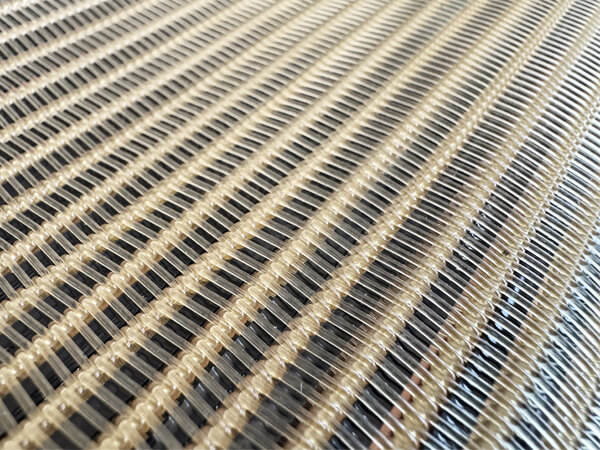
PFM SCREEN's Antistatic Polyester Dryer Mesh Belts are engineered for safe, energy-efficient low-temperature drying in wood panel, pellet, biomass, and sludge industries. Woven from high-viscosity PET monofilament with integrated copper or carbon conductive thread, these ATEX-compliant belts permanently dissipate electrostatic charge — a critical safety feature when drying combustible fine particles such as sawdust, wood shavings, and biomass.
Description
PFM SCREEN's Antistatic Polyester Dryer Mesh Belts are precision-woven for low-temperature continuous belt dryers in wood processing, biomass energy, pellet manufacturing, and sludge treatment plants. Made from high-viscosity PET monofilament with permanently integrated copper wire, carbon fiber thread, or dual copper-carbon conductive thread, the belts continuously dissipate electrostatic charge — eliminating the spark ignition risk in ATEX-classified environments where combustible fine particles such as sawdust, wood shavings, and dried biomass are present.
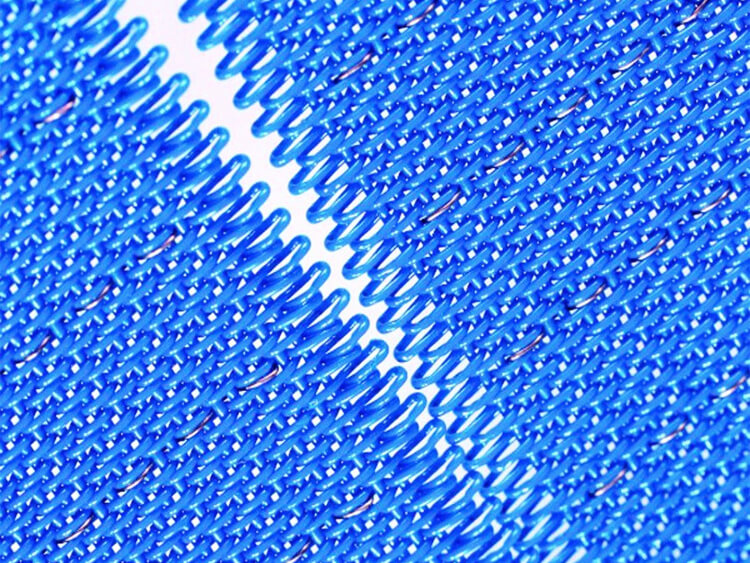
The special weave structure delivers a high open area for maximum airflow and rapid moisture evaporation, while the fine mesh captures fine particles and keeps dust emissions within regulatory limits. PFM SCREEN supplies these belts in widths up to 8 meters and lengths up to 200 meters, with three seam types — double-pin, spiral, and clipper — to match any dryer geometry, tension class, and maintenance protocol. Compatible with all major low-temperature belt dryer platforms including Büttner, STELA, Swiss Combi, ANDRITZ, and Valmet.
130°C Max Operating Temp. | 6,800+ Air Permeability m³/m²·h | 8 m Max Belt Width | ATEX Group II Cat 3G/3D |
Three model variants cover the full range of dryer types and ATEX zone classifications. Select the appropriate conductive thread based on your dryer environment, zone class, and material:
K — Copper Wire ● Lowest surface resistance — fastest charge dissipation ● Standard choice for sawdust and wood chip dryers ● Excellent corrosion resistance in humid dryer air ● Used in Büttner (Siempelkamp) and STELA installations | T — Carbon Fiber Thread ● No metal contamination risk — non-sparking on abrasion ● Preferred for food-adjacent and pharmaceutical drying ● Fully compliant with ATEX Zone 22 (combustible dust) ● Standard in ANDRITZ BDS and Valmet belt dryer systems | M — Copper + Carbon (Dual) ● Dual conductive paths — highest safety margin ● Meets ATEX Group II Cat 3G and 3D simultaneously ● Recommended for sludge and multi-fuel biomass dryers ● Preferred by EPC contractors for new-build dryer projects |
Three seam types are available to match your dryer geometry, belt tension class, and maintenance schedule. The seam is factory-installed to precise dimensional tolerances before dispatch.
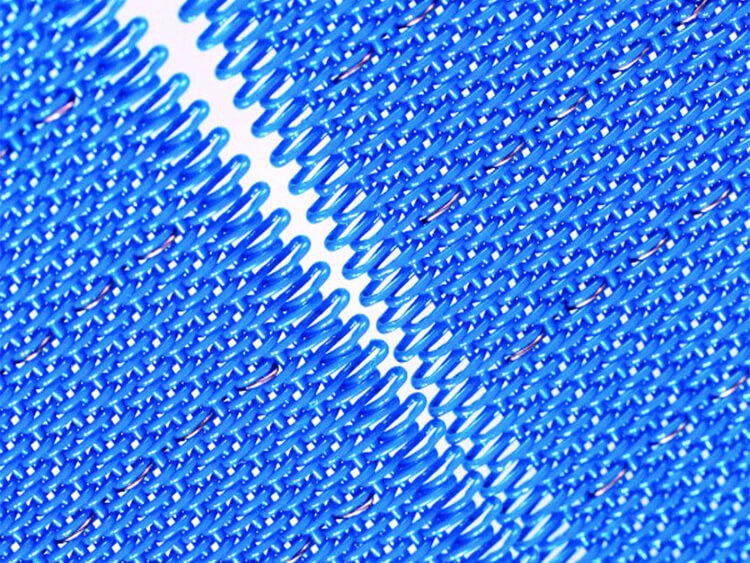 Double Pin Seam Clean profile, high tension load capacity. Preferred for wide and long dryer belts with high warp tension. | 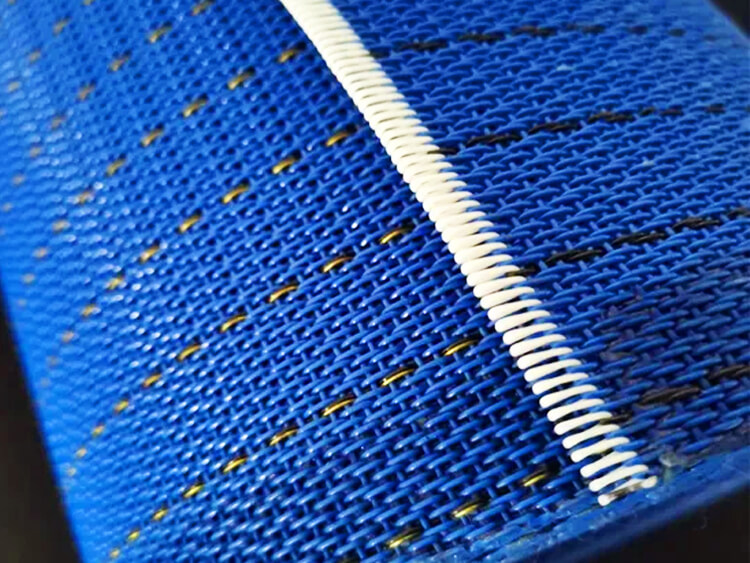 Spiral Seam Flexible, uniform seam strength along the full belt width. Compatible with Swiss Combi, Valmet, and ANDRITZ BDS dryers. | 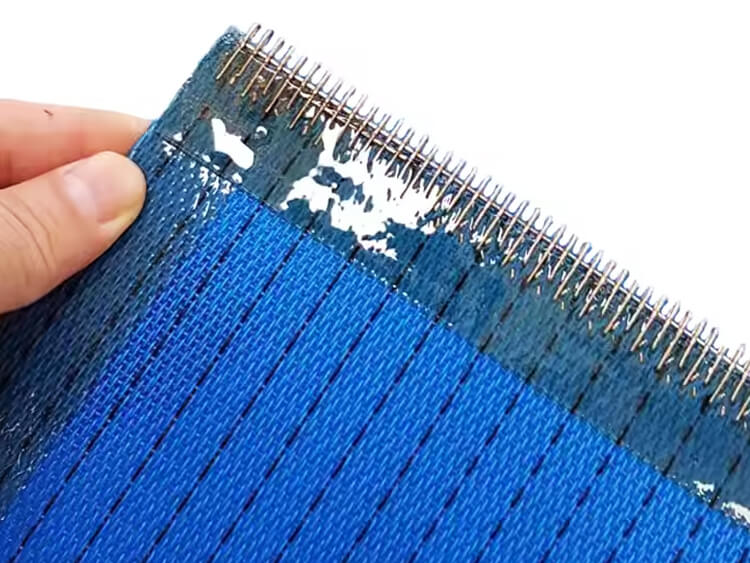 Clipper Seam Field-installable metal fastener. Enables rapid in-place replacement without removing the belt from the dryer frame. |
Get a Custom Antistatic Dryer Belt Quote Within 24 Hours Share your dryer brand, belt width, seam type, and conductive thread preference — PFM SCREEN responds with full specification and pricing within one business day. WhatsApp: +86 153 6967 9157Email: polyestermesh@pfmscreen.com |
Feature
Static electricity ignites combustible dust whenever fine, dry particles are in suspension — a condition present in every wood chip, sawdust, or biomass belt dryer. PFM SCREEN's antistatic dryer belts address this at the fabric level, not with a surface treatment:
01 Woven-In, Not Coated Copper or carbon thread is structurally integrated into the weave — it does not wash out, abrade, or degrade with heat and pressure cycling over the belt's full service life | 02 ATEX Group II Cat 3G/3D Fulfills ATEX requirements for equipment Group II, Categories 3G (flammable gas/vapor zones) and 3D (combustible dust zones) — mandatory for wood and biomass dryer installations in EU and many export markets | 03 Continuous Grounding Path Conductive warp threads run the full belt length, maintaining a continuous discharge path to dryer frame grounding at all belt speeds, tensions, and humidity levels | 04 Three Thread Variants Copper (K), carbon fiber (T), or dual copper-carbon (M) — each certified to the same ATEX standard with different conductivity and metal-content profiles to suit your application |
Fiber and Weave Construction ● High-viscosity PET monofilament — superior tensile strength vs standard polyester ● Special weave structure with controlled mesh aperture: maximum air permeability combined with reliable particle filtration ● Warp tensile strength: 2,000 N/cm — withstands full dryer drive tension without elongation ● Weft tensile strength: 900 N/cm — excellent cross-direction form stability across full belt width | Chemical and Environmental Resistance ● Acid-resistant and alkali-resistant — compatible with standard belt washing chemicals ● Wear-resistant monofilament surface resists abrasion from wood chips and biomass particles ● Dimensional stability maintained through full temperature cycling from ambient to 130°C operating temperature ● No delamination, no fiber shedding, no contamination of dried product during normal operation |
Thermal Performance and Energy Efficiency ● Max continuous operating temperature: 130°C — covers all standard low-temperature belt dryer platforms ● Low-temperature drying preserves wood lignin content and reduces VOC emissions vs drum dryer technology ● Prevents fine-fiber scorching that causes color defects in pellet and MDF products ● Compatible with waste heat sources: hot water (50–120°C), low-pressure steam, heat pump exhaust | Air Permeability and Dust Control ● Air permeability: 6,800–7,678 m³/m²·h (model-dependent) — the highest class in this belt category ● Fine mesh filtering captures particles and minimizes carryover of fines into exhaust air treatment systems ● Contributes to compliance with EU dust emission limits for biomass dryer installations ● Reduces load on downstream baghouse filters and cyclones — lower maintenance cost system-wide |
Standard Supply Dimensions ● Width: up to 8,000 mm ● Length: up to 200,000 mm (200 m) ● Seam: Double Pin / Spiral / Clipper (factory-installed) ● Conductive thread: Copper (K) / Carbon (T) / Dual (M) ● Standard models: 14804K, 14804T, 14804M, L201005T | Cleaning and Maintenance ● Smooth monofilament surface releases dried particles easily — low residue build-up ● Compatible with rotary brush cleaning systems and high-pressure belt washers (standard on Büttner and STELA dryers) ● Open mesh allows cleaning medium to pass freely through belt body ● Regular inspection of seam and conductive thread continuity recommended at belt change intervals |
Need an ATEX-Compliant Dryer Belt Replacement? PFM SCREEN Can Cross-Reference. Send us your existing belt model number, dryer brand, and belt dimensions — we'll confirm compatibility and quote within 24 hours. WhatsApp: +86 153 6967 9157Email: polyestermesh@pfmscreen.com |
Application
PFM SCREEN's antistatic dryer mesh belts are the standard-specified conveying medium in low-temperature continuous belt dryers across the wood processing, biomass energy, pellet manufacturing, agriculture, and industrial sludge treatment sectors. The belts handle a wide range of free-flowing granular or fibrous materials in any dryer where ATEX zone classification applies.
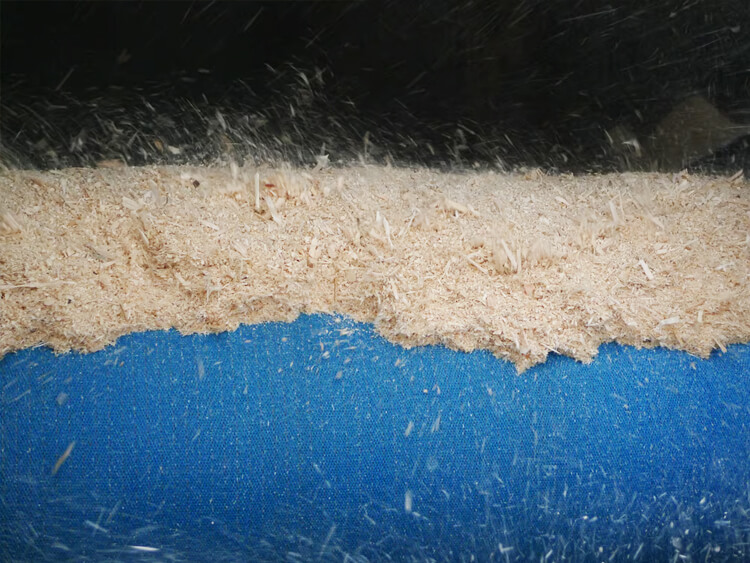 Wood Panel and Sawdust Drying Drying wood shavings, chips, and sawdust for particle board (PB), MDF, OSB, and HDF production. Low temperature preserves lignin content and limits VOC emissions compared to drum dryers. | 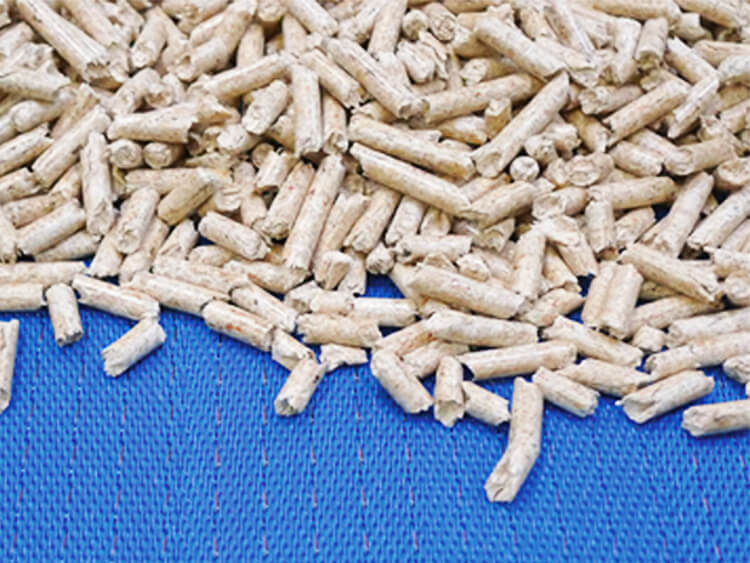 Biomass and Pellet Drying Pre-drying bark, forest residues, straw, and agricultural waste for pelletizing, combustion, gasification, or pyrolysis. Reduces moisture to target levels for fuel efficiency and pellet durability. | 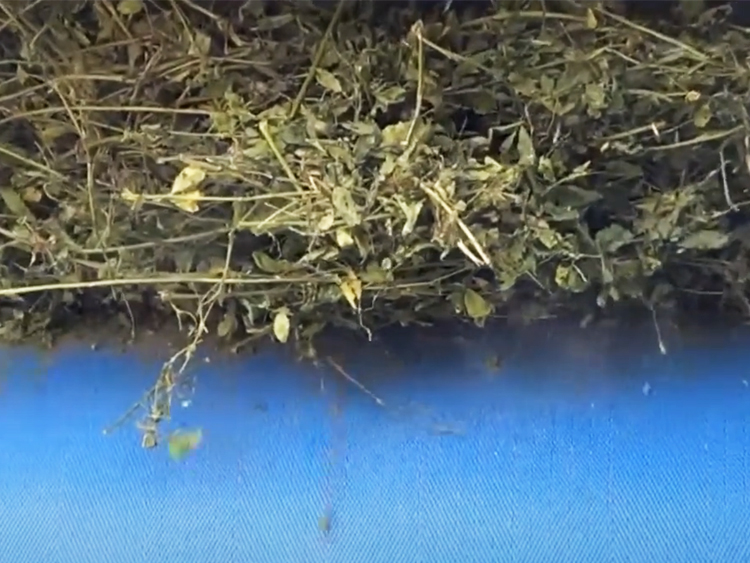 Grass, Alfalfa and Feed Drying Gentle low-temperature drying of grass, alfalfa (lucerne), and hay for animal feed pellet production — preserves protein content and nutritional value that high-temperature drum dryers destroy. |
Sugar Industry Drying sugar beet pulp and bagasse for use as animal feed, biogas feedstock, or solid fuel co-firing. Belt dryers are replacing energy-intensive rotary drum dryers for these heat-sensitive wet byproducts. | Industrial and Municipal Sludge Drying wastewater treatment sludge for volume reduction prior to disposal or use as biofuel. Dried sludge forms combustible dust — ATEX-compliant dual conductive thread (M model) is required for these installations. | Renewable Fuels and SAF Pre-Treatment Pre-drying feedstock for sustainable aviation fuel (SAF), bio-oil, and biochar via HTL, pyrolysis, and gasification. ATEX certification is a contractual requirement on virtually all such installations under EU standards. |
PFM SCREEN antistatic dryer mesh belts meet the same dimensional and performance specification as OEM belts supplied with major low-temperature belt dryer platforms. Share your dryer brand and belt dimensions for exact cross-reference:
| Dryer OEM | Dryer Series | Typical Material | Recommended Belt Model |
|---|---|---|---|
| Büttner / Siempelkamp | Belt Dryer (Swiss Combi technology) | Wood shavings, chips, particle board | 14804K / 14804M |
| STELA Laxhuber | BT / BTL Low-Temperature Dryer | Biomass, sawdust, renewable fuels | 14804K / L201005T |
| Swiss Combi (W. Kunz dryTec) | WKD Belt Dryer | Biomass, pellet pre-drying, sludge | 14804K / 14804M |
| ANDRITZ | BDS Belt Drying System | Biomass, sludge, RDF / MSW | 14804M / L201005T |
| Valmet | Belt Dryer (herringbone pattern) | Wood chips, bark, sawdust, bagasse | 14804K / 14804T |
| Imtech / Custom OEM | Low-temperature belt dryer | Industrial sludge, digestate | Custom per dryer drawing |
* Compatibility based on standard low-temperature dryer belt specifications. Contact PFM SCREEN with your dryer serial number or existing belt dimensions for verified cross-reference and quotation.
Need a Replacement Belt for Your Dryer? Contact PFM SCREEN Now Share your dryer brand, belt width, seam type, and conductive thread requirement — PFM SCREEN will confirm compatibility and quote within 24 hours. WhatsApp: +86 153 6967 9157Email: polyestermesh@pfmscreen.com |
Specifications
Max Operating Temperature 130°C | Max Belt Width 8,000 mm | Max Belt Length 200,000 mm | Warp Tensile Strength 2,000 N/cm |
| Model | Wire Dia. Warp (mm) | Wire Dia. Weft (mm) | Density Warp (wire/cm) | Density Weft (wire/cm) | Tensile Warp (N/cm) | Tensile Weft (N/cm) | Conductive Thread | Air Permeability (m³/m²·h) |
|---|---|---|---|---|---|---|---|---|
| 14804K | 0.65 | 0.80 | 14.8 | 7.2 | 2,000 | 900 | Copper | 6,800 |
| 14804T | 0.65 | 0.80 | 14.8 | 7.2 | 2,000 | 900 | Carbon Fiber | 6,800 |
| 14804M | 0.65 | 0.80 | 14.8 | 7.2 | 2,000 | 900 | Copper + Carbon | 6,800 |
| L201005T | 0.65 / 0.35 | 1.00 | 20.6 | 5.1 | 2,000 | 900 | Carbon Fiber | 7,678 |
* Custom mesh configurations, widths, lengths, and seam types available on request. Model suffix K = copper conductive thread; T = carbon fiber thread; M = dual copper + carbon thread. All specifications subject to manufacturing tolerances. Contact PFM SCREEN for custom model design drawings.
Q1: What does ATEX-compliant mean for a dryer mesh belt, and why is it required? ATEX is the European Union directive that governs equipment and protective systems used in potentially explosive atmospheres. In low-temperature wood and biomass dryers, dried fine particles — sawdust, wood dust, biomass fines — form a combustible dust cloud (Zone 22 under ATEX) that can ignite from an electrostatic spark. An ATEX-compliant dryer belt has permanently integrated conductive thread (copper or carbon) that dissipates static charge continuously to the dryer's grounded frame, eliminating the ignition source. PFM SCREEN's antistatic dryer belts meet ATEX Group II, Categories 3G (gas/vapor) and 3D (dust) — the classification required for most wood panel and pellet dryer installations in Europe and many export markets. |
Q2: What is the difference between copper (K), carbon (T), and dual (M) conductive thread? Copper thread (K suffix) provides the lowest surface resistance and fastest charge dissipation — it is the standard choice for sawdust, wood chip, and particle board dryers where metal contamination is not a concern. Carbon fiber thread (T suffix) is non-metallic, lightweight, and suitable where metal-free belts are required (food-adjacent drying, pharmaceutical, or applications with metal detection systems). Dual copper-carbon thread (M suffix) provides redundant conductive paths, meeting ATEX 3G and 3D simultaneously, and is specified for sludge dryers, multi-fuel biomass plants, and new-build projects where engineering contractors require the highest safety margin. All three variants are woven permanently into the belt structure — not surface-applied — so conductivity is maintained for the belt's full service life. |
Q3: Can PFM SCREEN supply a replacement belt for my Büttner, STELA, Swiss Combi, or ANDRITZ dryer? Yes. PFM SCREEN's antistatic dryer mesh belts are engineered to the same dimensional and performance specification as OEM belts used in all major low-temperature belt dryer platforms including Büttner (now Siempelkamp Energy and Drying Solutions), STELA Laxhuber (BT/BTL series), Swiss Combi (WKD), ANDRITZ BDS, and Valmet belt dryers. To confirm exact compatibility, send us your dryer brand, dryer model, existing belt dimensions (width, circumference, seam type), and conductive thread type. PFM SCREEN will cross-reference and provide a formal quotation within 24 hours. |
Q4: Which seam type is best for my dryer — double pin, spiral, or clipper? Double pin seam offers a clean belt profile and the highest warp tension load capacity — recommended for wide, long belts (above 4 m width) in high-tension dryer drives. Spiral seam delivers uniform seam strength across the full belt width with good flexibility — specified in Swiss Combi, Valmet, and ANDRITZ BDS dryers. Clipper seam uses a metal fastener that can be installed in the field without removing the belt from the dryer — best for situations where rapid in-place replacement is required. The correct choice depends on your dryer geometry, belt tension rating, and maintenance protocol. PFM SCREEN can advise based on your dryer brand and existing belt specification. |
Q5: Why does a belt dryer outperform a drum dryer for wood chip and biomass drying? Belt dryers operate at temperatures up to 130°C using low-grade heat sources such as waste hot water (50–120°C) or low-pressure steam — heat that a drum dryer cannot efficiently use. The gentle airflow-through-mesh drying principle preserves wood lignin content, prevents fine-particle scorching that causes color defects in particle board and pellets, and reduces VOC emissions significantly compared to drum dryers operating at 300–600°C. The antistatic mesh belt is the core enabling component of this process — its high open area (6,800+ m³/m²·h air permeability) allows thorough airflow while the fine mesh filters dust and limits particulate emissions. |
Q6: What is the maximum width and length PFM SCREEN can supply for a single dryer belt? PFM SCREEN manufactures antistatic dryer mesh belts up to 8,000 mm (8 meters) wide and up to 200,000 mm (200 meters) long as a standard supply range — matching the specifications of all current major low-temperature belt dryer platforms. For dryer systems outside this range, or for custom mesh configurations, contact PFM SCREEN directly with your dryer drawing or existing belt dimensions to discuss feasibility and lead time. |
Q7: How do I clean and maintain an antistatic dryer mesh belt? Antistatic dryer mesh belts are designed for the cleaning systems integrated into most low-temperature belt dryer platforms. Standard cleaning methods include rotary brush cleaning systems mounted inside the dryer return path, and high-pressure water spray washing systems. The smooth PET monofilament surface releases dried particles with minimal residue. Avoid harsh solvents incompatible with polyester fiber. Periodically inspect the seam for integrity and verify conductive thread continuity at grounding contact points — critical for maintaining ATEX compliance throughout the belt's service life. Most major dryer manufacturers (Büttner, STELA, Swiss Combi) specify belt change intervals based on operating hours and visual inspection criteria. |
Q8: What is the lead time and minimum order quantity for antistatic dryer mesh belts? PFM SCREEN accepts orders from a single replacement belt to full volume production runs — there is no fixed minimum order quantity. Standard lead time for a custom-dimensioned antistatic dryer mesh belt is typically 3 to 5 weeks after order confirmation and drawing approval, depending on belt size, seam type, and production scheduling. Rush replacement orders can be accommodated in some cases. Contact PFM SCREEN via WhatsApp (+86 153 6967 9157) or email (polyestermesh@pfmscreen.com) with your belt specifications for a formal quotation and confirmed lead time within 24 hours. |
Ready to Order? Get Your Custom Quote Within 24 Hours Send us your belt width, model, seam type, conductive thread variant, quantity, and dryer brand — PFM SCREEN will respond with a full specification and pricing within one business day. WhatsApp: +86 153 6967 9157Email: polyestermesh@pfmscreen.com |