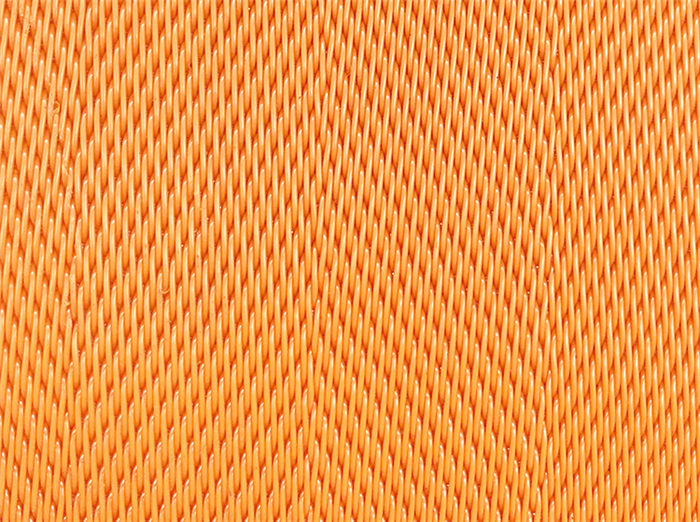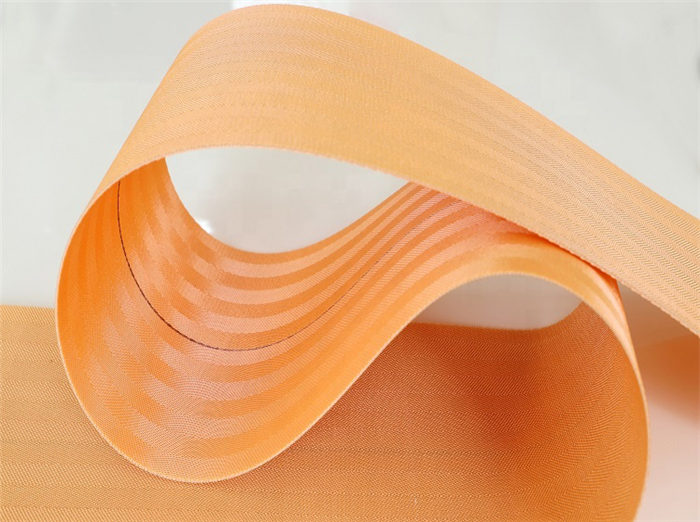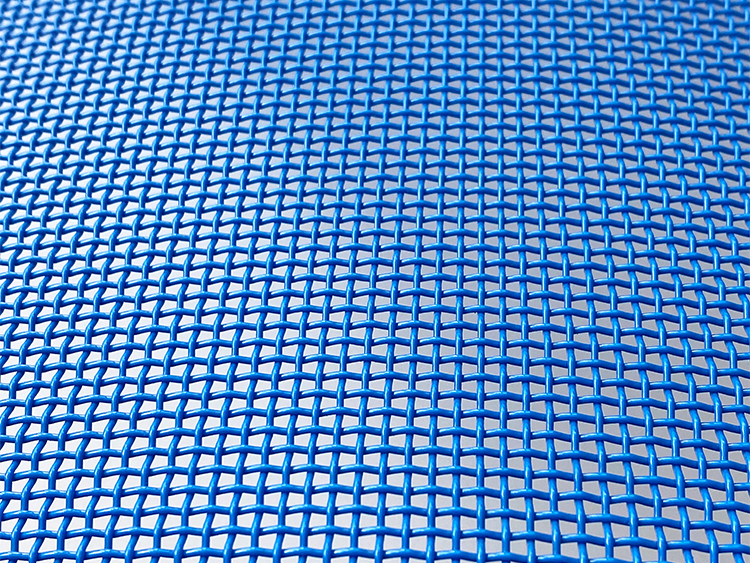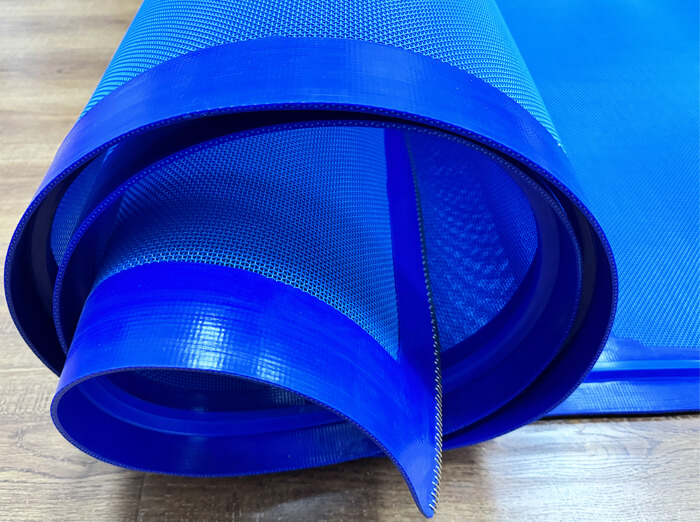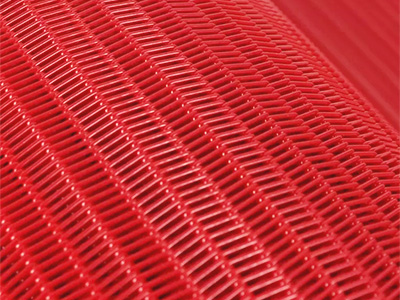
PFM Screen polyester vacuum filter belts — also called FGD desulfurization mesh belts — are double-layer woven fabrics for continuous solid-liquid separation in horizontal vacuum belt filter (HBF) systems. Woven from PET flat monofilament warp and polyester multifilament weft, they deliver 2–100 μm filtration accuracy, 2200 N/cm warp strength, and >1.6 mm belt thickness for power plant FGD gypsum dewatering, sludge treatment, mine tailings, and industrial process filtration.
Description
PFM Screen's Polyester Vacuum Filter Belts — also supplied as FGD filter belts and desulfurization mesh belts — are double-layer woven fabrics precision-engineered for continuous solid-liquid separation in horizontal vacuum belt filter (HBF) systems. Woven from high-tenacity PET flat monofilament warp yarns and precision polyester multifilament weft yarns, these belts achieve filtration accuracies from 2 to 100 μm — capturing fine gypsum particles, sludge solids, and mine tailings — while delivering the acid-alkali resistance, mechanical strength, and dimensional stability demanded by 24/7 power plant FGD, sludge dewatering, and industrial process filtration operations.
2–100 μm Filtration Accuracy Three standard models cover coarse (50–80 μm), medium (20–50 μm), and fine (2–10 μm) FGD gypsum and sludge particle separation | 2200 N/cm Warp Strength High tensile strength withstands continuous vacuum suction, mechanical tension, and belt tracking forces in HBF systems | >1.6 mm Belt Thickness Robust belt body extends service life and resists wear under abrasive gypsum slurry and mine tailings conditions | 1600 m³/m²h Air Permeability Peak permeability (Model 27508) enables rapid vacuum-assisted drainage and minimal residual moisture in FGD gypsum filter cake |
The performance of a vacuum filter belt in FGD gypsum dewatering is determined by its yarn construction. PFM Screen's vacuum filter belts combine two yarn types in a deliberately engineered hybrid system that balances two competing requirements: clean cake discharge on the belt surface and fine particle retention within the belt structure.
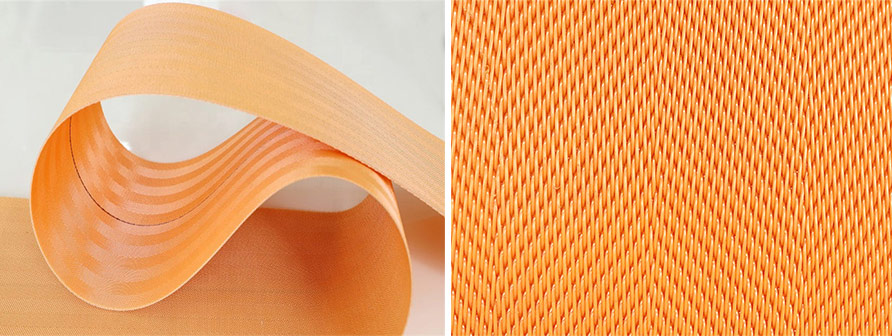 PET Flat Monofilament Warp ● Flat cross-section (0.5 × 0.32 mm) — delivers smooth cake-release surface; gypsum peels cleanly without bridging ● High tensile stiffness — maintains belt flatness under vacuum suction and mechanical tension ● Chemically inert PET — excellent resistance to SO₂-bearing slurry and the cleaning chemicals used in FGD wash systems ● Easy spray cleaning — smooth monofilament surface releases gypsum fines without abrasive treatment | 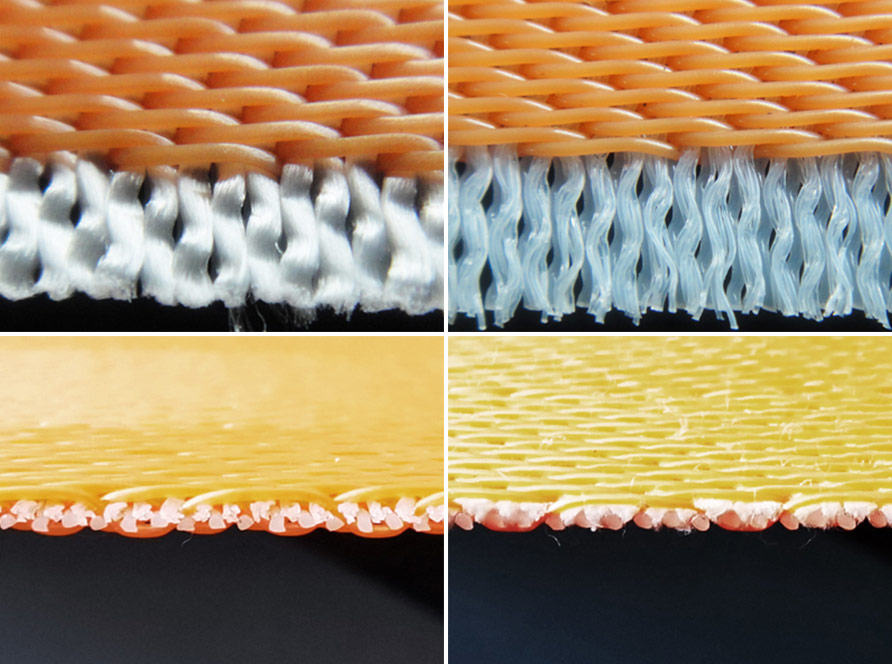 Polyester Multifilament Weft ● Multi-strand construction (600D or 6×0.18 mm) — dense inter-yarn filtration zone captures 2–100 μm gypsum and sludge particles ● Provides cross-direction dimensional stability under lateral tracking forces ● Combined monofilament + multifilament weft structure balances filtration fineness with through-belt drainage flow rate ● Three weft variants: weft density 21–25 yarns/cm selects filtration accuracy from 2 μm to 80 μm |
PFM Screen supplies vacuum filter belts in two base materials — PET (polyester) and PP (polypropylene). The right choice depends on your process chemistry, operating temperature, and gypsum purity requirements:
PET Polyester — Standard for FGD Gypsum Dewatering ● Operating temperature: up to 130°C — handles hot FGD slurry in standard coal-fired power plant environments ● High tensile strength — 2200 N/cm warp strength for continuous HBF operation under vacuum and mechanical load ● Good acid and alkali resistance — withstands SO₂-bearing slurry and FGD cleaning agents ● Preferred for: power plant FGD, sludge dewatering, mine tailings, coal slurry, alumina filtration ● All three standard models (27508 / 27508-1 / 27508-2) supplied in PET as standard | PP Polypropylene — For High-Purity Gypsum & High-Alkali Processes ● Superior alkali resistance — preferred when process fluids have high pH or contain fluorosilicic acid or aggressive alkalis ● Operating temperature: up to 90°C — suitable for cooler-temperature HBF applications ● Slightly lower tensile strength than PET — specify for medium-tension belt filter applications ● Preferred for: wallboard-grade gypsum production, phosphoric acid filtration, high-alkali chemical HBF ● Available on request — contact PFM Screen with your process chemistry and temperature specifications |
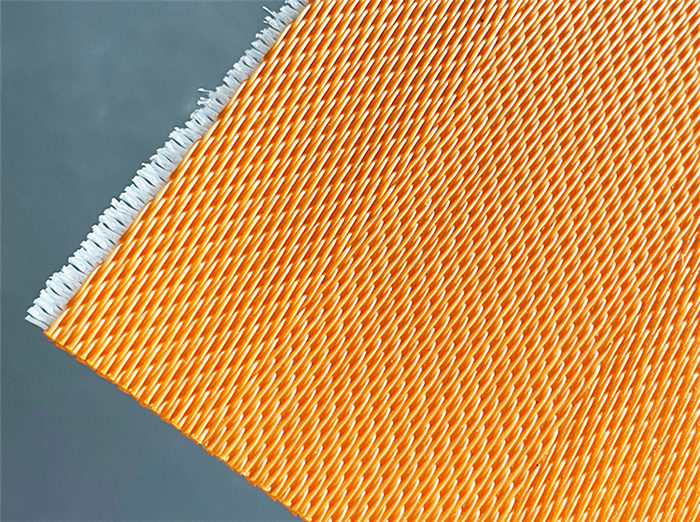 Custom Belt Width Up to 4,000 mm+ Matched to your HBF filter deck width — any width and circumference available on request | Specify to Your HBF System ● Belt width: matched to HBF filter deck — standard up to 4,000 mm+ ● Belt length (circumference): any — precision-measured to your equipment ● Joining: 316L SS flat clipper seam with apron cover cloth (standard for FGD) ● Filtration model: 27508, 27508-1, or 27508-2 to match your target particle size ● Material: PET (standard) or PP (alkali-resistant / high-purity gypsum) on request ● Compatible with all major HBF equipment brands — FLSmidth, Andritz, Outotec, and more |
Get a Custom Vacuum Filter Belt Quote Within 24 Hours Share your HBF equipment model, belt width, target filtration accuracy, and quantity — PFM Screen will confirm material, model, and pricing within one business day. WhatsApp: +86 153 6967 9157Email: polyestermesh@pfmscreen.com |
Feature
01 PET Flat Monofilament Warp Flat cross-section (0.5 × 0.32 mm) delivers smooth cake-release surface, 2200 N/cm tensile strength, and resistance to the acidic SO₂ slurry environment in FGD systems | 02 Hybrid Multifilament Weft 600D or 6×0.18 mm multifilament weft creates dense filtration zones that capture 2–100 μm particles while maintaining drainage flow through the belt body | 03 Double-Layer Weave Structure Double-layer interlaced construction provides a smooth upper filtration surface and an open lower drainage face — optimized for vacuum-assisted belt filter operation | 04 Post-Weave Thermal Setting Heat setting after weaving eliminates dimensional instability, locks aperture geometry, and produces a consistently flat, smooth surface from the first operational cycle |
Warp Yarn Specification All three standard models use PET flat monofilament warp in 0.5 × 0.32 mm cross-section at 28.5 yarns/cm warp density. The flat profile provides a smooth, non-stick top surface for clean gypsum cake discharge, while the high warp density delivers consistent contact with the vacuum pan rubber seal — maintaining suction integrity across the full filter area. | Weft Yarn & Filtration Selection Three weft configurations are available: Model 27508 uses 6×0.18 mm multifilament + 0.5 mm monofilament weft at 25 yarns/cm for coarse FGD dewatering (50–80 μm). Model 27508-1 uses 600D multifilament + 0.5 mm monofilament at 21 yarns/cm for medium filtration (20–50 μm). Model 27508-2 uses 600D + 0.5 mm at 25 yarns/cm for fine particle capture to 2–10 μm. Weft density is engineered to balance filtration fineness with air permeability and drainage rate. |
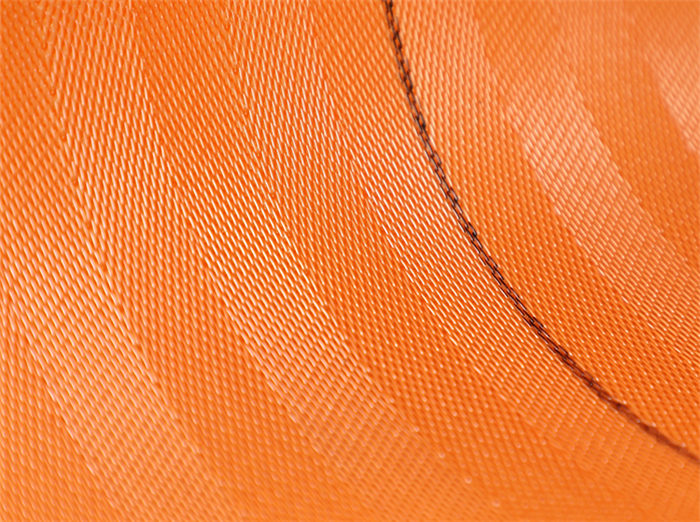
316L Stainless Steel Clipper Seam Industrial-grade 316L stainless steel flat clipper seam with protective cover cloth apron — the standard joining method for FGD vacuum belt filters. The 316L grade resists the strong acid and alkali cleaning agents used in FGD belt spray wash systems. The apron cover cloth prevents slurry from entering the clip zone and maintains vacuum seal continuity across the join, enabling quick field re-joining without specialized tooling. | Thermal Setting & Surface Finishing Each belt undergoes thermal heat setting after weaving to stabilize fabric dimension and flatten the surface. This process locks the aperture geometry, pre-shrinks the belt body to prevent stretch during run-in, and ensures the belt seats flat on the vacuum pan from the first operational cycle — reducing commissioning downtime and improving initial filtration efficiency. The finished belt surface is smooth, stable, and easy to clean with standard spray bar systems. |
| Joint Type | Description | Best Application | Joint Strength |
|---|---|---|---|
| 316L SS Clipper + Apron | Industrial-grade flat SS clip with cover cloth apron | Standard for FGD gypsum dewatering, sludge, mine tailings — most horizontal belt filter systems | 1000 N/cm |
| Round Hook / Hinge Clip (SS) | Round or hinge-type stainless steel mechanical clip | Higher-tension HBF applications; robust industrial process filtration | On request |
| Plastic Spiral / Clipper | Nylon or plastic spiral connecting thread or clip | High chloride or chemical environments where metal clips are unsuitable | On request |
| Finger Splice (Endless) | Seamless woven-together joint — no hardware | Pharmaceutical or food-grade filtration requiring no metal contact | On request |
2–100 μm Filtration Accuracy Three standard models cover the full range from standard FGD gypsum (50–80 μm) to fine chemical process filtration (2–10 μm) — select the model matched to your particle size distribution | 130°C Temperature Resistance (PET) PET belt withstands continuous operation up to 130°C — handles hot FGD gypsum slurry and high-temperature steam spray cleaning without belt deformation or dimensional change | 316L Stainless Steel Seam Grade 316L SS clipper seam resists concentrated acid and alkali cleaning agents — the correct specification for FGD gypsum dewatering environments with aggressive chemical cleaning cycles |
Clean Cake Discharge The smooth flat monofilament warp surface allows gypsum filter cake to peel cleanly at the belt return point — reducing cake residue buildup and minimizing cleaning downtime between filtration cycles | Wear & Abrasion Resistance High-strength PET monofilament and minimum 1.6 mm belt thickness provide extended service life even in abrasive mine tailings, coal slurry, and alumina filtration environments | Dimensional Stability Heat-set PET fabric maintains constant belt width and length under sustained vacuum tension — preventing tracking drift and ensuring consistent vacuum pan seal contact for maximum suction efficiency |
Application
PFM Screen's Polyester Vacuum Filter Belts are deployed across a wide range of industrial solid-liquid separation processes — wherever a horizontal vacuum belt filter (HBF), vacuum drum filter, or vacuum rubber belt filter is used for continuous dewatering, cake washing, or process filtration. The double-layer woven structure, smooth monofilament cake-discharge surface, and industrial 316L SS seam construction make these belts the standard choice for demanding environments from FGD coal-fired power plants to mine tailings disposal, municipal sludge treatment to fine chemical process filtration.
Power Plant FGD Gypsum Dewatering ● Limestone-gypsum wet FGD: primary dewatering stage after hydro-cyclone pre-thickening ● Cake washing to remove chloride ions and achieve commercial-grade gypsum purity ● Compatible with 100 MW to 1000 MW+ coal-fired power plant FGD systems ● Suitable for gypsum intended for wallboard, cement, and other building material recycling | Municipal & Industrial Sludge Dewatering ● Sewage sludge dewatering in municipal wastewater treatment plants (WWTPs) ● Industrial effluent sludge: steel mills, paper mills, petrochemical and refinery plants ● Power plant fly ash slurry and ash pond dewatering ● Mining process water sludge recovery and tailings pond pre-dewatering |
Mining & Metallurgical Process Filtration ● Mine tailings dewatering — copper, gold, phosphate, and iron ore processing concentrates ● Coal washing and slurry filtration in coal preparation plants ● Alumina (bauxite processing) filtration with horizontal vacuum belt filter systems ● Zinc, nickel, and ferrous metallurgy by-product dewatering | Chemical & Process Industry Filtration ● Phosphoric acid production: phosphogypsum filtration in HBF systems (PP belt preferred) ● Fine solids separation from acidic or alkaline chemical process streams ● Pulp and paper: pulp washing and fiber recovery on horizontal vacuum belt filters ● Salt, mineral, and pharmaceutical-grade fine filtration requiring precise accuracy control |
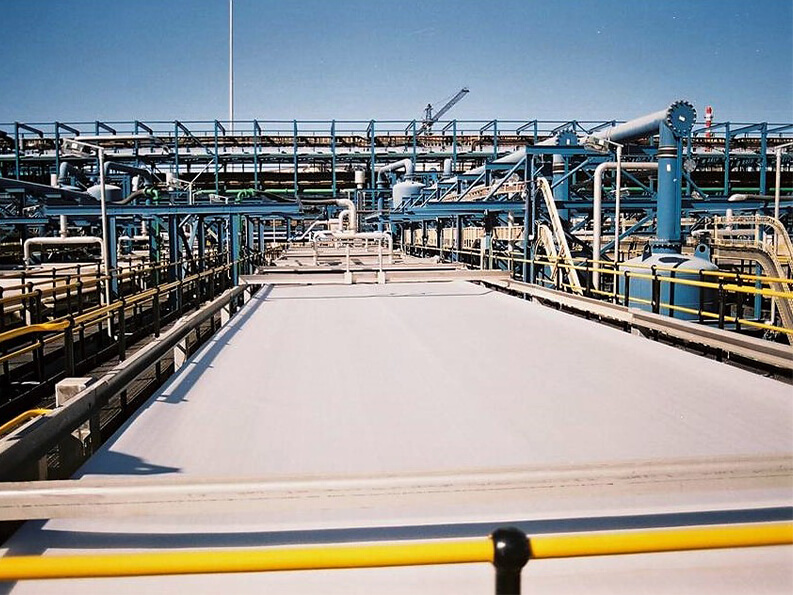 Power Plant FGD Gypsum Dewatering PFM Screen vacuum filter belts in limestone-gypsum wet FGD gypsum dewatering systems at coal-fired power stations | 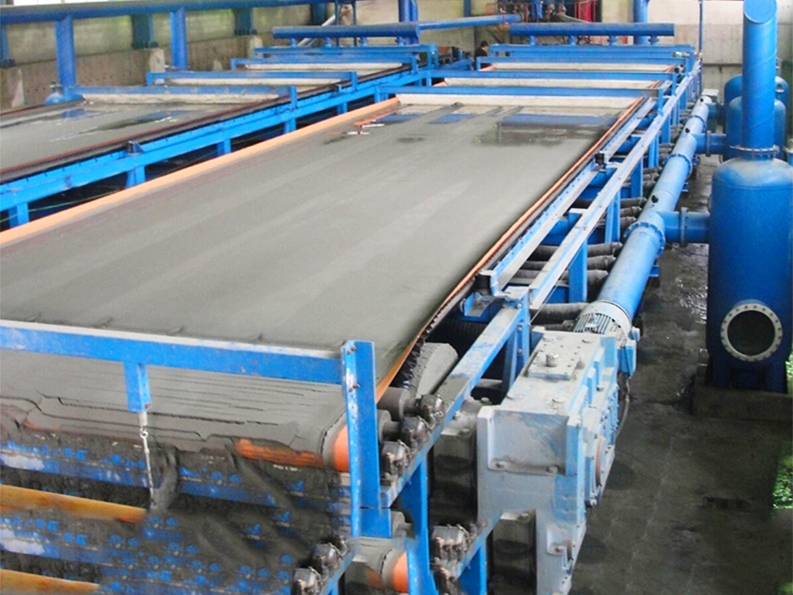 Horizontal Vacuum Belt Filter System PFM Screen vacuum filter belts matched to horizontal vacuum rubber belt filter equipment for continuous FGD gypsum and industrial filtration |
PFM Screen manufactures vacuum filter belts to the exact belt width, circumference, and joining specification of all major horizontal vacuum belt filter (HBF) brands. Provide your equipment model, belt width, and belt circumference for a precision-matched replacement or new installation belt:
| Equipment Manufacturer | Country | Primary Application | Typical Belt Width |
|---|---|---|---|
| FLSmidth | Denmark | FGD gypsum dewatering, minerals, alumina, phosphates | Up to 3,500 mm+ |
| Andritz | Austria | FGD, mine tailings, chemical process filtration, pulp | Up to 4,000 mm+ |
| BHS-Sonthofen | Germany | Chemical process, fine filtration, pharmaceutical | Custom widths |
| Outotec (Metso) | Finland | Mining concentrates, mine tailings, metallurgical filtration | Up to 3,000 mm+ |
| ThyssenKrupp Industrial | Germany | FGD gypsum, coal preparation, bulk mineral filtration | Up to 3,500 mm+ |
| Prayon Technologies | Belgium | Phosphoric acid, phosphogypsum, chemical HBF filtration | Custom widths |
| Ishigaki | Japan | Sludge dewatering, industrial filtration | Custom widths |
Specifications
PFM Screen's vacuum filter belts for horizontal vacuum belt filters are available in three standard models, each engineered for a different filtration accuracy range. All models use PET flat monofilament warp and a 316L stainless steel clipper seam as standard. PP (polypropylene) material, alternative joining types, and custom belt widths and lengths are available on request.
| Model | Warp Yarn | Weft Yarn | Density Warp/Weft (yarn/cm) | Strength Surface/Joint (N/cm) | Weight (kg/m²) | Thickness (mm) | Air Perm. (m³/m²h) | Filtration (μm) |
|---|---|---|---|---|---|---|---|---|
| 27508 | Flat yarn 0.5×0.32 | 6×0.18+0.5 | 28.5 / 25 | 2200 / 1000 | 1.2 | 1.95 | 1600 | 50–80 |
| 27508-1 | Flat yarn 0.5×0.32 | 600D+0.5 | 28.5 / 21 | 2200 / 1000 | 0.9 | 1.90 | 720 | 20–50 |
| 27508-2 | Flat yarn 0.5×0.32 | 600D+0.5 | 28.5 / 25 | 2200 / 1000 | 1.3 | 2.00 | 280 | 2–10 |
* Standard joining type: 316L stainless steel flat clipper seam with cover cloth apron. Density and Strength values shown as Warp / Weft and Surface / Joint respectively. PP (polypropylene) material available on request for high-alkali and phosphoric acid applications. Custom belt widths and lengths supplied to order.
Q1: What is the difference between vacuum filter belt models 27508, 27508-1, and 27508-2? The three models differ in weft yarn construction and density, which determines filtration accuracy and air permeability. Model 27508 uses a 6×0.18 mm multifilament + 0.5 mm monofilament weft at 25 yarns/cm — the coarsest filter (50–80 μm) with the highest air permeability (1600 m³/m²h), best for standard FGD gypsum dewatering where throughput and cake dryness are the primary goals. Model 27508-1 uses 600D multifilament + 0.5 mm monofilament weft at 21 yarns/cm for medium-fineness filtration (20–50 μm, 720 m³/m²h) — balanced for sludge dewatering and general industrial HBF. Model 27508-2 uses the same 600D + 0.5 mm yarn at higher weft density (25 yarns/cm) for fine filtration accuracy (2–10 μm, 280 m³/m²h) — suited for ultrafine chemical process filtration or applications requiring very low residual fines in the filtrate. All three models share the same warp specification and 2200 N/cm surface warp strength. |
Q2: Can PFM Screen supply vacuum filter belts compatible with FLSmidth, Andritz, or Outotec horizontal belt filter equipment? Yes. PFM Screen manufactures vacuum filter belts to the belt width, length (circumference), and joining specification of all major horizontal vacuum belt filter (HBF) manufacturers including FLSmidth, Andritz, BHS-Sonthofen, Outotec (Metso Outotec), ThyssenKrupp Industrial Solutions, Prayon Technologies, and Ishigaki. Provide your equipment manufacturer, model or drawing number, belt width, belt circumference (or belt length around the drive and idler pulleys), and target filtration accuracy — PFM Screen will supply a precisely matched replacement or new installation belt with the correct 316L SS clipper seam or alternative joining type as specified. |
Q3: What filtration accuracy does a vacuum filter belt need for FGD gypsum dewatering in a coal-fired power plant? In a standard limestone-gypsum wet FGD process — the most widely used type, deployed in approximately 90% of coal-fired power plants worldwide — gypsum crystals produced in the absorber are typically 30–100 μm in size. Model 27508 (50–80 μm filtration accuracy, highest air permeability at 1600 m³/m²h) is the standard recommendation for this application, delivering optimal drainage efficiency and low filter cake moisture. If your FGD system targets commercial-grade wallboard gypsum requiring low chloride and high purity, or if your gypsum particle size distribution is finer than typical, Model 27508-1 (20–50 μm) may be preferred for improved particle capture and cleaner filtrate. Contact PFM Screen with your gypsum particle size distribution (PSD), target moisture content, and belt filter type for a precise model recommendation. |
Q4: What is the standard joining method for FGD vacuum filter belts, and why is 316L stainless steel specified? The standard joining method is a 316L stainless steel flat clipper seam with a protective cover cloth apron. The 316L molybdenum-bearing grade provides superior corrosion resistance compared to standard 304 SS — essential in FGD environments where belt cleaning systems use dilute acid spray or alkaline wash chemicals to prevent gypsum scaling. The cover cloth apron bridges the clip zone, prevents gypsum slurry from entering and jamming the clip, and maintains vacuum seal continuity as the belt passes over the vacuum boxes. The clip seam also allows quick field re-joining if the belt requires repair during a planned or forced outage, without removing the full belt from the machine. Alternative joining types (round hook SS clips, hinge clips, plastic spiral) are available on request for specific installation requirements. |
Q5: Is a PP (polypropylene) vacuum filter belt available, and when should I choose PP over PET? Yes. PFM Screen supplies vacuum filter belts in PP (polypropylene) on request. PP offers superior alkali and chemical resistance compared to PET, making it the preferred material in three main scenarios: (1) phosphoric acid plant filtration, where fluorosilicic acid and other aggressive chemicals are present; (2) production of high-purity wallboard-grade gypsum, where even trace PET fiber contamination must be avoided; and (3) HBF applications with strongly alkaline process fluids or cleaning systems. The tradeoff: PP has a lower maximum operating temperature (approximately 90°C vs 130°C for PET) and slightly lower tensile strength. For standard FGD gypsum dewatering in coal-fired power plants, PET is recommended due to its superior mechanical strength and higher temperature tolerance. Share your process chemistry, operating temperature, and gypsum purity specification with PFM Screen for material selection guidance. |
Q6: How do I clean and maximize the service life of FGD vacuum filter belts? PFM Screen vacuum filter belts are designed for efficient spray cleaning using the integrated belt wash system of the HBF — typically one or two high-pressure water spray bars positioned on the belt return run (underside). The smooth flat monofilament warp surface releases gypsum cake cleanly at the discharge roll, and residual surface fines flush off readily with water spray. If gypsum scaling (blinding) occurs over time, dilute acid cleaning is effective and compatible with PET belts; observe equipment manufacturer guidelines on cleaning pressure and chemical concentration. To maximize service life: (1) maintain correct belt tension to prevent wrinkle formation and uneven wear; (2) verify that the belt runs flat and centered — misalignment causes premature edge wear; (3) inspect the clipper seam regularly for clip deformation or cover cloth fraying; (4) avoid dry running — gypsum slurry provides lubrication between the belt and the vacuum pan. Belt service life in FGD applications typically ranges from 2 to 5+ years depending on gypsum abrasivity, slurry temperature, and cleaning frequency. |
Q7: Can PFM Screen supply vacuum filter belts for non-standard or older HBF equipment where the OEM belt is no longer available? Yes. PFM Screen manufactures vacuum filter belts to any width and circumference required — from narrow pilot-scale units to full-size industrial HBF installations with belt widths exceeding 4,000 mm. For non-standard or older equipment where the original OEM belt is discontinued or difficult to source, PFM Screen can manufacture a precise replacement based on the original belt width, length, weave model, and joining type. Share the original belt dimensions, weave model number (if known), or a sample of the existing belt — PFM Screen will identify the matching specification and supply a dimensionally correct replacement. Custom belt colors (including the yellow color common in FGD applications) are also available. |
Q8: What is the minimum order quantity (MOQ) and lead time for vacuum filter belts? PFM Screen accepts orders from a single replacement belt to full production volumes — there is no fixed minimum order quantity for vacuum filter belts. Standard lead time for custom-size filter belts is typically 2 to 4 weeks from order confirmation and drawing approval, depending on belt dimensions and production scheduling. For urgent replacement orders — such as unplanned belt failures in power plant FGD systems — rush production may be accommodated in certain cases. Contact PFM Screen immediately via WhatsApp (+86 153 6967 9157) or email (polyestermesh@pfmscreen.com) for emergency scheduling. Formal quotation and material confirmation are provided within 24 hours of receiving your belt specifications, including width, circumference, weave model, and quantity. |
Ready to Order? Get Your Vacuum Filter Belt Quote Within 24 Hours Send us your HBF equipment model, belt width, belt circumference, target filtration accuracy, and quantity — PFM Screen will confirm the right model, material, and pricing within one business day. WhatsApp: +86 153 6967 9157Email: polyestermesh@pfmscreen.com |