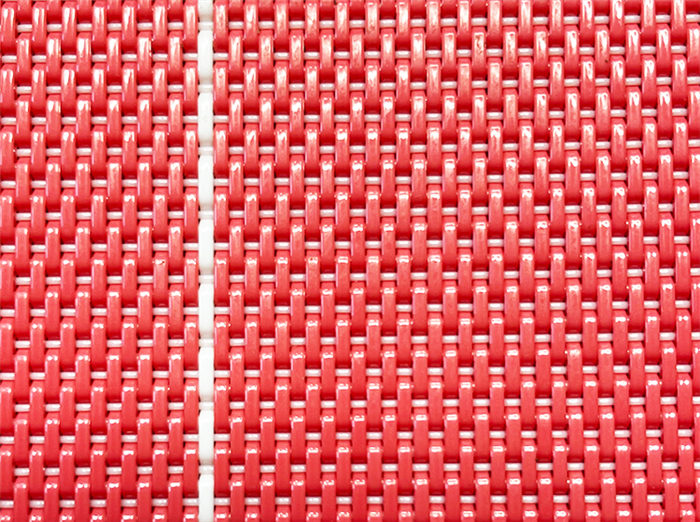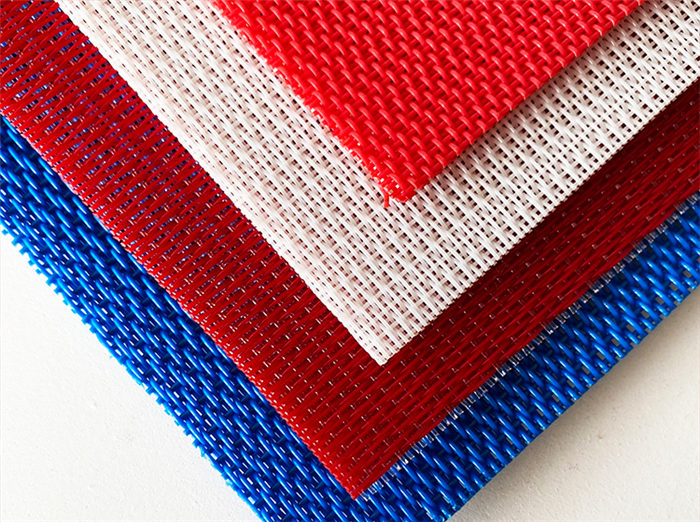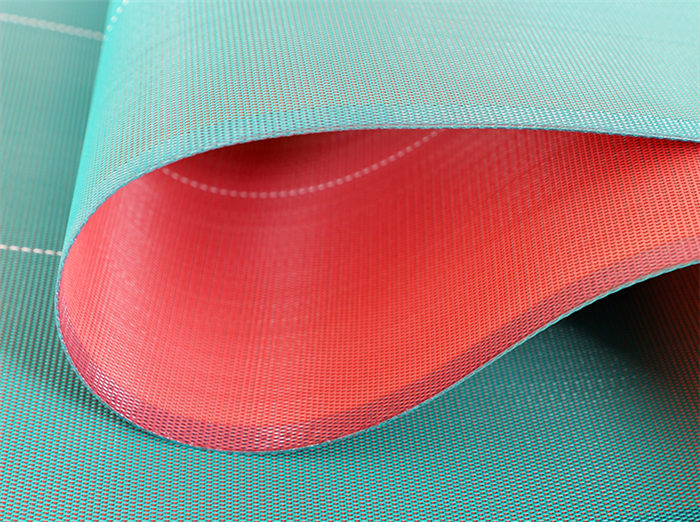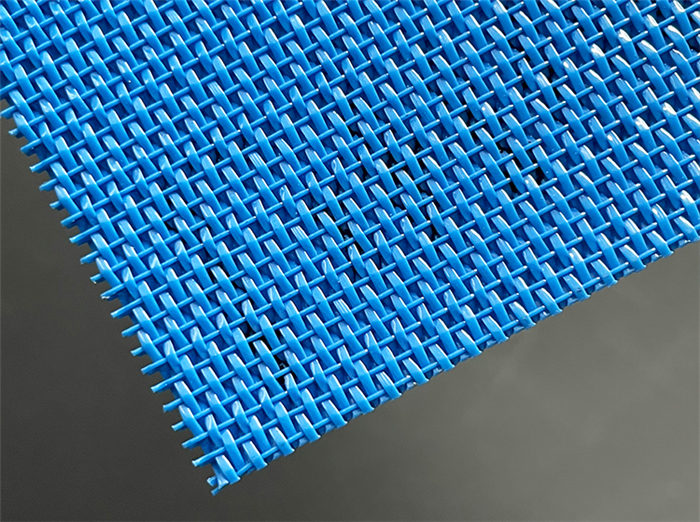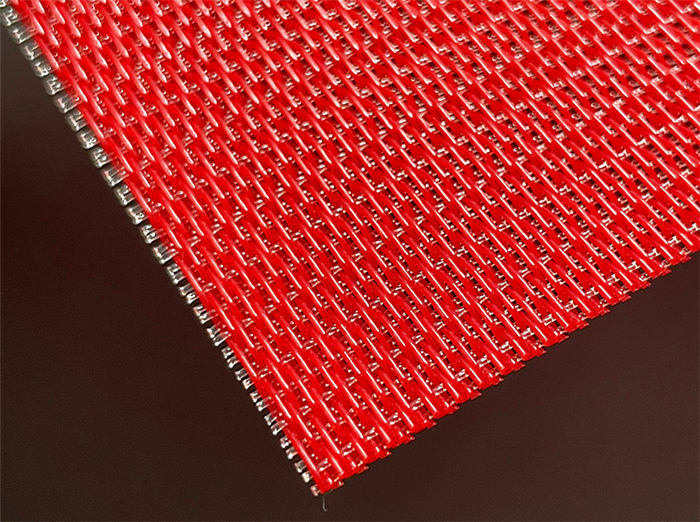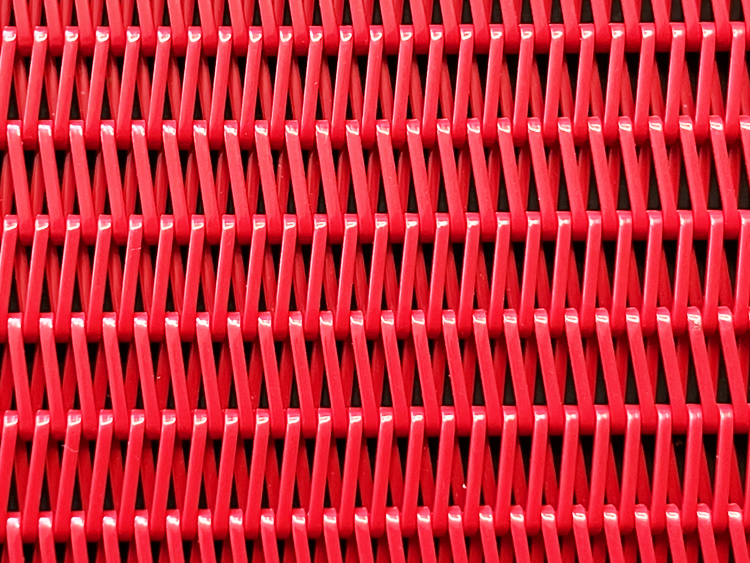
A woven polyester dryer fabric is paper machine clothing woven from PET or PPS monofilament yarns in 3-shed, 4-shed, or 8-shed patterns — available in single-layer, 1.5-layer, and double-layer structures, with round wire or flat wire (rectangular monofilament) yarns. The controlled weave structure delivers precise air permeability (100–750 CFM at 200 Pa), stable support for the paper web, and long-running dimensional stability. Three-shed fabrics suit paper grades below 70 g/m²; four-shed and flat wire fabrics excel for heavier grades and high-speed machines. PPS yarn edge options provide reliable operation in severe-steam early dryer positions.
Description
PFM Screen Woven Dryer Fabrics are paper machine clothing woven from polyester (PET or PPS) monofilament yarns in structured multi-shed patterns — principally 3-shed, 4-shed, or 8-shed weaves. The interlaced warp and weft structure creates a stable mesh that supports the paper web against heated dryer cylinders while delivering precisely controlled air permeability, contact area, and dimensional stability. Available in single-layer, 1.5-layer, and double-layer constructions, and in round wire or flat wire (rectangular monofilament) yarn options. Air permeability ranges from 100 to 750 CFM at 200 Pa. PPS edge reinforcement is available for severe-steam early dryer positions.
 |  |
100–750 CFM Air Permeability Range | 3 Weaves 3-Shed · 4-Shed · 8-Shed | 30+ Years Manufacturing Experience |
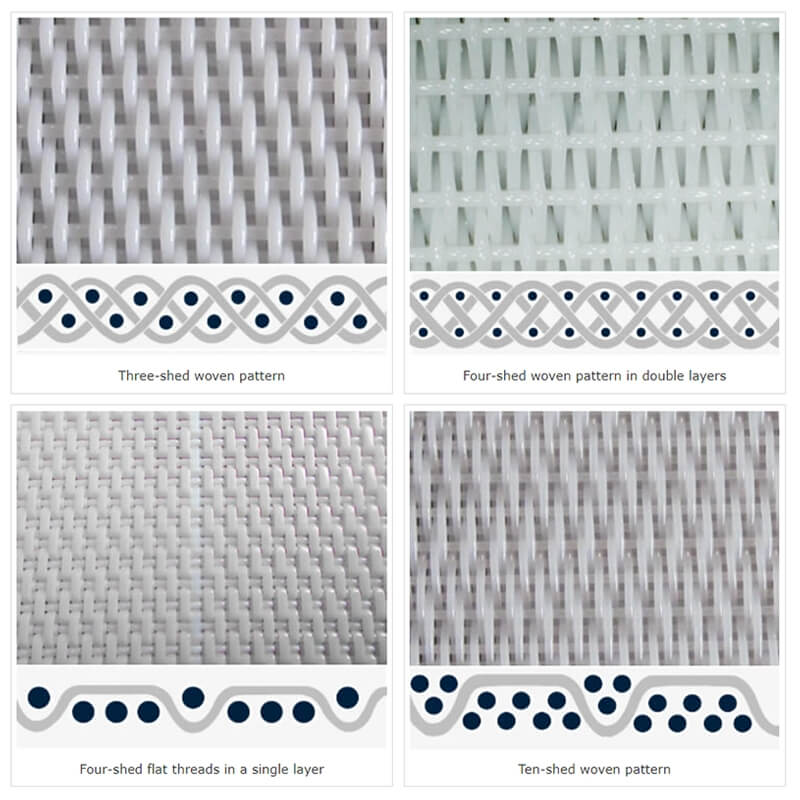
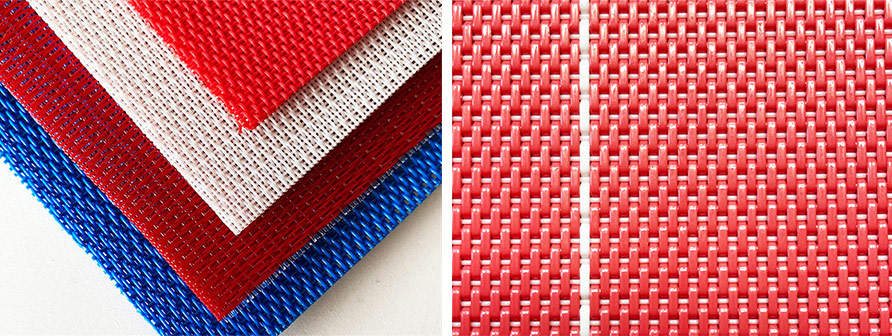
3-Shed Weave ● For papers below 70 g/m² ● Single or 1.5-layer structure ● CFM range: 438–500 ● Mid-to-late dryer groups ● Best for: cultural paper, light packing | 4-Shed Weave ● For papers ≥ 70 g/m² ● Double-layer structure ● CFM range: 680–750 ● Late dryer groups; heavy board ● Best for: board, heavy kraft, pulp board | Flat Wire / 8-Shed ● All grades — high-quality papers ● Single or 1.5-layer structure ● CFM range: 100–625 ● First 2–3 dryer groups (fore-heating) ● Best for: high-quality printing & writing paper |
Round Wire Dryer Fabric ● Classic circular monofilament cross-section ● Standard paper contact area ● Higher air permeability (438–750 CFM) ● Standard and high-speed machines ● Best for: general use across most paper grades | Flat Wire Dryer Fabric — Recommended for First Dryer Groups ● Rectangular monofilament (width × height) ● Larger paper contact area — better sheet handling ● Lower permeability (100–625 CFM) ● High speed; fore-heating groups ● Best for: high-quality printing/writing paper; early dryer groups |
Get a Custom Woven Dryer Fabric Quote in 24 Hours No fixed MOQ. Custom width, length & weave pattern. Round or flat wire. PET or PPS edge. Provide machine speed, paper grade and position — we'll select the right model and reply within 24 hours. WhatsApp: +86 153 6967 9157Email: polyestermesh@pfmscreen.com |
Feature
PFM Screen woven dryer fabrics deliver controlled air permeability, dimensional stability, and long service life — available in multiple weave patterns and yarn types to meet the exact requirements of each dryer section position and paper grade.
01 Hydrolysis & Heat Resistance PET monofilament resists hydrolysis in normal dryer conditions up to ≈150°C. PPS yarn edge reinforcement is available for severe-steam, high-humidity positions where standard PET would fail prematurely. Both materials are heat-stabilized for maximum economic fabric life. | 02 Precisely Controlled Air Permeability Woven dryer fabrics allow far more precise permeability control (100–750 CFM at 200 Pa) than spiral fabrics — achieved by selecting the weave pattern (3-shed, 4-shed, 8-shed), yarn type (round or flat wire), and layer count (single, 1.5, or double layer). | |
03 Excellent Dimensional Stability Woven dryer fabrics maintain stable dimensions under continuous tension and temperature cycling. Double-layer 4-shed fabrics provide excellent rigidity for board and heavy paper machines at high speeds. Flat wire fabrics add contact-area stability for mark-sensitive grades. | 04 Controlled Contact Area — Better Sheet Handling Flat (rectangular) monofilament wire significantly increases the contact area with the paper sheet, improving runnability and sheet handling — especially critical on high-speed machines and for paper grades prone to sheet flutter or edge instability during drying. | |
05 Long Service Life — Abrasion Resistant Polyester monofilament dryer fabrics are inherently abrasion-resistant. Flat wire monofilament provides additional wear resistance on high-speed machines running against suction boxes and return rolls. PPS edge reinforcement significantly extends service life where edge wear is the typical failure mode. | 06 Clean-Running — Contamination Resistant Woven dryer fabrics with appropriate CFM and yarn structure resist pitch, paper fines, and chemical contamination. The controlled open area allows effective shower cleaning. PPS-reinforced edges further reduce contamination in the edge zones where chemical conditions are most severe. | |
Why choose PPS edge reinforcement? PPS (polyphenylene sulfide) monofilament replaces the standard PET yarn at the fabric edges. PPS is completely immune to hydrolysis and retains full mechanical strength at continuous temperatures up to 250°C — compared to standard PET's ≈150°C limit. PPS edge reinforcement is the standard solution when paper mill customers report early edge failure in the first two or three dryer groups where high-pressure steam creates conditions that degrade standard polyester prematurely. Available as a full-edge strip or selective MD/CD reinforcement. Contact us to specify PPS edge width and configuration for your machine position. |
Tell Us Your Machine Position — We'll Select the Right Fabric Share paper grade, basis weight (g/m²), machine speed, and dryer section position. Our engineers will recommend the optimal weave pattern and yarn type, and send a custom quote within 24 hours. WhatsApp: +86 153 6967 9157Email: polyestermesh@pfmscreen.com |
Application
PFM Screen woven polyester dryer fabrics are used across the full range of paper and board manufacturing, and in several industrial drying and conveying applications beyond papermaking. The woven construction provides precise, consistent support for the paper web throughout the drying process — ensuring even moisture removal, excellent sheet stability, and minimal sheet marking.
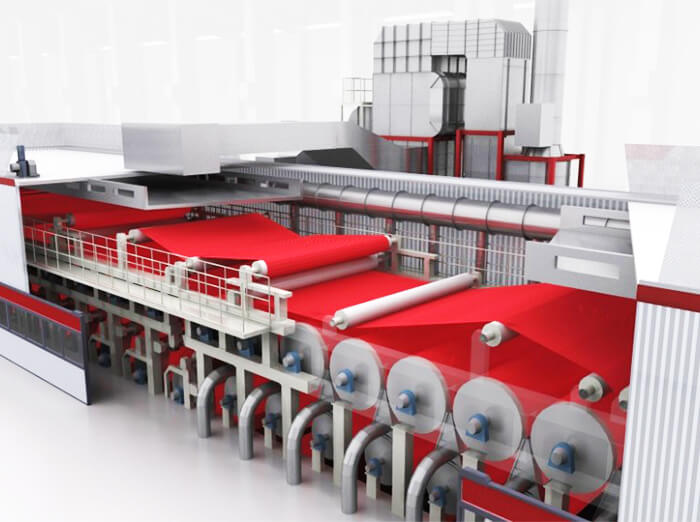 Woven Dryer Fabric — Paper Machine Dryer Section | 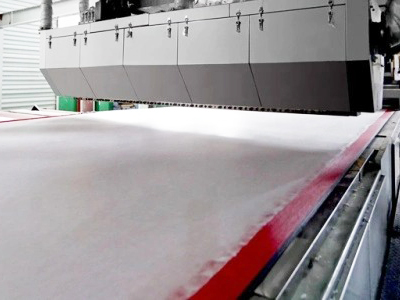 Woven Dryer Belt — Nonwoven Fabric Drying |
Conditions in the paper machine dryer section change significantly from early groups (high steam, high humidity) to later groups (lower temperature, finishing drying). The right dryer fabric depends not only on paper grade but also on position:
| Dryer Position | Conditions | Recommended Fabric | Notes |
| Early groups (1–3) | High steam, high humidity | Flat wire + PPS edge reinforcement | Fore-heating; high-grade papers |
| Mid groups (4–8) | Moderate temp. & humidity | 3-shed (light paper) / 4-shed (heavy) | Standard dryer position |
| Late groups | Lower temp.; final drying | 4-shed double layer; standard PET | Heavy paper grades |
| Paper Grade | Recommended Weave | Yarn Type | CFM Range |
| Cultural paper (<70 g/m²) | 3-shed, 1.5 layer | Round wire | 438–500 |
| Board paper (≥70 g/m²) | 4-shed, double layer | Round wire | 680–750 |
| Kraft / packing paper | 4-shed, double layer | Round wire | 500–750 |
| High-quality printing/writing | 8-shed or flat wire | Flat wire (rectangular) | 100–425 |
| Pulp board | 4-shed, double layer | Round wire | 500–750 |
| Early dryer groups (high steam) | Flat wire | Flat wire + PPS edge | 100–345 |
Mining & Coal Washing Woven polyester dryer fabric used as screen and filter fabric in coal washing plants and mining processing lines, as well as on horizontal belt washers — chemical resistance and dimensional stability under load. | Pharmaceutical & Food Processing Used as conveyor and process belt in food processing, pharmaceutical tablet coating, and drying ovens. The polyester construction resists common industrial chemicals and cleaning agents used in GMP environments. |
Printing & Dyeing Industry Conveyor belts for printing and dyeing machines. Controlled air permeability and smooth surface contact maintain print registration and even heat transfer across the full fabric width during heat-setting. | Rubber & Laminating Machines Process belts in rubber curing presses and laminating machines — controlled heat transfer, dimensional stability, and chemical resistance. The woven structure provides consistent backing support through the press nip. |
Select the Right Woven Dryer Fabric for Your Paper Grade & Machine Share paper grade, basis weight, machine speed, dryer position and current fabric issues. Our engineers will recommend the optimal weave type, yarn and material, and send a custom quote within 24 hours. No fixed MOQ. WhatsApp: +86 153 6967 9157Email: polyestermesh@pfmscreen.com |
Specifications
PFM Screen woven dryer fabrics are manufactured in 100% PET (hydrolysis-resistant polyester) with optional PPS edge reinforcement for severe-steam positions. Weave options include 3-shed, 4-shed and 8-shed in single, 1.5-layer and double-layer constructions. Both round wire and flat wire (rectangular monofilament) yarns are available. All fabrics are produced to custom machine dimensions — no fixed MOQ. Available seam/joining types: insert, pin, pin-ring, and spiral ring.
| Type | Model | Warp Dia. (mm) | Weft Dia. (mm) | Warp Density (/cm) | Weft Density (/cm) | MD Tensile (N/cm) | Weight (kg/m²) | CFM (200 Pa) |
| 3-Shed | 22503 | 0.5 | 0.5 | 24 | 12 | 2000 | 1.06 | 500 |
| 3-Shed | 24503 | 0.5 | 0.5 | 25 | 12 | 2000 | 1.1 | 438 |
| 4-Shed | 24504 | 0.5 | 0.5 | 24 | 12 | 2000 | 1.26 | 750 |
| 4-Shed | 24504-A | 0.5 | 0.5 | 26 | 12 | 2100 | 1.3 | 688 |
| 8-Shed | 4106 | 0.5 | 0.5 | 23 | 12.6 | 2200 | 1.2 | 425 |
| Round Wire | 1406-1 | 0.5 | 0.3 / 0.7 | 22.8 | 12.4 | 2200 | 1.3 | 500 |
| Flat Wire | 4106-2 | 0.35×0.68 | 0.5 | 19.6 | 15.7 | 2200 | 1.1 | 345 |
| Flat Wire | 15505 | 0.25×0.40 | 0.5 | 17 | 13.5 | 2000 | 0.75 | 406 |
| Flat Wire | 20654 | 0.33×0.52 | 0.65 | 22 | 7.5 | 2000 | 1.02 | 625 |
| Flat Wire | 18688 | 0.30×0.58 | 0.35×0.68 | 20 | 18.5 | 2000 | 1.2 | 100 |
| Flat Wire | 16904 | 0.29×1.06 | 0.9 / 0.98 | 15.2 | 8.6 | 2600 | 1.33 | 120 |
Flat wire yarn diameter shown as width×height (mm). All woven dryer fabrics can be supplied with PPS edge reinforcement on request. Contact us for specifications outside the standard range.
Q1: What is a woven dryer fabric and how does it differ from a spiral dryer fabric? A woven dryer fabric is paper machine clothing woven from polyester monofilament yarns using structured multi-shed weave patterns. The interlaced warp and weft structure creates a stable, dimensionally consistent mesh. Unlike spiral dryer fabrics (which use interlocked spiral loops), woven dryer fabrics offer more precise control of air permeability (100–750 CFM), better support for heavier paper grades, and a wider variety of weave options. Spiral fabrics are preferred where a seamless design is needed to prevent seam marking, or where maximum air permeability (up to 900 CFM) is required. |
Q2: What is the difference between 3-shed and 4-shed woven dryer fabrics? A 3-shed woven dryer fabric has a simpler weave pattern used in single or 1.5-layer structures — suitable for papers below 70 g/m², providing a balance of strength, stability, and permeability (typically 438–500 CFM at 200 Pa). A 4-shed fabric uses a more complex double-layer weave delivering higher stability, durability, and tensile strength — ideal for heavier papers ≥70 g/m² and higher-speed positions, with permeability typically 680–750 CFM. The 4-shed double-layer is the standard choice for board, kraft, and heavy packaging papers. The 8-shed weave provides a finer structure for specialty and high-quality paper grades. |
Q3: When should I use flat wire instead of round wire in a woven dryer fabric? Flat wire (rectangular monofilament) dryer fabric is mainly used in the fore-heating groups of the drying section and for high-quality paper grades such as printing and writing papers. The flat yarn cross-section creates a larger contact area between the fabric and the paper web — improving sheet handling, reducing flutter, and enhancing wear resistance on high-speed machines. Flat wire fabrics typically have lower air permeability (100–625 CFM) than round wire fabrics (438–750 CFM), making them suitable for positions where lower permeability is needed in early dryer groups. |
Q4: What is PPS edge reinforcement and when is it needed? PPS (polyphenylene sulfide) edge reinforcement replaces the standard PET yarn at the fabric edges with PPS monofilament. PPS is completely immune to hydrolysis and retains full mechanical strength at continuous temperatures up to 250°C — compared to standard PET's ≈150°C limit. PPS edge reinforcement is needed when the fabric edges run through high-pressure steam zones in early dryer groups, causing premature edge failure. If your current fabric consistently fails at the edges in the first two or three dryer groups, a PPS-edge reinforced woven dryer fabric is the standard solution. |
Q5: How do I select the right woven dryer fabric for my paper machine? Key selection factors: (1) Paper weight — use 3-shed for below 70 g/m²; 4-shed double-layer for ≥70 g/m²; (2) Machine speed — flat wire for high-speed positions and fore-heating groups; (3) Dryer section position — early groups with high steam exposure need flat wire with PPS edge reinforcement; (4) Paper quality requirements — high-grade cultural or printing papers benefit from flat wire for improved surface contact; (5) Stability demands — 4-shed double layer provides highest dimensional stability for fast, wide machines. Contact PFM Screen with paper grade, basis weight (g/m²), machine speed (m/min) and dryer position for a specific recommendation. |
Q6: What paper grades are PFM Screen woven dryer fabrics suitable for? PFM Screen woven dryer fabrics are suitable for: packing paper and kraft paper (4-shed double layer, round wire), cultural/printing/writing paper (3-shed single layer or flat wire), board paper and pulp board (4-shed double layer), corrugated paper (4-shed), and high-quality specialty papers (flat wire, 8-shed). See the Application tab for the complete paper grade selection guide with recommended weave types and CFM ranges for each grade. |
Q7: What seam and joining types are available for woven dryer fabrics? PFM Screen woven dryer fabrics are available with four joining types to suit your machine and installation requirements: insert type, pin type, pin-ring type, and spiral ring type. A leader cloth is supplied with each fabric to facilitate installation. Confirm the seam type when ordering — provide your machine manufacturer, machine speed, and current seam type for a recommendation. For most modern high-speed paper machines, the spiral ring joining type is standard. |
Q8: Can I order custom widths, lengths, or weave patterns? Yes. PFM Screen manufactures woven dryer fabrics to customer-specified dimensions — custom width, circumference, yarn diameter, density, and weave pattern on request. There is no fixed minimum order quantity; single-piece orders are accepted. Provide your machine width, dryer roll diameter, number of dryer cylinders, paper grade, basis weight, and machine speed. Typical lead time is 2–4 weeks from order confirmation. We reply with a full specification and pricing within 24 hours. |
Order Woven Dryer Fabric — Custom Quote in 24 Hours No fixed MOQ · Custom weave patterns & dimensions · Round or flat wire · PET or PPS edge · 30+ years paper machine clothing experience. Tell us your machine position and paper grade — we'll recommend the right fabric and reply within 24 hours. WhatsApp: +86 153 6967 9157Email: polyestermesh@pfmscreen.com |