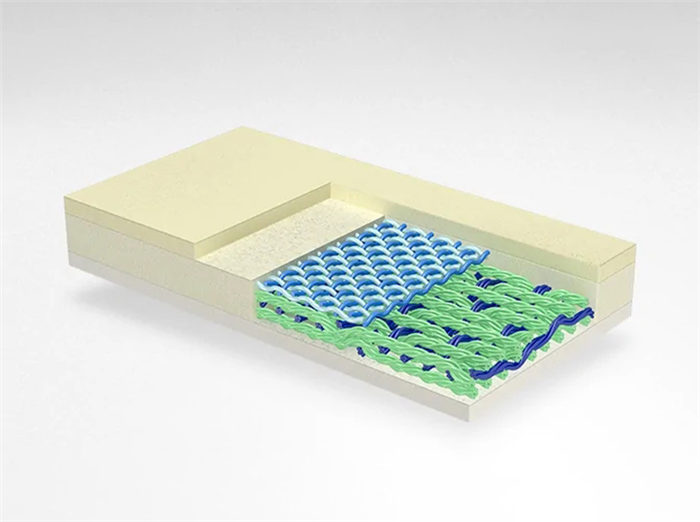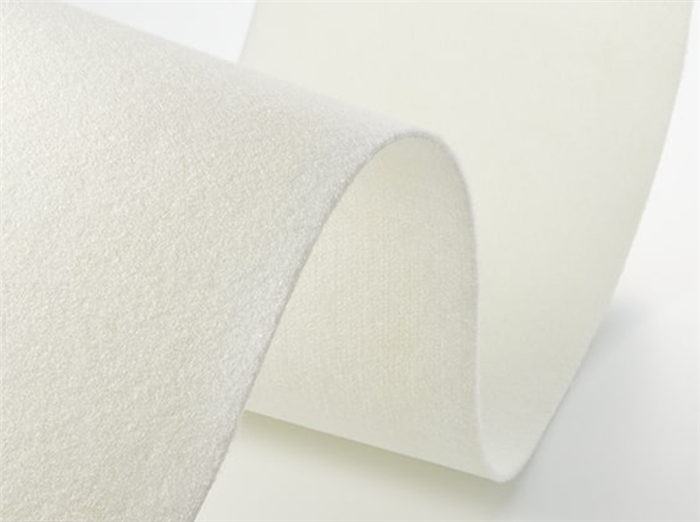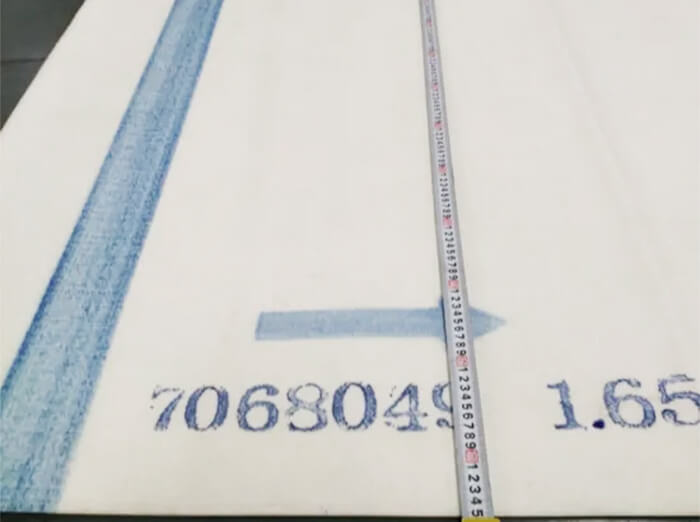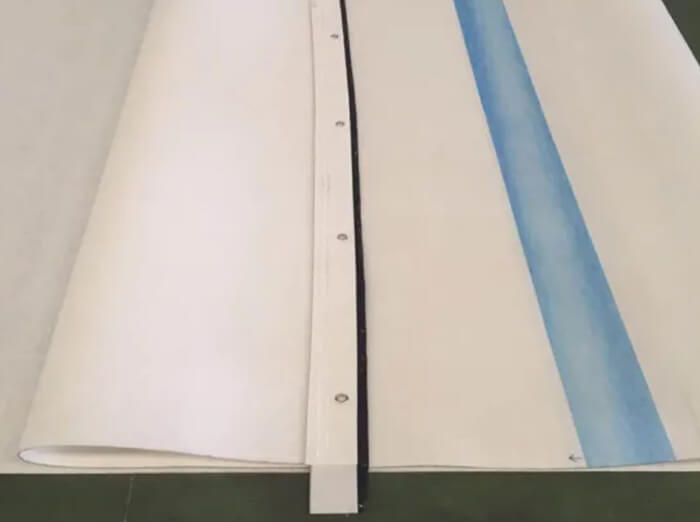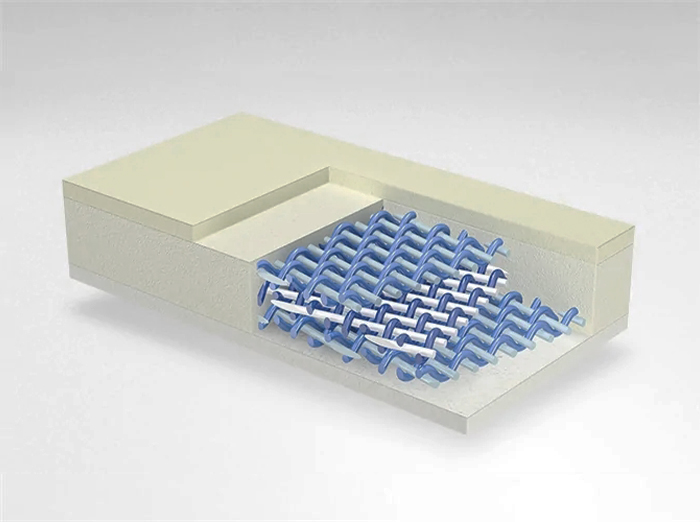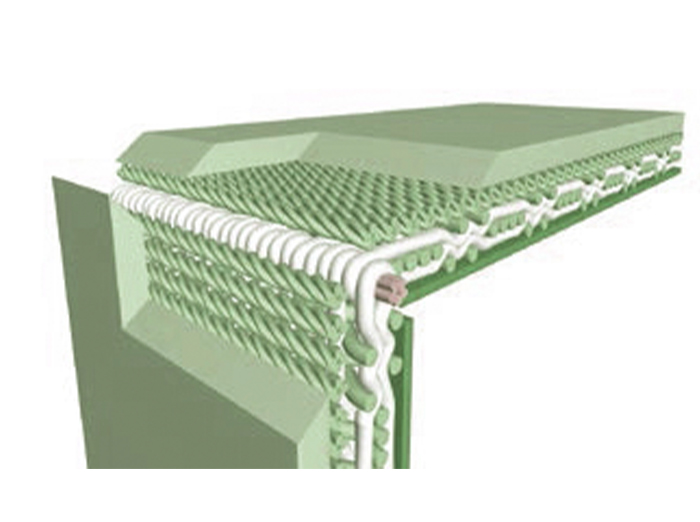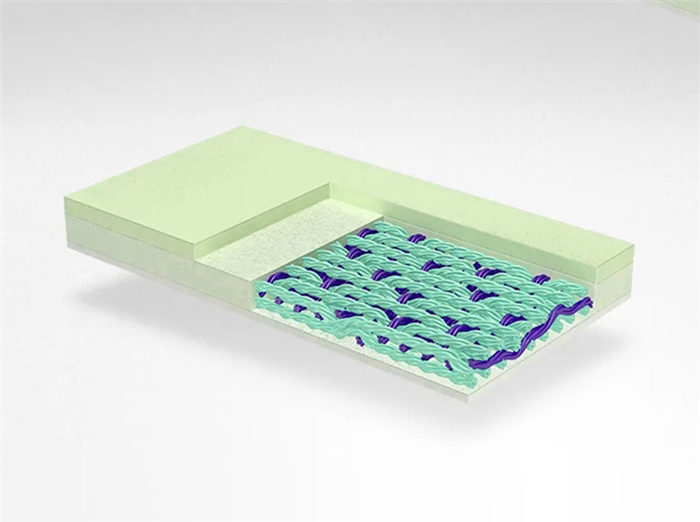
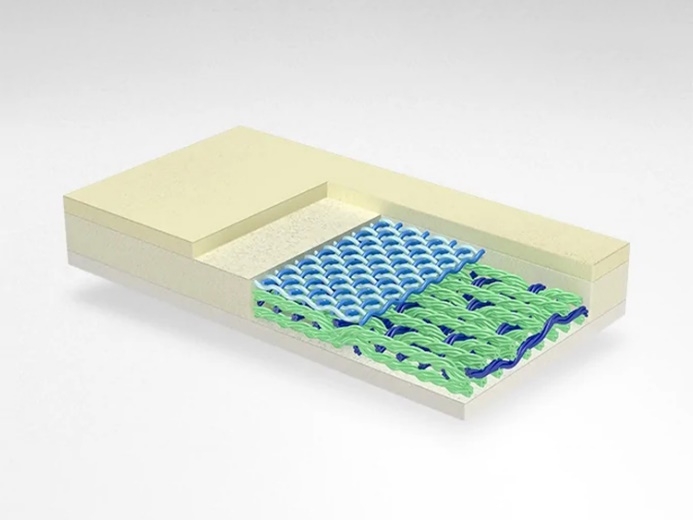
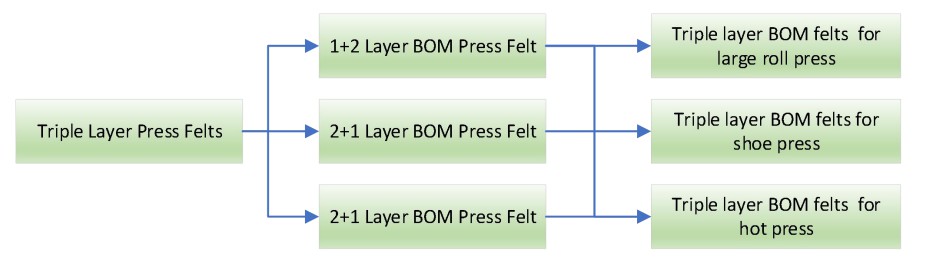
PFM Screen's Triple Layer BOM Press Felt features three-layer composite base structures — available in 1+2, 2+1, and 1+1+1 configurations — with needled batt on both faces. The highest-performance BOM press felt in the PFM Screen range, designed for shoe presses, large-diameter roll presses, blind-hole presses, and vacuum compound presses at NIP loads ≥200 kN/m and speeds up to 1000 m/min.
Description
PFM Screen's Triple Layer BOM Press Felt is the highest-performance batt-on-mesh press felt in the PFM Screen range — engineered for shoe presses, large-roll blind-hole presses, and vacuum compound presses operating at NIP line loads of ≥200 kN/m and machine speeds up to 1000 m/min. The felt is built on a three-layer composite base, which delivers the maximum void volume, tensile strength, and structural rigidity required by the most demanding press positions on modern high-speed paper machines.
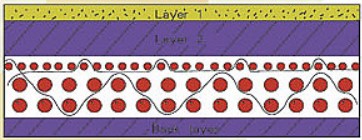 1+2 Composite Structure One fine upper mesh combined with two coarser lower meshes. Maximises the drainage plane thickness while maintaining a smooth paper-contact surface. Preferred for shoe presses and large-roll blind-hole presses. | 2+1 Composite Structure Two fine upper meshes combined with one coarser lower mesh. Provides maximum surface smoothness and batt support, with excellent resistance to surface wear. Preferred for high-grade coated paper and board grades requiring superior paper-side surface quality. | 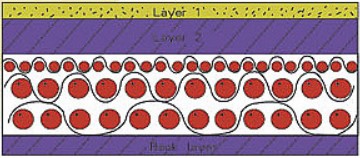 1+1+1 Composite Structure Three equal-weight mesh layers stacked and combined. Provides the highest total void volume and the most uniform pressure distribution across all three layers. The benchmark structure for very high NIP shoe press positions. |
A shoe press replaces the traditional roll-to-roll nip with a hydraulically loaded concave shoe pressing against a counter roll — producing a nip zone that is 5–10 times longer than a conventional roll press and NIP loads consistently above 200 kN/m. This extended dwell time in the nip allows significantly more water to be extracted per pass, but it also imposes sustained compressive loads on the felt structure. Only a triple-layer composite base can maintain adequate void volume and structural integrity under these sustained loads. Single-layer and double-layer BOM felts would compact, lose permeability, and fail prematurely in shoe press service.
| Property | Single Layer | Double Layer | Triple Layer (This Page) |
|---|---|---|---|
| Base structure | Single mesh | 1+1 composite | 1+2 / 2+1 / 1+1+1 |
| GSM range | 700–1200 g/m² | 950–1450 g/m² | 1450–1750 g/m² |
| Tensile strength | ≥2000 N/5cm | ≥3000 N/5cm | ≥4500 N/5cm |
| Elongation | ≤1% | ≤0.6% | ≤0.6% |
| Air permeability | 30–120 CFM | 30–110 CFM | 40–90 CFM |
| NIP load capacity | ≤80 kN/m | 60–200 kN/m | ≥200 kN/m |
| Shoe press compatible | No | Marginal | Yes |
| Best press type | Plain / nip roll | Suction / groove | Shoe / high-nip / compound |
Specify Your Triple Layer BOM Press Felt — Quote Within 24 Hours Tell us your press type, NIP load, machine speed, paper grade, and felt dimensions. PFM Screen recommends the optimal composite build and issues a full specification within one business day. WhatsApp: +86 153 6967 9157Email: polyestermesh@pfmscreen.com |
Feature
PFM Screen's Triple Layer BOM press felt delivers the maximum performance of any BOM-family felt — engineered specifically for the extended nip geometry of shoe presses and the sustained high NIP loads of large-roll blind-hole presses. The triple composite base provides unmatched void volume, tensile strength, and pressure distribution uniformity.
01 Plentiful Base Combinations Three composite structures (1+2, 2+1, 1+1+1) and multiple mesh count / yarn diameter combinations — PFM Screen selects the optimal build for your specific press type, NIP load, and paper grade. | 02 Maximum Void Volume Three mesh layers create the highest internal void space of any BOM construction — essential for absorbing the large volumes of water released per nip pass by shoe press and high-nip configurations. | 03 Tensile ≥4500 N/5cm The triple composite base provides the highest tensile strength of any BOM felt — sufficient for the demanding drive loads and felt tensioning requirements of high-speed shoe press machines. | 04 High Surface Smoothness Tightly controlled needling and fine-denier batt on the paper-contact face delivers a smooth, uniform surface — no marks of any kind on high-grade newsprint, writing papers, or coated boards. |
● Three base fabrics combined — 1+2, 2+1, or 1+1+1 composite; each optimised for specific press geometry ● Resistance against high pressure loads ≥200 kN/m — maintains void volume and structure where single/double layer felts would compact ● Good flexibility — triple composite remains flexible around guide rolls and return rolls without cracking ● Excellent permeability 40–90 CFM — calibrated drainage rate for shoe press extended nip dwell time | ● Effectively eliminates all mark types — no vacuum marks, no blind-hole marks, no groove marks, no sheet caliper variation ● Dimensional stability — triple base resists width creep and machine-direction elongation over the full run ● Long service life — higher structural reserve delays compaction onset compared to lighter-weight constructions ● GSM range 1450–1750 g/m² — heavier construction matched to the mechanical demands of high-nip press environments |
≥4500 N/5cm Tensile Highest tensile of any BOM felt | ≥200 kN/m NIP Load Shoe press and high-nip capable | ≤0.6% Elongation Stable under sustained high NIP | 1000 m/min Max. Speed Full-speed shoe press compatibility |
Application
Triple Layer BOM press felts are specified for the highest-load press positions on medium-to-high-speed fourdrinier, multicylinder, and gap-former machines. Their triple composite base is the only BOM construction capable of sustaining performance at shoe press NIP loads of ≥200 kN/m and in extended-nip configurations where felt compaction rate is the primary limiting factor on press run life.
| Press / Machine Type | Compatible | Notes |
|---|---|---|
| Shoe press (extended nip press) | ✓ | Primary application — only BOM felt with sufficient void volume and structural reserve for ≥200 kN/m |
| Large-diameter roll press (big roll press) | ✓ | Models 47601 and 47602 optimised for large-roll press positions with high linear loads |
| Blind-hole roll press (high-nip) | ✓ | Triple composite stiffness prevents deflection into blind holes; eliminates mark transfer at ≥200 kN/m |
| Vacuum compound press | ✓ | Combines vacuum suction with high NIP — triple layer handles both marking risk and structural load |
| Medium/high-speed multicylinder machine | ✓ | 3rd press positions on high-speed multicylinder machines producing ≥40 g/m² paper grades |
| High-speed fourdrinier press section | ✓ | Shoe press position on fourdrinier machines running at 700–1000 m/min |
| Superposition wire machine press | ✓ | High-nip press positions on superposition wire machines |
≤1000 m/min Max. machine speed | ≥200 kN/m NIP line load | ≥40 g/m² Min. paper basis weight | 5 Models Standard configurations available |
| Paper Grade | Basis Weight | Recommended Model | Notes |
|---|---|---|---|
| Newsprint | 40–52 g/m² | 47601, 47621 series | High-speed fourdrinier and gap former shoe press positions |
| High-grade writing & printing paper | 60–120 g/m² | 47601, 47621 series | Big roll press and shoe press on high-speed machines |
| Packaging & kraft paper | 60–150 g/m² | 47601, 47621 series | Corrugating and kraft grades on large-roll presses |
| High-grade coated whiteboard (FBB) | 200–400 g/m² | 47602, 47622, 47629 series | Shoe press on high-basis-weight board machines |
| Paper boards & corrugated base | 120–400 g/m² | 47602, 47622, 47629 series | Big roll press and shoe press on board machines |
| OEM Brand | Shoe Press Model | NIP Load Range |
|---|---|---|
| Valmet | SymBelt, SymPress II, OptiPress Shoe, TissueFlex shoe | 200–1200 kN/m (depending on position) |
| Voith | NipcoFlex, NipcoFlex T, NipcoFlex S (shoe) | 200–1000 kN/m (depending on configuration) |
| Andritz | PrimePress XT Shoe, PrimePress Shoe | 200–1000 kN/m |
| Beloit (legacy) | Extended Nip Press (ENP) | 200–800 kN/m |
| Chinese domestic OEMs | Shoe press models on high-speed fourdrinier lines | 200–600 kN/m |
Specifications
GSM 1450–1750 g/m² GSM tolerance ≤±4% | Tensile Strength ≥4500 N/5cm Highest of any BOM felt construction | Elongation ≤0.6% Stable under sustained ≥200 kN/m NIP |
Air Permeability 40–90 CFM Calibrated for shoe press dwell time | Width Variation ≤±2 cm Consistent across full machine width | Base Structure Triple Layer Composite 1+2, 2+1, or 1+1+1 composite mesh |
| Model | GSM (g/m²) | Structure | Suitable Press Type & Paper Grades |
|---|---|---|---|
| 47601 | 1450–1550 | Triple layer mesh | Big roll press — high-grade writing papers, newsprint, packaging papers, corrugating, kraft papers |
| 47602 | 1500–1700 | Triple layer mesh | Big roll press — high-grade coating whiteboards, paperboards, corrugating, kraft papers |
| 47621 | 1450–1550 | Triple layer mesh | Big roll & shoe press — high-grade writing papers, newsprints, packaging, corrugating & kraft papers |
| 47622 | 1500–1700 | Triple layer mesh | Big roll press, shoe press — high-grade coating whiteboards, paperboards |
| 47629 | 1600–1900 | Triple layer mesh | Big roll press, shoe press — high-grade coating whiteboards, paperboards (very high NIP) |
* Custom composite build (1+2, 2+1, 1+1+1), GSM, batt composition, and dimensions available. Contact PFM Screen for specific press fit confirmation and lead times.
Q1: What is a Triple Layer BOM press felt, and when is it required? A Triple Layer BOM press felt uses three base meshes combined in a composite structure, with batt needled on both faces. It is required when the press section NIP load consistently exceeds 200 kN/m — specifically in shoe press, large-roll blind-hole press, and vacuum compound press configurations. At these loads, single-layer and double-layer BOM felts compact too rapidly, losing void volume and dewatering efficiency before their design life is reached. The triple composite base has the structural reserve to maintain void volume and tensile integrity at sustained NIP loads that would cause premature compaction in lighter-weight constructions. |
Q2: What is the difference between 1+2, 2+1, and 1+1+1 composite structures in triple layer BOM press felts? All three structures combine three base mesh layers, but the arrangement differs: in the 1+2 structure, one finer mesh is placed on the paper-contact side and two coarser meshes on the machine side — maximising drainage capacity; in the 2+1 structure, two finer meshes provide the batt support layer and one coarser mesh forms the base — maximising surface smoothness and batt bonding for high surface-quality grades; in the 1+1+1 structure, three equal-weight meshes are stacked — providing the most uniform pressure distribution and highest total void volume. PFM Screen selects the optimal structure based on the press type, NIP load, machine speed, and paper grade requirements. |
Q3: Which shoe press models from Valmet, Voith, and Andritz are Triple Layer BOM press felts compatible with? PFM Screen's Triple Layer BOM press felts are custom-manufactured to fit all major OEM shoe press designs. Confirmed compatible machine types include: Valmet SymBelt, SymPress II, and OptiPress Shoe; Voith NipcoFlex, NipcoFlex T, and NipcoFlex S; Andritz PrimePress XT Shoe and PrimePress Shoe; legacy Beloit Extended Nip Press (ENP). All felts are made to the exact pin-to-pin dimensions and permeability targets specified for each press position. Provide your machine OEM, press model, and felt dimensions and PFM Screen will confirm compatibility and issue a specification sheet within 24 hours. |
Q4: Why does shoe press require Triple Layer BOM felt instead of Double Layer? A shoe press generates a nip zone 5–10 times longer than a conventional roll press and applies NIP loads consistently above 200 kN/m. The combination of extended dwell time and sustained high load causes the felt to experience far greater cumulative compressive stress per revolution than in conventional press positions. Double Layer BOM felts (designed for 60–200 kN/m) reach their compaction threshold under these conditions much faster than expected — they lose void volume rapidly, reducing dewatering rate and felt run life. Triple Layer BOM's three-mesh composite has approximately 50% more structural capacity than the double layer, delaying compaction onset and sustaining higher dewatering rates over a significantly longer run. |
Q5: What paper grades can be produced using Triple Layer BOM press felts? Triple Layer BOM press felts are suitable for paper grades with basis weights of ≥40 g/m². The most common grades include: newsprint (40–52 g/m²), high-grade writing and printing papers (60–120 g/m²), packaging and kraft papers (60–150 g/m²), corrugating medium (80–180 g/m²), high-grade coated whiteboards and folding box boards (150–400 g/m²), and high-grade paper boards. Triple Layer BOM is typically used in the shoe press or third press positions — the heaviest dewatering positions — on machines producing these grades at medium-to-high speeds. |
Q6: How does Triple Layer BOM press felt maintain a mark-free paper surface at high NIP pressures? At NIP loads of ≥200 kN/m, the potential for the felt to imprint its base mesh pattern onto the paper surface is significantly higher than at lower loads. PFM Screen addresses this through two mechanisms: first, the fine-denier batt on the paper-contact face provides a smooth, dense filtration layer that isolates the paper from the mesh base structure; second, the triple composite base creates sufficient bending stiffness to bridge across roll perforations (grooves, blind holes) without the base deflecting into them. The result is a felt that delivers even pressure and even drainage across the paper sheet, with no caliper variation, no mesh shadow, and no perforation marking — even at sustained NIP loads well above 200 kN/m. |
Q7: What are the full technical specifications of PFM Screen's Triple Layer BOM press felts? PFM Screen's Triple Layer BOM press felts are manufactured to the following standard specifications: GSM 1450–1750 g/m² (tolerance ≤±4%); tensile strength ≥4500 N/5cm; elongation ≤0.6%; air permeability 40–90 CFM; width variation ≤±2 cm. Base structure: triple-layer composite (1+2, 2+1, or 1+1+1), monofilament polyester. 5 standard models are available (47601–47629 series), targeting newsprint, writing papers, packaging grades, and high-grade board applications at shoe press and large-roll press NIP loads. Custom composite builds and dimensions are available. |
Q8: What is the minimum order quantity and lead time for Triple Layer BOM press felts from PFM Screen? There is no fixed minimum order quantity — PFM Screen accepts orders from a single felt to full production volumes. Standard lead time for custom-engineered Triple Layer BOM press felts is 2–4 weeks after specification confirmation and drawing approval. All felts are made to order to your machine's exact dimensions and the press position's permeability target. Provide your machine type, press model, NIP load, target CFM, felt dimensions (pin-to-pin width and length), and paper grade, and PFM Screen will issue a full specification sheet and formal quotation within 24 hours. Contact via WhatsApp (+86 153 6967 9157) or email (polyestermesh@pfmscreen.com). |
Ready to Order? Get Your Shoe Press Felt Specification Within 24 Hours Provide your press model, NIP load, machine speed, paper grade, and felt dimensions — PFM Screen recommends the right 1+2 / 2+1 / 1+1+1 composite build and issues a full quotation within one business day. No fixed MOQ. WhatsApp: +86 153 6967 9157Email: polyestermesh@pfmscreen.com |