PFM Screen's Alkali-Resistant Mesh Belts are precision-woven from high-performance PA6 (polyamide / nylon 6) and PPS (polyphenylene sulfide) monofilament, engineered for conveying, filtration, drying, and washing applications where standard polyester belts degrade — specifically in environments where caustic alkali concentrations reach ≥20% sodium hydroxide (NaOH) and continuous operating temperatures exceed 100°C.
Description
PFM Screen's Alkali-Resistant Mesh Belts are precision-woven from high-performance PA6 polyamide (nylon 6) and PPS (polyphenylene sulfide) monofilament fibers, engineered for conveying, filtration, drying, and washing processes where standard polyester belts fail. The defining performance threshold: continuous resistance to caustic alkali concentrations of ≥20% sodium hydroxide (NaOH) at operating temperatures exceeding 100°C — conditions that degrade polyester within weeks but leave PA6 and PPS belts unaffected for years. Abrasion resistance is 10–50 times higher than ordinary synthetic fiber belts, and the smooth monofilament surface enables clean product release — critical for pharmaceutical granules, chemical powders, and textile fiber handling.
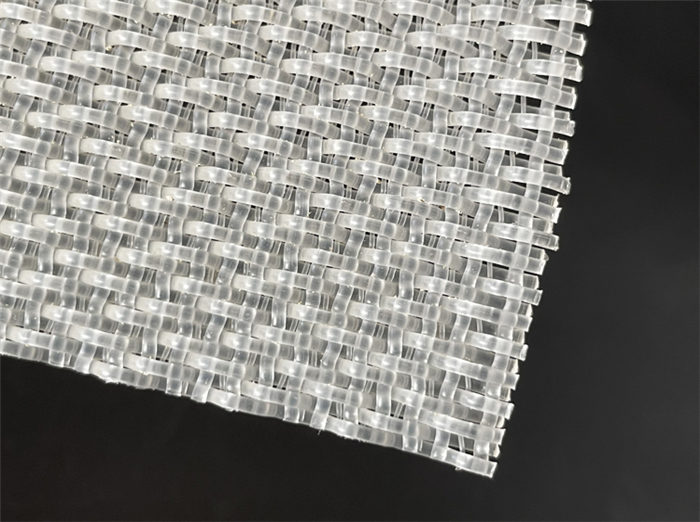 PA6 Polyamide (Nylon 6) — Standard Choice for Alkali Lines ● Continuous operation at 100°C+ with ≥20% NaOH — PA6 amide bonds resist hydrolysis that destroys PET ester linkages ● Abrasion resistance 10–50× vs ordinary synthetic fibers — extended belt service life in particle-laden caustic environments ● Cost-effective solution for standard chemical, pharmaceutical, and textile mercerization lines ● 5 standard mesh models (121104, 15905, 61204, 121204, 16903) — custom width, pitch and joining available | 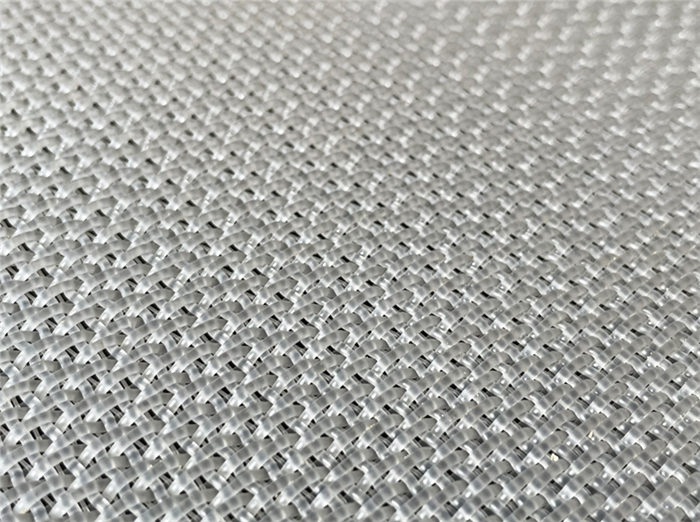 PPS (Polyphenylene Sulfide) — For Extreme Chemical & Thermal Conditions ● No known solvent below 200°C — resists concentrated acids, alkalis, and oxidizing agents simultaneously; continuous use to 190°C+ ● Inherently flame resistant; extremely low moisture absorption (0.02–0.05%) for maximum dimensional stability ● Outstanding performance in combined heat + chemical environments where PA6 reaches its limits ● Recommended for battery manufacturing, green hydrogen electrolysis, semiconductor, and extreme-temperature chemical processing |
Standard polyester (PET) monofilament undergoes hydrolytic degradation in alkaline conditions: NaOH attacks ester linkages in the polymer chain, causing rapid tensile strength loss, surface fibrillation, and belt failure within weeks. PA6 and PPS resist this attack at the molecular level, delivering four decisive performance advantages over PET in caustic environments:
01 Molecular Alkali Stability PA6 amide bonds resist NaOH hydrolysis that destroys PET ester linkages — belt retains tensile strength and mesh geometry across years of caustic service | 02 10–50× Abrasion Resistance PA6 and PPS monofilament resists surface wear from abrasive alkaline slurries and high-velocity caustic wash sprays — belt life measured in years, not months | 03 High-Temperature Stability Continuous service at 100°C+ (PA6) and up to 190°C+ (PPS) — maintains tensile strength and mesh geometry under thermal cycling with no creep or dimensional shift | 04 Clean Product Release Smooth monofilament surface prevents material adhesion and carryover — critical for pharmaceutical granules, chemical powders, and textile fibers on caustic-wash conveyor lines |
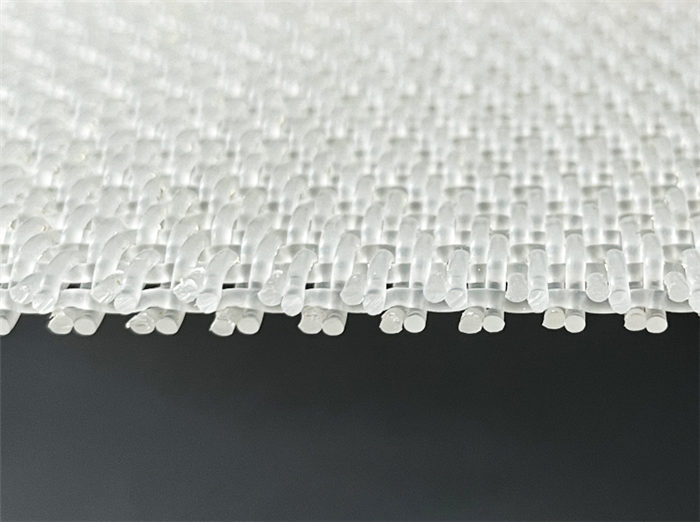 Open Mesh Structure for Drainage and Filtration High open-area woven construction enables free liquid drainage and airflow through the belt — essential for washing, rinsing, dewatering, and drying process stages in chemical and pharmaceutical lines | 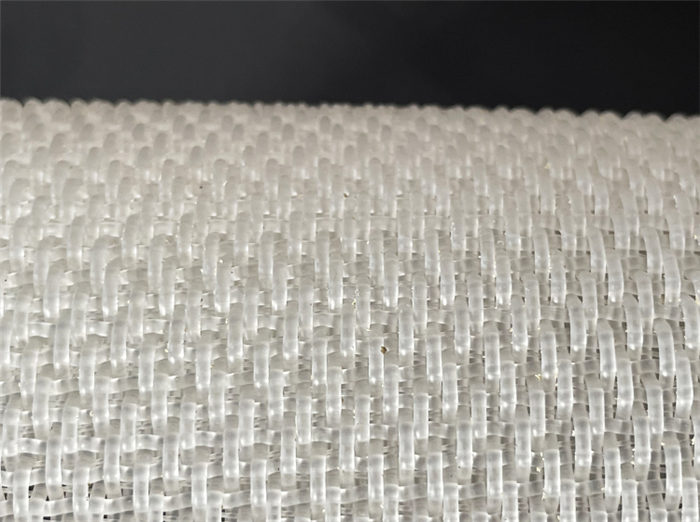 Custom Width and Mesh Pitch Any width from 300 mm to 4,000 mm+; 5 standard PA6 mesh models and custom configurations available for specific filtration aperture, air permeability, or belt tension requirements |
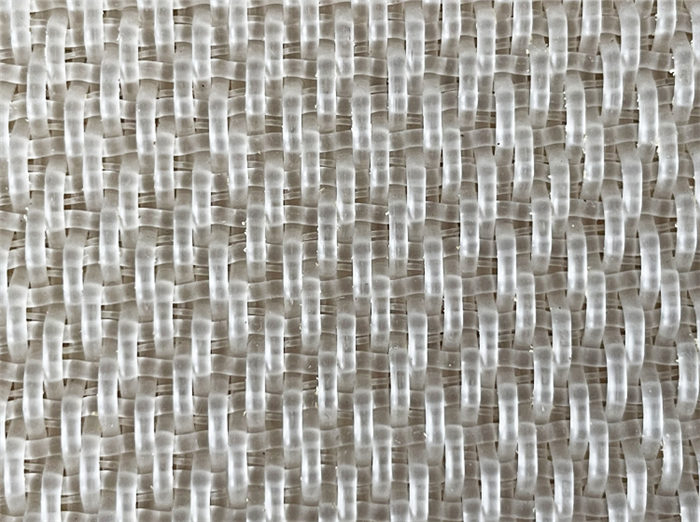 Endless-Woven or Mechanical Joint Delivered endless-woven (seamless, no metal hardware — maximum chemical compatibility) or with pin-seam mechanical joints — specify based on your conveyor geometry and access requirements | Custom to Your Chemical Process Line ● Belt width: 300 mm to 4,000 mm+ ● 5 standard PA6 mesh models + custom pitch ● Endless-woven or pin-seam mechanical joint ● PA6 standard; PPS available on request for extreme conditions ● NaOH resistance: ≥20% (PA6) / All concentrations (PPS) ● Max operating temperature: 100°C+ (PA6) / 190°C+ (PPS) |
Ready to Order? Get Your Custom Quote Within 24 Hours Send us your belt width, mesh model, NaOH concentration, operating temperature, and application — PFM Screen will respond with full specifications and pricing within one business day. WhatsApp: +86 153 6967 9157 Email: polyestermesh@pfmscreen.com |
Feature
Strong Alkali Resistance — ≥20% NaOH Withstands sodium hydroxide (caustic soda) concentrations of 20% and above without polymer degradation, fiber fibrillation, or mesh geometry distortion. PA6 amide bonds resist NaOH hydrolysis that destroys standard polyester belts within weeks of caustic exposure. | High-Temperature Continuous Operation — 100°C+ (PA6) / 190°C+ (PPS) PA6 belts operate reliably in continuous service at 100°C or above. PPS variant extends continuous use to 190°C+. Belt maintains dimensional stability under thermal cycling — no shrinkage, no stretch deformation, and no mesh opening shift over long-run production schedules. |
10–50× Abrasion Resistance vs Ordinary Synthetic Fibers PA6 and PPS monofilament inherently resists surface wear from particle-laden alkaline slurries, abrasive chemical powders, and high-velocity caustic wash sprays. Measured wear life is 10–50 times longer than standard PET or PP synthetic fibers in equivalent chemical operating conditions. | High Tensile Strength — Stable Under Full Load Standard warp tensile strength 1,600 N/cm and weft strength 900 N/cm across all PA6 models. Belt maintains full load-bearing capacity across the operating temperature range and chemical concentration window — no creep or stress relaxation in continuous long-run industrial operation. |
Smooth Surface — Clean Product Release The smooth monofilament weave surface prevents material adhesion and carryover after the belt exits the process zone — critical for pharmaceutical granule conveying, chemical powder handling, and textile fiber transport where belt surface contamination or product drag would cause quality issues. | Dimensional Stability — Straight Running, No Tracking Deviation Post-weaving heat-setting treatment locks mesh geometry and belt flatness. Low elongation under rated tension enables reliable straight-line running with minimal tracking deviation — even on long conveyor runs in high-humidity caustic environments. No deformation after extended continuous operation. |
Use this table to match your chemical and thermal conditions to the correct belt material. Contact PFM Screen if your application falls outside these parameters or combines multiple challenging conditions simultaneously.
| Property | PET (Standard Polyester) | PA6 Nylon | PPS |
|---|---|---|---|
| NaOH Resistance (≥20%) | Poor — degrades rapidly; ester bonds hydrolysed by NaOH | Excellent — withstands ≥20% NaOH continuously | Excellent — virtually insoluble in all common bases |
| Max Continuous Service Temp. | ~90°C (degrades above this in alkali) | 100°C+ | 190–220°C |
| Abrasion Resistance (vs PET baseline) | 1× (baseline) | 10–50× vs PET | High — comparable to PA6 |
| Acid Resistance | Good (dilute mineral acids) | Limited (strong mineral acids) | Excellent — resists concentrated HCl, H2SO4, HF |
| Moisture Absorption | ~0.4% | ~2.5–3.5% (allows slight swelling) | 0.02–0.05% (extremely low) |
| Inherent Flame Resistance | No — requires flame-retardant treatment | No — requires treatment | Yes — inherently flame resistant (LOI 44%) |
| Relative Material Cost | Lowest | Medium | High (justified for extreme conditions) |
| Best Suited For | Standard dewatering, food, non-chemical industrial conveying | Chemical plants, pharma, textile mercerization, kraft pulping, caustic bottle wash | Battery / green hydrogen electrolysis, semiconductor processing, extreme temp + alkali combined |
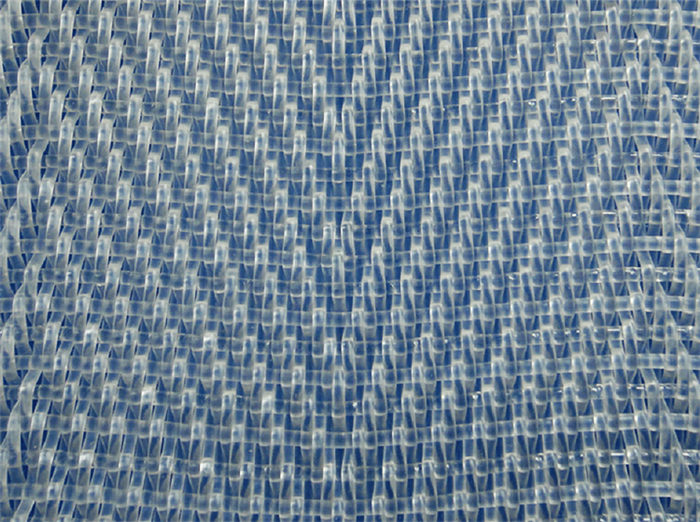
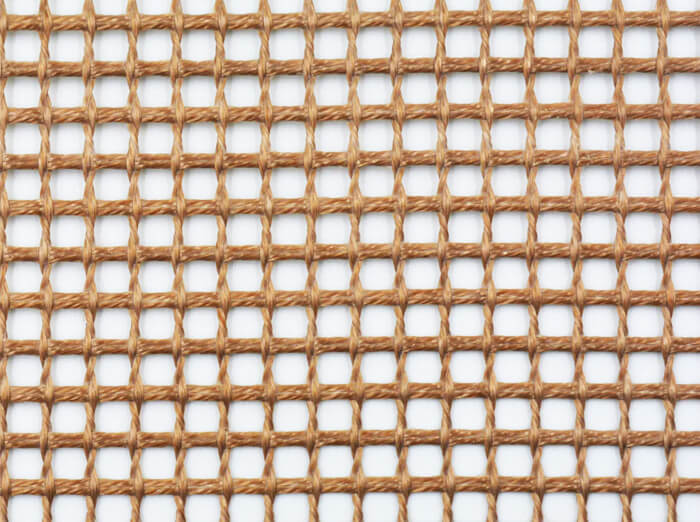
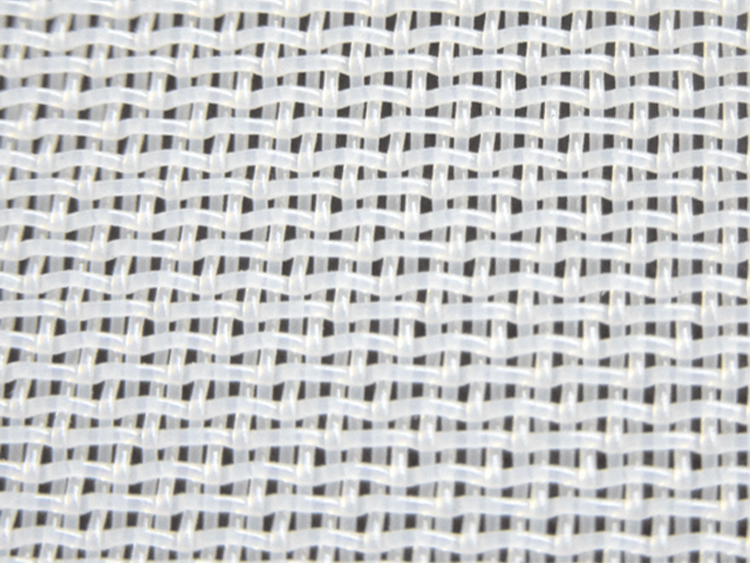
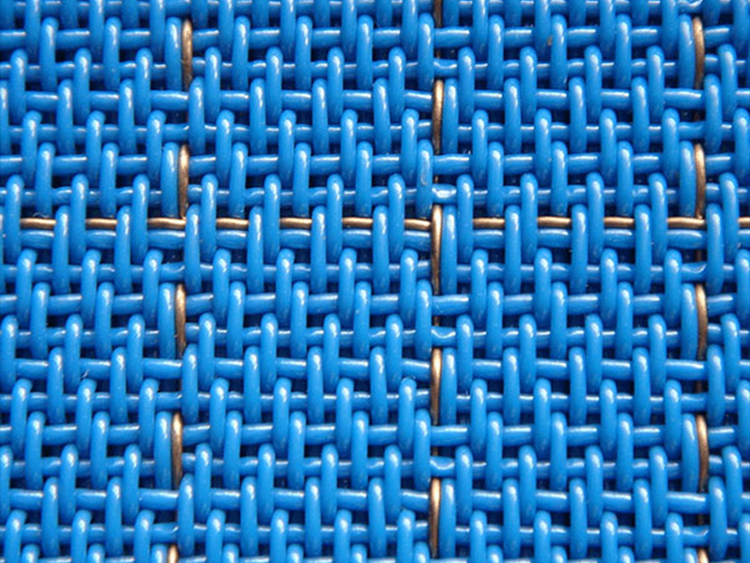
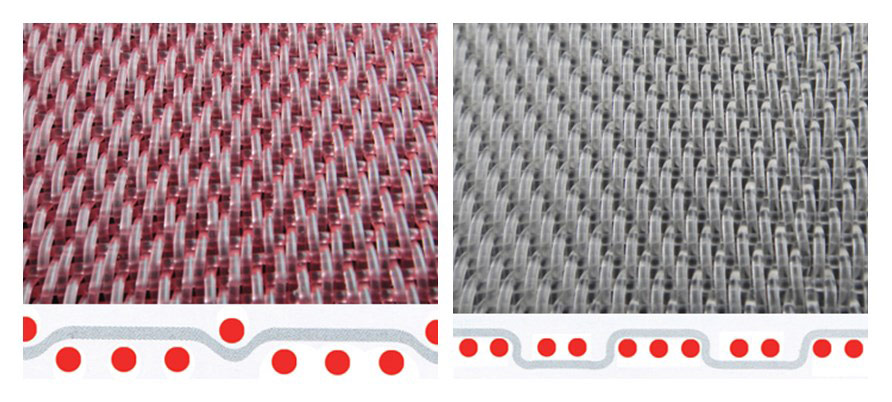 PA6 monofilament woven mesh structure — open area enables drainage and air permeability; smooth face for product release | 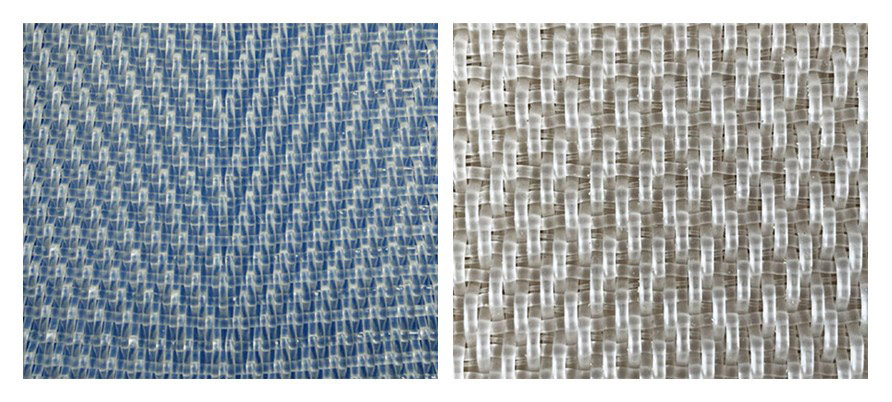 Alkali-resistant mesh belt on an industrial chemical conveyor installation |
Need Help Selecting the Right Material or Mesh Model? Share your NaOH concentration, operating temperature, belt width, and industry — PFM Screen's engineers will recommend the optimum material and configuration within 24 hours. WhatsApp: +86 153 6967 9157 Email: polyestermesh@pfmscreen.com |
Application
PFM Screen's alkali-resistant mesh belts are deployed wherever standard polyester belts fail due to exposure to caustic chemicals, high operating temperatures, or abrasive alkaline slurries. The PA6 model handles the full spectrum of standard industrial alkali environments; the PPS model extends capability to the most extreme combined chemical and thermal conditions. Seven key industries rely on these belts for continuous-duty operation.
| Industry | Typical Application | Belt Role | NaOH Level | Material |
|---|---|---|---|---|
| Chemical Manufacturing | Caustic soda production, alkali drying conveyor, chemical filter conveyor | Transport and dewatering of alkali-wet chemical products | ≥20% | PA6 / PPS |
| Pharmaceutical | Granule / tablet conveying after alkaline CIP wash; active ingredient handling | Product transport in caustic-washed environments; smooth-release surface | 5–20% | PA6 |
| Textile Mercerization | Cotton mercerizing — belt conveying fabric through 18–25% NaOH solution bath | Fabric transport through caustic bath; liquid drainage through mesh | 18–25% | PA6 |
| Battery / Green Hydrogen | Alkaline electrolyzer (KOH/NaOH) — membrane support belt, electrode handling | Filtration support and transport in extreme chemical environments | Extreme | PPS |
| Paper & Pulp | Kraft pulping (NaOH + Na2S); alkali bleaching conveyor; black liquor handling | Filter belt and transport in high-alkali, high-temperature pulp processing | High | PA6 / PPS |
| Food & Beverage | Bottle and container caustic wash lines (CIP); container label removal with NaOH | Container transport through hot caustic wash zone; smooth surface for label-free release | 2–5% | PA6 |
| Mining & Metallurgy | Alkali mineral leaching; caustic mineral processing; alkaline slurry dewatering | Heavy-duty filter/conveyor belt in particle-laden alkaline slurry environments | Variable | PA6 / PPS |
Signs Your Polyester Belt Is Failing in a Chemical Environment ● Belt surface becomes fuzzy or fibrillated within weeks of caustic exposure ● Belt fails to meet tensile strength specifications prematurely ● Mesh aperture changes or belt distorts under operating temperature ● Frequent belt replacement is driving high maintenance cost and downtime ● Product contamination from fiber particles shed by the belt | What PA6 / PPS Alkali-Resistant Mesh Belt Delivers Instead ● Stable mesh geometry and surface after 12+ months in ≥20% NaOH ● Maintained tensile strength (1,600/900 N/cm warp/weft) throughout service life ● Dimensional stability under thermal cycling — no shrinkage or stretch ● Dramatically lower replacement frequency — lower total cost of ownership ● Smooth monofilament surface — zero fiber contamination risk |
Tell Us Your Application — PFM Screen Recommends the Right Belt Share your industry, NaOH concentration, operating temperature, belt width, and any chemical exposure details — our engineers respond within 24 hours with a specific belt recommendation and quotation. WhatsApp: +86 153 6967 9157 Email: polyestermesh@pfmscreen.com |
Specifications
All PA6 models: warp tensile strength 1,600 N/cm; weft tensile strength 900 N/cm. PPS models available on request — contact PFM Screen for specifications and pricing.
| Model | Warp Diameter (mm) | Weft Diameter (mm) | Density Warp (wire/cm) | Density Weft (wire/cm) | Weight (kg/m²) | Thickness (mm) | Air Perm (m³/m²h) | Material |
|---|---|---|---|---|---|---|---|---|
| 121104 | 0.9 | 1.1 | 12.8 | 4 | 1.57 | 3.05 | 9,600 | PA6 |
| 15905 | 0.9 | 0.9 | 15.3 | 5 | 2.0 | 2.77 | 6,800 | PA6 |
| 61204 | 1.2 | 1.2 | 7.0 | 4.3 | 1.9 | 2.9 | 6,896 | PA6 |
| 121204 | 1.05 | 1.2 | 12.6 | 7.4 | 2.6 | 3.5 | 12,050 | PA6 |
| 16903 | 0.7 | 0.9 | 16.3 | 5 | 1.5 | 2.1 | 7,520 | PA6 |
* All specifications subject to manufacturing tolerances. PPS model specifications available on request — contact PFM Screen with your chemical exposure conditions. Custom mesh pitch, width, and joining configurations available beyond the standard models listed.
Q1: What is the difference between a PA6 nylon mesh belt and a PPS mesh belt for alkali-resistant applications? PA6 (polyamide 6 / nylon 6) and PPS (polyphenylene sulfide) are both alkali-resistant monofilament materials, but they suit different operating conditions. PA6 handles the most common industrial alkali environments — ≥20% NaOH at up to 100°C+ — and is the cost-effective standard choice for chemical plants, pharmaceutical lines, and textile mercerization. PPS delivers superior performance when conditions are more extreme: continuous temperatures up to 190°C+, simultaneous exposure to strong acids and alkalis, inherent flame resistance requirements, or ultra-low moisture absorption critical for precision applications (e.g. alkaline electrolyzers, battery manufacturing, semiconductor processing). For most caustic wash and chemical conveying applications, PA6 is sufficient; PPS is specified when PA6 reaches its thermal or chemical limits. |
Q2: What concentration of sodium hydroxide (NaOH / caustic soda) can PA6 alkali-resistant mesh belts withstand? PFM Screen's PA6 alkali-resistant mesh belts are designed and tested for continuous exposure to sodium hydroxide (NaOH) concentrations of 20% and above. This covers the full range of industrial caustic soda applications — from bottle washing lines (typically 2–5% NaOH) and pharmaceutical CIP systems (5–20% NaOH) through textile mercerization (18–25% NaOH), chemical plant conveying (≥20% NaOH), and kraft pulp washing (high NaOH + sodium sulfide). For concentrations above 30% NaOH, or for environments combining strong alkalis with strong acids or oxidizing agents simultaneously, the PPS model is recommended. Contact PFM Screen with your specific concentration and temperature for material confirmation. |
Q3: Why do standard polyester (PET) mesh belts fail in alkaline environments, and how do PA6/PPS belts solve this? Standard polyester (PET) monofilament contains ester linkages (-COO-) in the polymer backbone that are chemically susceptible to hydrolysis in alkaline conditions. NaOH cleaves these ester bonds, causing progressive tensile strength loss, surface fibrillation (fuzz), mesh opening distortion, and ultimately belt failure — typically within days to weeks in concentrated caustic environments. PA6 polyamide replaces ester bonds with amide bonds (-NHCO-) that are far more stable under NaOH attack. PPS uses a completely different aromatic sulfide chemistry with no hydrolysable linkages, making it virtually insoluble in caustic media below 200°C. Both materials therefore maintain structural integrity, tensile strength, and mesh geometry across the full service life in alkali environments where PET fails immediately. |
Q4: What is the maximum operating temperature for PFM Screen's alkali-resistant mesh belts? PA6 model belts support continuous operating temperatures of 100°C and above — sufficient for the majority of industrial caustic washing, chemical conveying, and pharmaceutical processing applications. PPS model belts extend continuous service capability to 190°C or higher, making them suitable for hot alkali chemical processing, high-temperature drying conveyors in corrosive environments, and applications requiring simultaneous thermal and chemical resistance. Both models maintain dimensional stability and tensile strength throughout their rated temperature range without shrinkage, stretching, or mesh geometry change. |
Q5: Which industries use alkali-resistant mesh belts, and what are the most common applications? The seven primary industries using alkali-resistant mesh belts are: (1) Chemical manufacturing — conveying on caustic soda production and alkali chemical processing lines; (2) Pharmaceutical — granule and tablet transport in CIP-washed environments; (3) Textile mercerization — cotton fabric transport through 18–25% NaOH solution baths to improve lustre and dye uptake; (4) Battery and green hydrogen — alkaline electrolyzer belt applications (PPS model); (5) Paper and pulp — kraft pulping and alkali bleaching conveyor belts; (6) Food and beverage — bottle and container caustic wash line transport; and (7) Mining and metallurgy — heavy-duty conveying and filtration in alkali mineral leaching and processing environments. In each case, the belt replaces a standard PET belt that fails to survive the chemical conditions. |
Q6: How does an alkali-resistant PA6 mesh belt compare with a PTFE mesh belt for chemical environments? PA6 and PTFE alkali-resistant belts each serve different needs. PTFE (polytetrafluoroethylene) offers the broadest chemical resistance of any polymer — covering strong acids, strong alkalis, solvents, and oxidizers — and operates at temperatures up to 260°C. However, PTFE belts are significantly more expensive, have lower tensile strength, and are typically used in narrower specialty roles such as high-temperature baking conveyors, food-contact non-stick surfaces, and extreme chemical filtration. PA6 alkali-resistant mesh belts offer a more cost-effective solution specifically optimized for high-alkali environments at temperatures up to 100°C+, with superior abrasion resistance (10–50× vs ordinary synthetic fiber) and high tensile strength (1,600/900 N/cm warp/weft) suited to industrial conveying under load. PFM Screen offers PTFE mesh belts as a separate product category for environments where PA6 or PPS limits are insufficient. |
Q7: Can PFM Screen supply alkali-resistant mesh belts in custom widths, mesh sizes, or joining configurations? Yes. PFM Screen manufactures all alkali-resistant mesh belts to exact buyer specifications. Custom options include: any belt width from 300 mm to over 4,000 mm; custom mesh pitch and filament diameter beyond the five standard PA6 models; endless-woven (seamless, no metal hardware) or pin-seam mechanical joint configuration; and PPS material for conditions beyond PA6's capability. There is no fixed minimum order quantity — PFM Screen accepts orders from a single custom belt to full production volumes. To request a custom configuration, share your belt width, required mesh aperture or air permeability, joining preference, NaOH concentration, operating temperature, and industry application. |
Q8: What is the lead time and minimum order quantity for alkali-resistant mesh belts? PFM Screen accepts orders from a single custom belt — there is no fixed minimum order quantity. Standard lead time for PA6 alkali-resistant mesh belts is typically 2–4 weeks after drawing or specification confirmation, depending on belt size, mesh configuration, and current production scheduling. PPS model belts may require additional lead time; confirm when placing your inquiry. Rush orders can be accommodated in certain cases. Contact PFM Screen via WhatsApp (+86 153 6967 9157) or email (polyestermesh@pfmscreen.com) with your belt width, mesh model, quantity, and application for a formal quotation and lead time confirmation within 24 hours. |
Ready to Order? Get Your Custom Alkali-Resistant Belt Quote Within 24 Hours Share your belt width, mesh model or aperture requirement, NaOH concentration, operating temperature, and quantity — PFM Screen will respond with a full specification and price within one business day. WhatsApp: +86 153 6967 9157 Email: polyestermesh@pfmscreen.com |