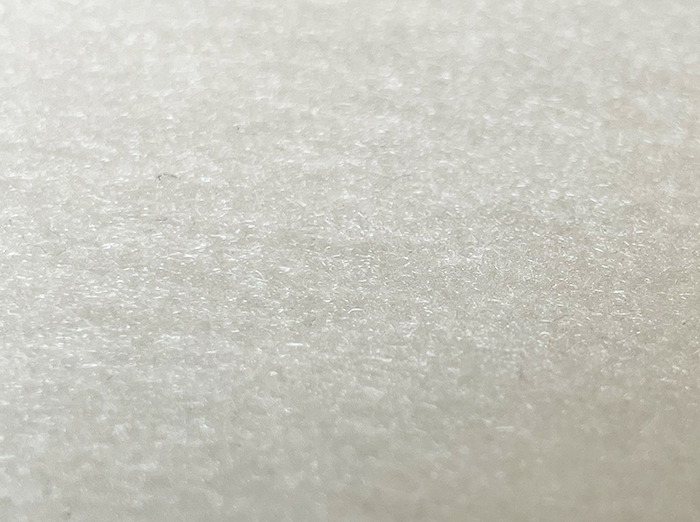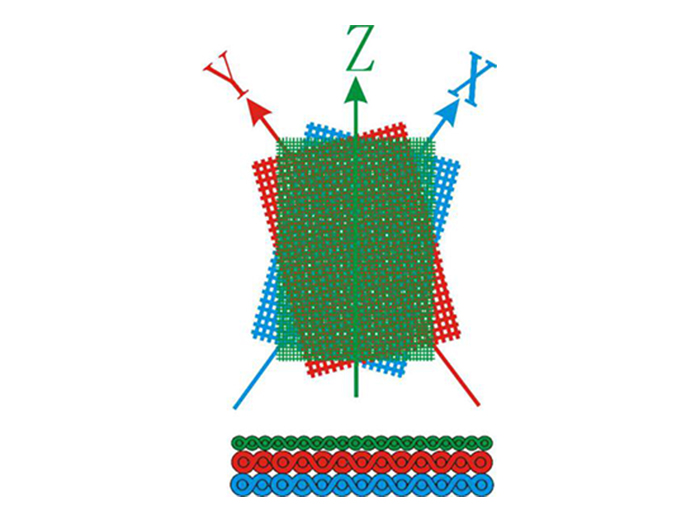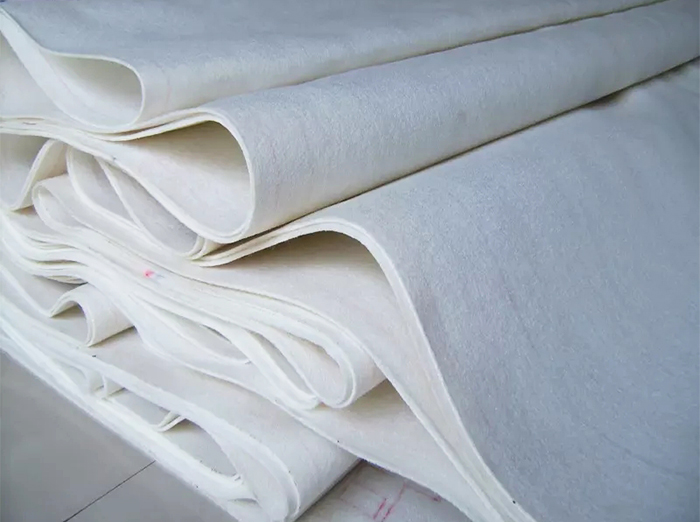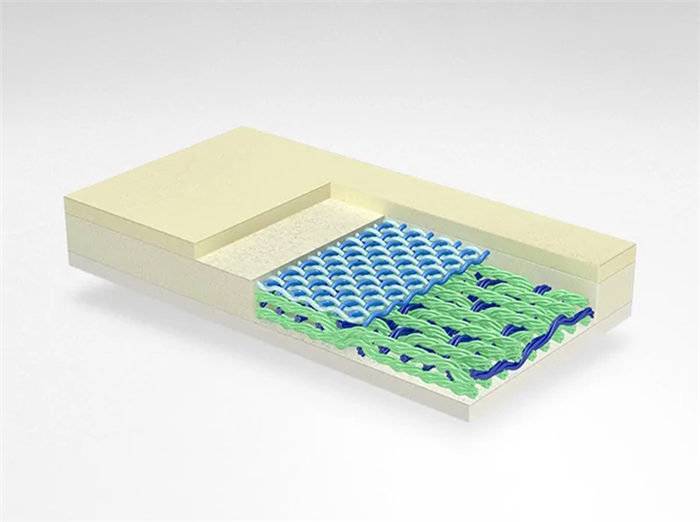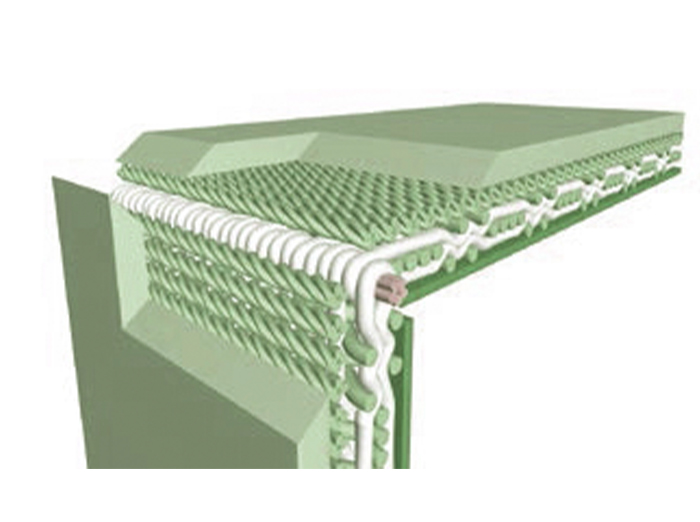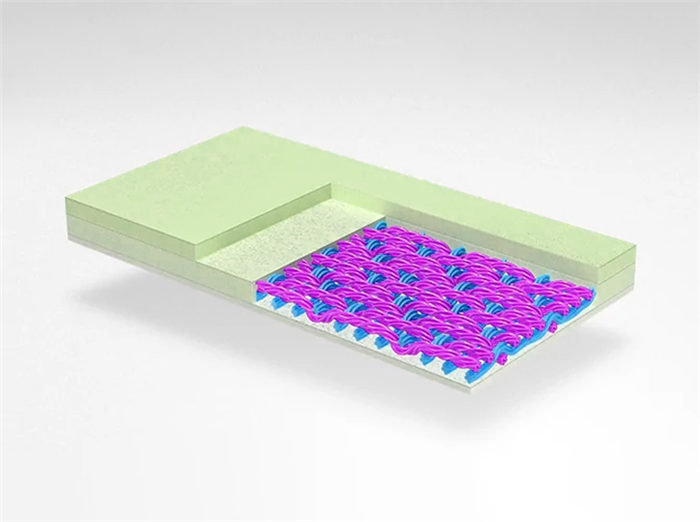
PFM Screen's Multi-Axial Laminated Press Felt uses a base construction in which multiple non-woven fiber layers are laid at different orientations — typically 0°, +45°, -45°, and 90° — and laminated together before high-grade batt is needled onto both faces. Unlike conventional BOM felts whose base yarns run only at 0° (MD) and 90° (CD), the multi-axial base resists compaction forces arriving from any direction — delivering higher compaction resistance, more uniform nip pressure distribution, and more consistent dewatering over longer run lengths. Available in 1+1 and 1+1+1 base builds.
Description
PFM Screen's Multi-Axial Laminated Press Felt is an advanced-generation papermaking press felt designed to overcome the primary failure mode of conventional BOM felts: progressive compaction under sustained press loads. Instead of a woven base mesh where yarns run only at 0° (machine direction) and 90° (cross direction), the multi-axial base uses multiple fiber layers oriented at different angles — typically 0°, +45°, -45°, and 90° — and thermally laminated into a unified structure. This multi-directional reinforcement resists compaction forces arriving from any direction in the nip, delivering higher compaction resistance, uniform nip pressure, and consistently high dewatering rates over significantly longer felt run lengths.
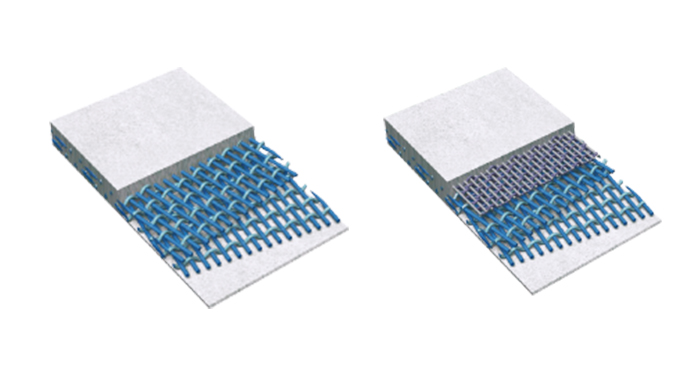
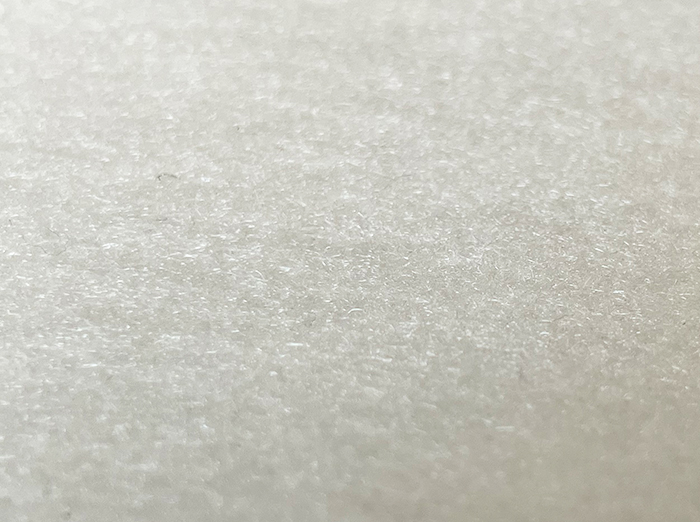 | Conventional vs Multi-Axial Base Conventional BOM base: Multi-axial laminated base: |
1+1 Multi-Axial Build Two laminated multi-axial base layers combined, with batt needled on both faces. The standard configuration for suction presses, groove presses, large-roll presses, and high-speed fourdrinier press positions. GSM range typically 1000–1350 g/m². Best for: NIP loads 60–250 kN/m, speeds up to 1200 m/min | 1+1+1 Multi-Axial Build Three laminated multi-axial base layers combined. The premium configuration for shoe presses and the most demanding high-NIP positions where maximum compaction resistance and void volume are required. GSM range typically 1350–1600 g/m². Best for: NIP loads ≥200 kN/m, shoe press, high-speed board machines |
| Property | Conventional Laminated BOM | Multi-Axial Laminated (This Page) |
|---|---|---|
| Base yarn directions | 0° + 90° only | 0° + 45° + -45° + 90° |
| Compaction resistance | Good (0°/90° only) | Excellent (all directions) |
| Pressure uniformity | Good | Superior |
| Felt run life | Standard | Extended |
| Dewatering consistency | Decreases as felt compacts | Remains consistent longer |
| Elongation | ≤0.6% | ≤0.5% |
| NIP load capacity | 60–200+ kN/m | 60–300+ kN/m |
| Max. machine speed | ≤1000 m/min | ≤1200 m/min |
Specify Your Multi-Axial Laminated Press Felt — Quote Within 24 Hours Share your press type, NIP load, machine speed, paper grade, and felt dimensions. PFM Screen recommends the optimal 1+1 or 1+1+1 multi-axial build and issues a full specification within one business day. WhatsApp: +86 153 6967 9157Email: polyestermesh@pfmscreen.com |
Feature
PFM Screen's Multi-Axial Laminated press felt addresses the core limitation of conventional BOM felts: their base fibre structure resists compression well in the 0° and 90° directions, but provides limited resistance to diagonal compaction forces at ±45°. In high-speed, high-NIP press environments, these diagonal forces are significant — and they cause the felt to compact and lose dewatering efficiency faster than expected. The multi-axial laminated base eliminates this weakness.
01 Superior Anti-Compaction Multi-directional fibre reinforcement (0°, ±45°, 90°) resists compaction in all directions. The felt retains its original void volume and permeability significantly longer than any conventional BOM construction. | 02 Uniform Nip Pressure The isotropic stiffness of the multi-axial base distributes NIP load evenly across the full machine width — eliminating pressure variations that cause cross-direction caliper variation or uneven moisture profiles in the paper sheet. | 03 Consistent High Dehydration Because void volume is maintained for longer, the felt delivers consistent dewatering rates throughout its service life — avoiding the gradual decline in dewatering efficiency that characterises conventional BOM felts as they compact. | 04 Extended Felt Life The combination of lower compaction rate and higher structural reserve delays the end of the useful felt run — reducing the frequency of felt changes, lowering downtime, and reducing the cost-per-tonne of press clothing. |
● Multi-angle fibre base (0°, ±45°, 90°) — isotropic compaction resistance unlike conventional 0°/90° base ● Tensile strength ≥3500 N/5cm — high structural strength from multi-directional fibre reinforcement ● Low elongation ≤0.5% — best elongation resistance of any press felt type in its class ● Air permeability 25–90 CFM — broad range to match drainage requirements at different press positions | ● Laminated base construction — thermal bonding of multi-axial layers creates a stable, non-delaminating base ● Supports high-speed operation ≤1200 m/min — suitable for the most modern high-speed paper machines ● Mark-free paper surface — fine-denier batt on paper-contact face; stiff multi-axial base bridges roll perforations ● 1+1 and 1+1+1 builds available — matched to press NIP load and machine speed requirements |
≥3500 N/5cm Tensile Multi-directional fibre reinforcement | ≤0.5% Elongation Better than conventional BOM felts | 1200 m/min Max. Speed Suitable for high-speed machines | All Directions Reinforced 0°, ±45°, 90° fibre layers |
Application
Multi-Axial Laminated press felts are specified for high-speed, high-NIP press positions where conventional BOM felts show premature compaction, inconsistent moisture profiles, or shorter-than-expected run life. They are particularly effective where the press operates near or above the capacity of conventional double-layer BOM construction — bridging the gap between standard BOM felts and specialised shoe press felts.
| Press / Machine Type | Compatible | Notes |
|---|---|---|
| Vacuum suction press (high-speed) | ✓ | Higher compaction resistance than conventional BOM — extends run life at sustained vacuum NIP |
| Groove roll press | ✓ | Isotropic base stiffness bridges grooves more effectively than conventional 0°/90° base |
| Large-diameter roll press (big roll) | ✓ | Extended nip dwell + high NIP load — multi-axial base handles both without premature compaction |
| Shoe press (extended nip press) | ✓ | 1+1+1 multi-axial build for shoe press positions — highest-performance option |
| Blind-hole press | ✓ | Multi-axial stiffness prevents deflection into blind holes at high NIP loads |
| High-speed fourdrinier press section | ✓ | Press positions on fourdrinier machines running at 800–1200 m/min where conventional felt life is short |
| Multi-press (3rd, 4th press position) | ✓ | Final press positions with combined high speed and high NIP load |
| Low-speed plain roll press | △ | Multi-axial felt works but is overspecified for ≤80 kN/m — Single Layer BOM is more cost-effective |
≤1200 m/min Max. machine speed | 60–300+ kN/m NIP load range | 25–90 CFM Air permeability range | 1+1 / 1+1+1 Available build options |
| Paper Grade | Basis Weight | Recommended Build | Notes |
|---|---|---|---|
| Newsprint | 40–52 g/m² | 1+1 | High-speed machines 800–1200 m/min; consistent moisture for print quality |
| Writing & printing paper | 50–120 g/m² | 1+1 | Uniform moisture profile critical for printing performance |
| Kraft & packaging paper | 60–150 g/m² | 1+1 | Good drainage at high basis weight; extended run life reduces clothing cost |
| Corrugating medium | 80–180 g/m² | 1+1 | Recycled fibre furnish needs consistent drainage; anti-compaction extends service |
| White paperboard / FBB | 200–400 g/m² | 1+1 or 1+1+1 | High basis weight; shoe press position; multi-axial 1+1+1 for highest NIP loads |
| High-grade coated board | 150–400 g/m² | 1+1+1 | Uniform moisture profile critical for coating quality; shoe press compatible |
| Technical paper | 40–200 g/m² | 1+1 | Specialty substrates; consistent dewatering prevents caliper variation |
| OEM Brand | Machine / Press Types | Recommended Build |
|---|---|---|
| Valmet | SymBelt, OptiPress, SymPress II, ValPress, TissueFlex | 1+1 (suction/groove) or 1+1+1 (shoe press) |
| Voith | NipcoFlex, NipcoFlex T, DuoFormer, PolyFlex | 1+1 (groove/suction) or 1+1+1 (shoe press) |
| Andritz | PrimePress XT, PrimePress Shoe, Gap Former | 1+1 or 1+1+1 depending on position |
| GL&V / Kadant | Fourdrinier suction and groove presses | 1+1 standard |
| Chinese domestic OEMs | High-speed fourdrinier and multicylinder machines | 1+1 or 1+1+1 depending on NIP load |
Specifications
GSM 1000–1600 g/m² 1+1 build: 1000–1350; 1+1+1 build: 1350–1600 | Tensile Strength ≥3500 N/5cm Multi-directional fibre reinforcement | Elongation ≤0.5% Best elongation resistance in its class |
Air Permeability 25–90 CFM Adjusted to press type and drainage needs | Max. Machine Speed ≤1200 m/min Suitable for most modern high-speed machines | Base Structure Multi-Axial Laminated Fibres at 0°, ±45°, 90°; 1+1 or 1+1+1 build |
PFM Screen's Multi-Axial Laminated press felts are custom-engineered products. Standard model numbers are available on request — contact PFM Screen with your machine specifications for a specific model recommendation, full data sheet, and formal quotation within 24 hours.
Q1: What is a multi-axial laminated press felt? A multi-axial laminated press felt is a papermaking press felt whose base uses multiple non-woven fibre layers oriented at different angles — typically 0° (machine direction), +45°, -45°, and 90° (cross direction) — thermally laminated into a unified base structure before batt is needled onto both faces. Unlike conventional BOM felts, which use a woven base with yarns running only at 0° and 90°, the multi-axial base provides fibre reinforcement in all four principal directions. This makes the felt resistant to compaction forces arriving from any direction in the nip — the primary cause of premature felt failure in high-speed, high-NIP press positions. |
Q2: How is multi-axial laminated press felt different from conventional BOM laminated press felt? Conventional BOM laminated press felt uses a woven base where the load-bearing elements are yarns running at exactly 0° (MD) and exactly 90° (CD). Compressive forces arriving at angles between these — particularly at ±45° — must be carried by the bending deformation of the yarns rather than by direct fibre tension. This is less efficient, and under sustained high NIP loads, the base gradually collapses in the diagonal directions. Multi-axial laminated felt adds reinforcing fibre layers at ±45° (and sometimes other angles), so there are direct fibre elements resisting compression in every direction. The result is significantly higher compaction resistance, a more consistent void volume through the felt run, more uniform pressure distribution across the machine width, and a longer service life before the felt reaches the end of its useful dewatering performance. |
Q3: What does "multi-axial" mean in the context of press felt base construction? In the context of press felt base construction, "axial" refers to the orientation of the structural elements in the base. A single-axial structure has elements in one direction only; a bi-axial (conventional BOM base) has elements in two directions (0° and 90°). A "multi-axial" structure adds elements in three or more directions — in PFM Screen's multi-axial laminated press felt, the base contains fibre layers at 0°, +45°, -45°, and 90°. Each layer is a non-woven fibre web laid at that specific angle, then all layers are laminated together under heat and pressure before the batt is applied. The term distinguishes this construction from conventional woven-base BOM felts and conventional laminated BOM felts (which are bi-axial). |
Q4: What base builds (1+1, 1+1+1) are available for multi-axial laminated press felts, and which should I choose? PFM Screen's multi-axial laminated press felts are available in two build configurations. The 1+1 build combines two multi-axial laminated base layers and is recommended for press positions with NIP loads of 60–250 kN/m at machine speeds up to 1200 m/min — covering suction presses, groove presses, large-roll presses, and high-speed fourdrinier press positions. The GSM range for the 1+1 build is typically 1000–1350 g/m². The 1+1+1 build combines three multi-axial layers and is recommended for shoe press and the highest-NIP positions (≥200 kN/m and above), where maximum void volume and structural reserve are required. Its GSM range is typically 1350–1600 g/m². If you are unsure which build is appropriate, contact PFM Screen with your press NIP load and machine speed — we will recommend the correct build. |
Q5: For which paper grades and machine speeds are multi-axial laminated press felts recommended? Multi-axial laminated press felts are recommended for all paper and board grades where the press section operates at machine speeds above 800 m/min, or where NIP loads are above 100 kN/m, or where conventional BOM felts are experiencing shorter-than-expected run life due to compaction. Common grade applications include newsprint (40–52 g/m²), writing and printing papers (50–120 g/m²), kraft and packaging papers (60–150 g/m²), corrugating medium (80–180 g/m²), white paperboard and FBB (200–400 g/m²), high-grade coated board, and technical papers. The felt is suitable for all machine types from fourdrinier to gap-former, from multicylinder to tissue machines, at speeds up to 1200 m/min. |
Q6: What are the key technical specifications of PFM Screen's multi-axial laminated press felts? PFM Screen's multi-axial laminated press felts are produced to the following general specification ranges: GSM 1000–1600 g/m² (1+1 build: 1000–1350; 1+1+1 build: 1350–1600); tensile strength ≥3500 N/5cm; elongation ≤0.5% — the lowest elongation of any press felt in its class; air permeability 25–90 CFM (adjusted per machine drainage requirements); maximum machine speed ≤1200 m/min. These specifications are starting points — PFM Screen engineers each felt to the exact requirements of your press position, paper grade, and machine speed. Model-specific data sheets are provided on request. |
Q7: How does multi-axial laminated structure resist compaction compared to conventional laminated felt? In a conventional woven-base laminated felt, the base deforms most in the directions where there are no load-bearing elements — the diagonal directions between the 0° MD yarns and the 90° CD yarns. Under sustained press loads, this diagonal deformation accumulates, causing the base to thin and the void volume between the base layers to decrease. Multi-axial laminated felt adds fibre layers at ±45°, filling in these weak diagonal directions with load-bearing fibre elements. When a compressive load arrives at any angle, it encounters direct fibre resistance — there are no "weak diagonal gaps." The result is that compaction rate is reduced in all directions simultaneously, so the felt retains higher void volume for longer, maintains more consistent permeability, and delivers more consistent dewatering rates throughout its service life. |
Q8: What is the lead time and MOQ for multi-axial laminated press felts from PFM Screen? There is no fixed minimum order quantity — PFM Screen accepts single-felt orders as well as bulk supply contracts. Multi-axial laminated press felts are custom-engineered products made to your machine's exact dimensions, press position, paper grade, and permeability requirements. Standard lead time is 2–4 weeks after specification confirmation and drawing approval. Because these are advanced-construction felts, accurate specification data is important — provide your press type, NIP load, machine speed, paper grade, felt dimensions (pin-to-pin width and length), and target air permeability. PFM Screen will issue a specific model recommendation, technical data sheet, and formal quotation within 24 hours via WhatsApp (+86 153 6967 9157) or email (polyestermesh@pfmscreen.com). |
Ready to Order? Get Your Custom Specification & Quote Within 24 Hours Send PFM Screen your press type, NIP load, machine speed, paper grade, and felt dimensions. We will recommend the right 1+1 or 1+1+1 multi-axial build and issue a full technical quotation within one business day. No fixed MOQ. WhatsApp: +86 153 6967 9157Email: polyestermesh@pfmscreen.com |