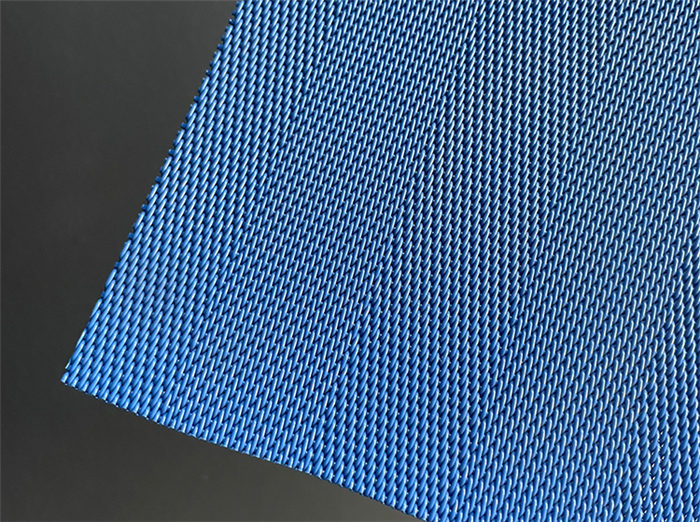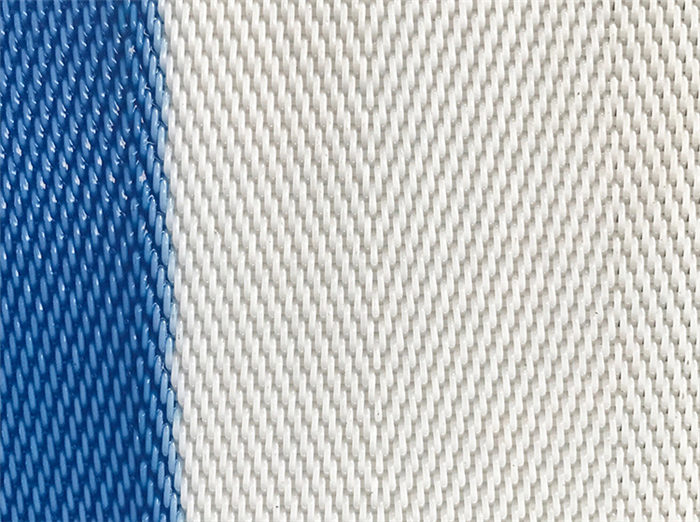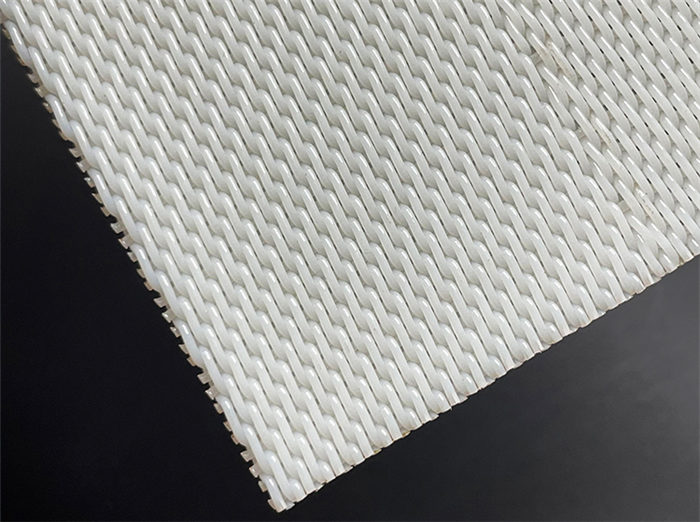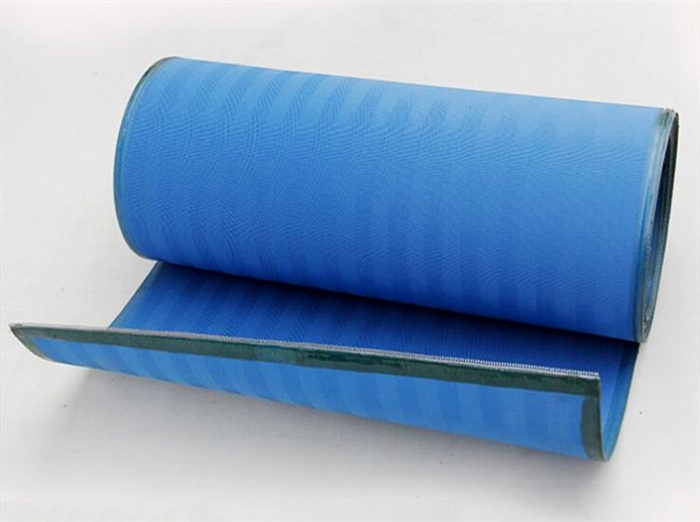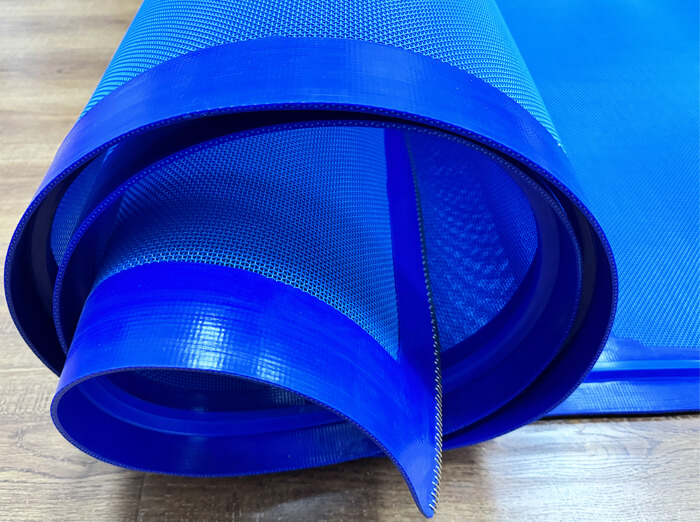
PFM Screen's Woven Press Filter Belts are precision-woven from high-quality polyester or nylon (PA) monofilament in four engineered weave structures — three-shed stain, four-shed stain, 2/7 stain, and three-shed double-layer — each delivering continuous solid-liquid separation, sludge dehydration, and filtration across municipal wastewater treatment, industrial sludge processing, mining tailings, and food & beverage applications. With acid and alkali resistance across pH 1–14, a working temperature range of -20°C to 200°C, FDA compliance, and glued lateral edges with precision stainless steel joining seams, PFM Screen woven filter belts are the proven replacement choice for Andritz, Alfa Laval, Komline-Sanderson, Ashbrook, Huber, and all major belt filter press platforms. Custom-manufactured up to 8 m wide × 200 m long.
Description
PFM Screen's Woven Press Filter Belts are precision-woven from high-quality polyester or nylon (PA) monofilament yarn in four engineered weave structures, delivering reliable solid-liquid separation, sludge dehydration, and filtration performance across municipal wastewater treatment, industrial process dewatering, mining tailings, and FDA-compliant food & beverage applications. Each belt is manufactured on heavy-duty looms and heat-set to minimize deformation and wrinkling under sustained belt press load.
As the core filter medium of a belt filter press, the woven press filter belt directly determines filtrate clarity, sludge cake dryness, and machine throughput. PFM Screen's precision weave structures, special yarn selection, and robust edge construction ensure rapid drainage, clean cake release, and long reliable running on Andritz, Alfa Laval, Komline-Sanderson, Ashbrook, Huber, and all major belt filter press platforms worldwide.
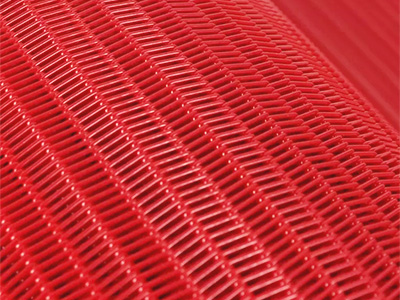
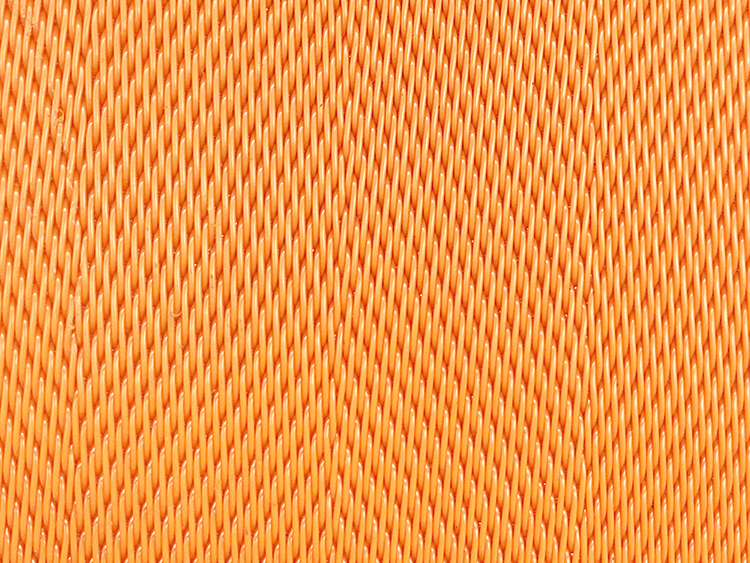
PFM Screen offers four standard weave structures, each optimized for different sludge characteristics, filtration fineness, and drainage requirements. Correct weave selection is the most critical factor in belt press performance and cake dryness.
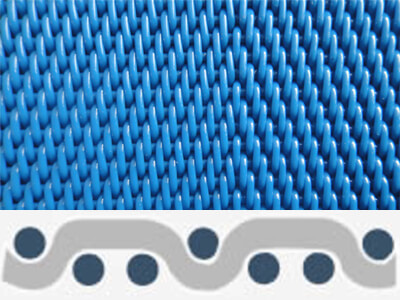 Three-Shed Stain Woven Dense single-layer twill structure with fine filtration — ideal for low-solids municipal wastewater sludge and applications requiring maximum filtrate clarity. Excellent filter cake release. | 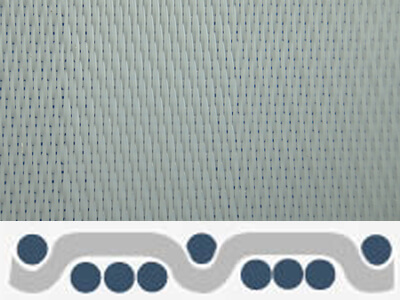 Four-Shed Stain Woven Balanced filtration and drainage. The most widely used weave for industrial sludge, process wastewater, and general-purpose belt filter press applications with moderate solids content. |
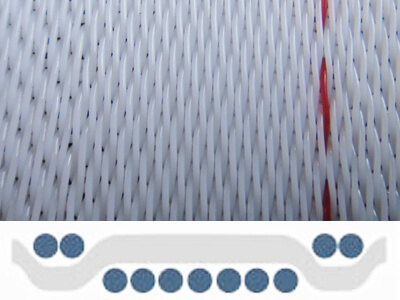 2/7 Stain Woven High open-area structure delivering superior air permeability and faster drainage. Recommended for medium-consistency industrial sludge and fruit juice pressing applications where drainage rate is the priority. | 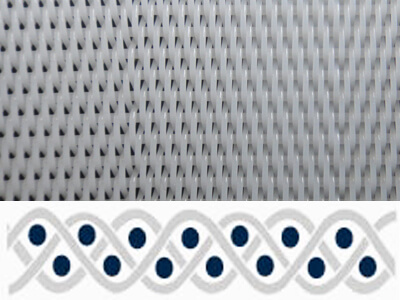 Three-Shed Double-Layer Dual-layer construction combining fine outer filtration with a coarse support layer. Best for high-capacity dewatering of heavy sludge, mining tailings, and high-tension belt press lines. |
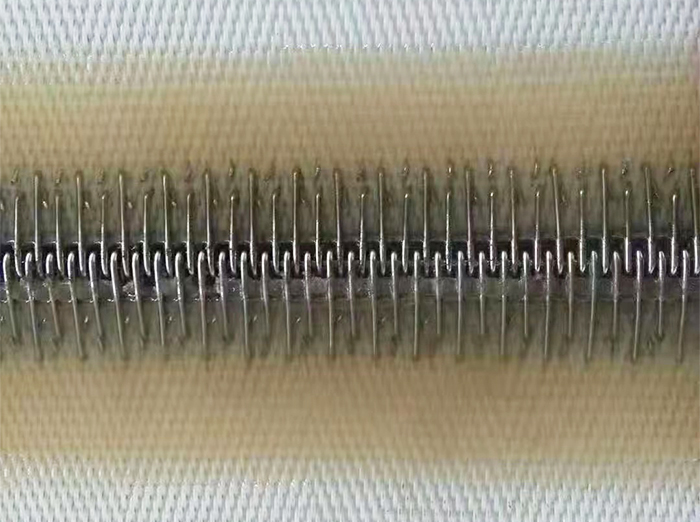
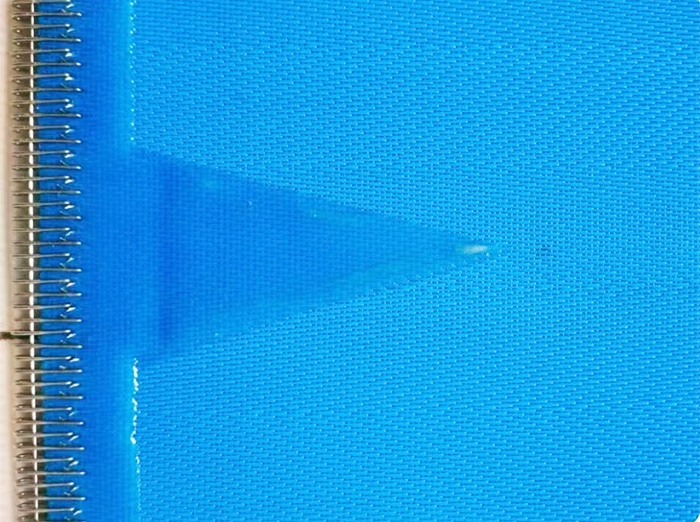
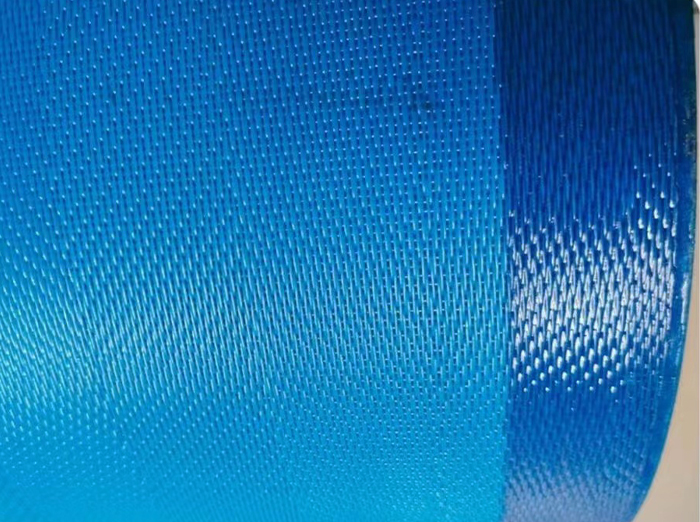
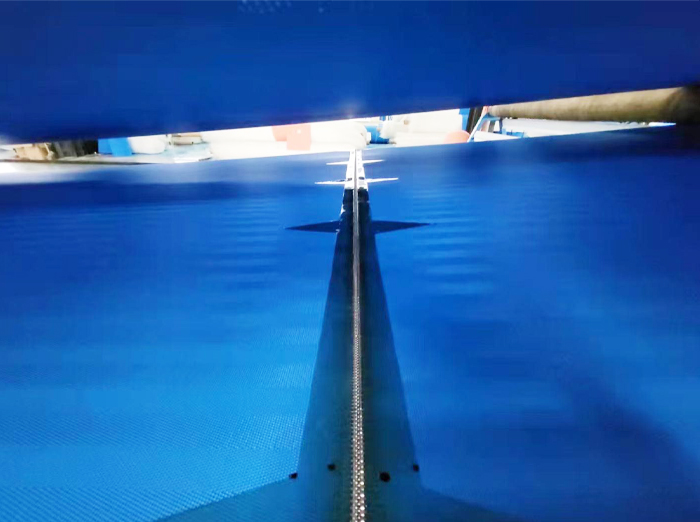
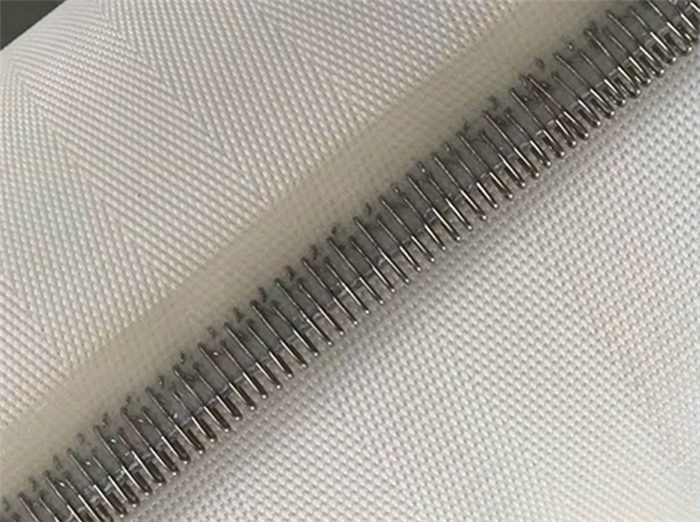
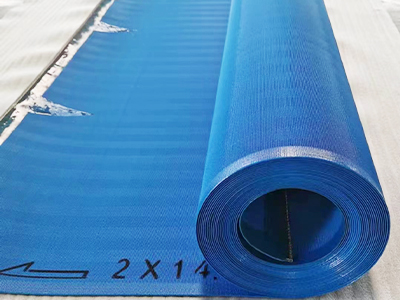 Robust Glued Lateral Edges ● Prevents lateral fiber fraying and thread pullout ● Seals belt sides against sludge infiltration ● Extends belt service life at edge contact points ● Compatible with standard belt press guide rails and tracking systems | 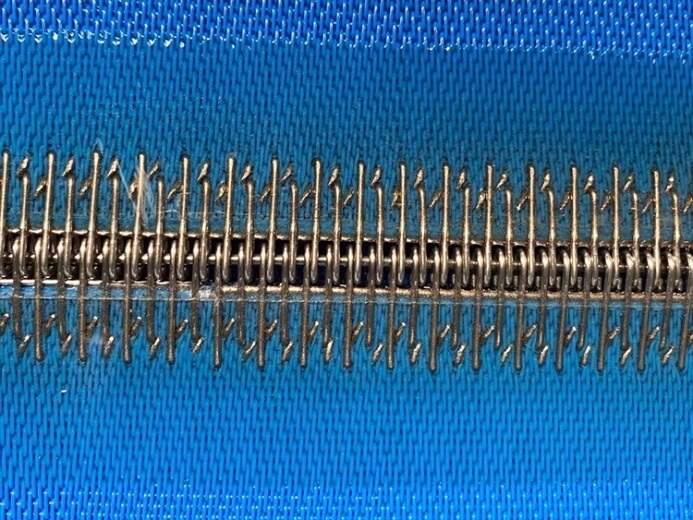 Stainless Steel Joining Seam ● Blades and sludge distributors glide freely over seam area ● Stronger and more durable than conventional hook seams ● Tightly closed seam reduces product penetration ● Proven running properties on high-tension belt press lines |
pH 1–14 Full Chemical Range Acid & alkali resistance from strongly acidic to strongly alkaline — handles lime-conditioned sludge and caustic wash environments | -20–200°C Wide Temperature Range From cold sludge processing in refrigerated facilities through high-temperature sludge drying applications | 1,600 N/cm Warp Strength High tensile strength across all 14 standard models — reliable under sustained belt press roller load and tension | 8 m × 200 m Maximum Custom Size Custom-manufactured to your exact belt press dimensions — width, length, weave, yarn, and joining specification |
Get Your Custom Belt Specification Within 24 Hours Share your belt width, weave pattern, material type, joining method, and application — PFM Screen will specify the right press filter belt for your machine. WhatsApp: +86 153 6967 9157Email: polyestermesh@pfmscreen.com |
Feature
Chemical Resistance — pH 1–14 High-quality polyester monofilament delivers excellent resistance to acids and most industrial chemicals. The PA nylon variant adds superior alkali resistance for lime-conditioned sludge, caustic wash systems, and process fluids with pH above 10. Both yarn types resist abrasion and corrosion to deliver long service life in aggressive environments. | Temperature Stability — -20°C to 200°C Operating range of -20°C to 200°C covers the complete spectrum of belt filter press applications — from cold sludge handling in refrigerated environments to high-temperature sludge dryer applications. Thermal heat-setting during manufacturing locks belt dimensions and minimizes deformation under sustained thermal and mechanical load. |
Clean Filter Cake Release Precision monofilament weave geometry produces a regular, smooth belt surface that allows the sludge cake to discharge cleanly at the cake discharge roller. The uniform open mesh structure resists blinding (pore clogging) during operation, maintaining stable filtrate flow and drainage rate throughout the belt's service life. | Mechanical Stability Under Press Load Heavy-duty loom construction combined with thermal heat-setting produces belts with 1,600 N/cm warp strength that maintain dimensional stability under sustained belt press roller loads, wedge zone compression, and lateral tracking forces. Stainless steel joining seams perform better than conventional hook seams under high-tension applications. |
| Weave Pattern | Structure | Permeability | Best For |
|---|---|---|---|
| Three-Shed Stain Woven | Dense single-layer twill | Lower — fine filtration | Municipal wastewater sludge; high-clarity filtrate; low-solids feed |
| Four-Shed Stain Woven | Balanced single-layer twill | Medium — general purpose | Industrial sludge; process wastewater; general belt filter press |
| 2/7 Stain Woven | High open-area single-layer | Higher — fast drainage | Medium-consistency sludge; fruit juice pressing; fast-drainage priority |
| Three-Shed Double-Layer | Dual-layer (fine outer / coarse inner) | Variable by layer | Heavy sludge; mining tailings; high-tension belt press lines |
Polyester (PET) Monofilament — Standard ● Excellent dimensional stability and high tensile strength ● Good resistance to acids and most organic chemicals ● FDA-compliant grades for direct food contact applications ● Recommended for municipal, industrial, and food processing ● Standard across all 14 stock models — fast lead time | Nylon (PA) Monofilament — Alkali-Resistant Variant ● Superior resistance to strong alkalis and caustic cleaning agents ● Better abrasion resistance than PET in high-friction applications ● Available as pure PA or PA/PET mixed-yarn construction ● Ideal for lime-conditioned sludge and high-pH chemical environments ● See model 151105 PA/PET mixed yarn in the Specifications tab |
Required Information ● Belt length and width ● pH value of the filtrate / process fluid ● Operating temperature range ● Required air permeability (m³/m²h or CFM) ● Edge processing and joining / seam type | Helpful Additional Information ● Slurry consistency and solid particle size ● Belt filter press brand, model, and processing capacity ● Required belt thickness and weight (kg/m²) ● Existing belt model number (if replacing a worn belt) ● Application type (municipal, food, mining, industrial) |
Application
PFM Screen's Woven Press Filter Belts are deployed across the widest range of solid-liquid separation applications — from municipal wastewater treatment plants and food processing facilities to mining operations and pulp & paper mills. Each belt filter press is fitted with 2 to 3 permeable filter belts that act as the primary dewatering medium through three operating zones: gravity drainage, wedge zone compression, and high-pressure roller dewatering. The quality of the woven press filter belt directly determines sludge cake dryness and filtrate clarity on every machine cycle.
Municipal Sludge Dewatering ● Dewatering of primary, secondary, and mixed municipal wastewater sludge ● Gravity thickening and mechanical dewatering on belt filter presses ● Biological sludge dewatering before anaerobic digestion or incineration ● Biosolids processing for land application or landfill disposal | Industrial Sludge & Process Wastewater ● Industrial process sludge from chemical, petrochemical, and pharmaceutical plants ● Coatings, pigment, and dye slurry dewatering ● Electroplating and metal finishing wastewater treatment ● Effluent treatment plant sludge dewatering across all industrial sectors |
Food & Beverage Processing ● Fruit and vegetable juice pressing — apple, pear, ginger, berry, citrus, nuts ● Pressing and dewatering of pomace and plant by-product slurries ● Protein and starch separation in food ingredient processing ● FDA-compliant PET yarn for direct food contact — safe for juice and food lines | Mining, Pulp & Paper ● Mine tailing dewatering — iron ore, copper, lead-zinc, fluorite, coal slurry ● Mineral concentrate dewatering and fine particle recovery ● Pulp mill primary sludge and paper mill waste dewatering ● Fiber recovery from paper and pulp process waste streams |
PFM Screen manufactures custom replacement woven press filter belts for all major belt filter press platforms worldwide. Provide your machine brand, model number, and current belt dimensions — PFM Screen will cross-reference and supply a matched replacement within 24 hours.
| Machine Brand | Country | Machine Series / Type | Primary Application |
|---|---|---|---|
| Andritz | Austria | KPA / FKF Belt Filter Press | Municipal & industrial sludge dewatering |
| Alfa Laval | Sweden | ThickTech / Belt Filter Press | Sludge thickening & dewatering, food processing |
| Komline-Sanderson | USA | Kompress Gravity Belt Thickener / Belt Press | Industrial & municipal sludge |
| Ashbrook Simon-Hartley | USA / UK | Ultra-Belt Press | Municipal wastewater biosolids |
| Huber Technology | Germany | BELTFIX S Belt Filter | Municipal wastewater treatment |
| BDP Industries | USA | Three Belt Press | Food processing & municipal sludge |
| Bellmer | Germany | BEWA Belt Filter Press | Pulp, paper & industrial process |
| EIMCO / FLSmidth | USA / Denmark | Belt Filter Press | Mining & mineral processing |
| Diemme Filtration | Italy | Belt Filter Press | Mining, chemical & pharmaceutical |
| Parkson / Hycor | USA | Belt Filter Press | Municipal sludge dewatering |
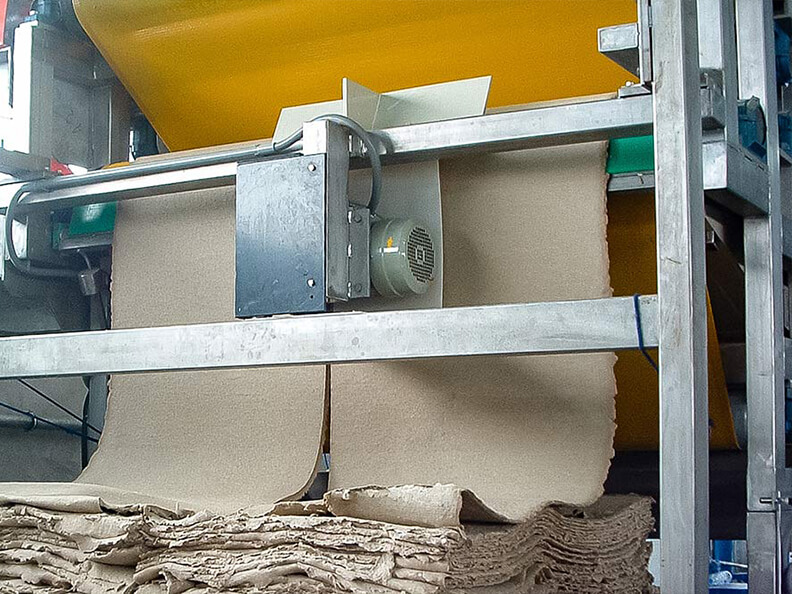 Sludge Dewatering — Belt Filter Press Continuous mechanical dewatering of municipal and industrial sludge — the woven filter belt determines cake dryness and filtrate clarity at every production cycle | 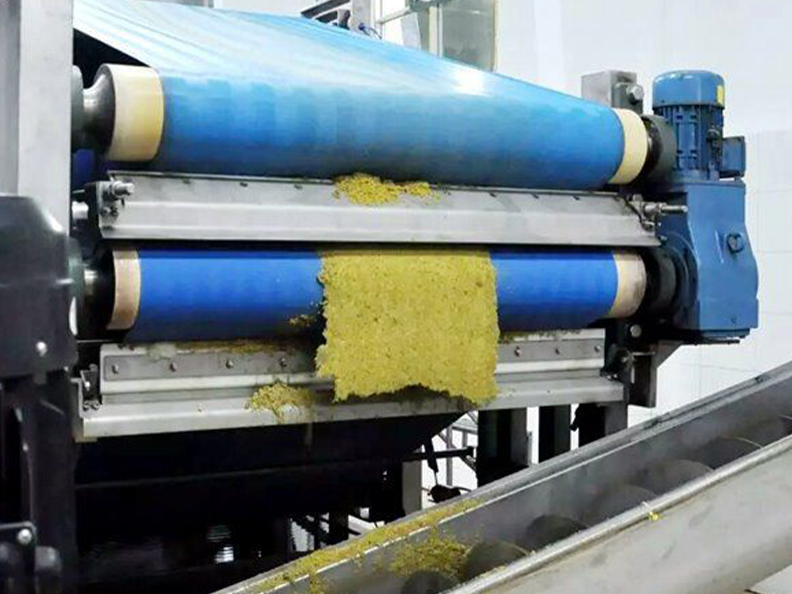 Fruit Juice Pressing — Belt Press Extractor FDA-compliant woven press filter belts for continuous fruit and vegetable juice extraction on belt press machines — apple, pear, ginger, citrus, and berry lines |
Specifications
PFM Screen offers 14 standard woven press filter belt specifications covering the full range of belt filter press and vacuum belt filter applications. All standard models use polyester monofilament with 1,600 N/cm warp strength. Custom mesh specifications, widths, and lengths are available. Contact PFM Screen with your process requirements for a matched specification.
| Model | Filament Ø Warp/Weft (mm) | Density Warp/Weft (wire/cm) | Strength Surface/Joint (N/cm) | Weight (kg/m²) | Thickness (mm) | Air Perm. (m³/m²h) | CFM (127Pa) |
|---|---|---|---|---|---|---|---|
| 31505 | 0.4 / 0.5 | 33 / 9 | 1600 / 900 | 0.8 | 1.3 | 2,976 | 186 |
| 26508 | 0.5 / 0.5 | 28 / 18.5 | 1600 / 900 | 1.2 | 1.5 | 2,050 | 128 |
| 2470 | 0.5 / 0.7 | 24 / 9 | 1600 / 650 * | 1.23 | 1.9 | 7,520 | 470 |
| 22903 | 0.5 / 0.9 | 23 / 5.5 | 1600 / 900 | 1.4 | 1.9 | 8,480 | 530 |
| 27708 | 0.5 / 0.7 | 28 / 8.5 | 1600 / 900 | 1.53 | 2.0 | 4,896 | 306 |
| 26908 | 0.5 / 0.9 | 26.2 / 6.2 | 1600 / 900 | 1.49 | 2.15 | 6,080 | 380 |
| 24908 | 0.5 / 0.9 | 24.8 / 7.1 | 1600 / 900 | 1.48 | 2.1 | 7,360 | 460 |
| 24808 | 0.5 / 0.8 | 24.8 / 8.0 | 1600 / 900 | 1.4 | 2.0 | 6,880 | 430 |
| 16903 | 0.7 / 0.9 | 16.3 / 5.0 | 1600 / 900 | 1.5 | 2.1 | 7,520 | 470 |
| 16903 blue | 0.7 / 0.9 | 16.3 / 5.8–6.0 | 1600 / 900 | 1.7 | 2.1 | 3,968–5,550 | 248–347 |
| 15905 | 0.9 / 0.9 | 15.3 / 5.0 | 1600 / 900 | 2.1 | 2.77 | 7,840 | 490 |
| 151105 | 0.9 / 1.1 | 15.3 / 6.3 | 1600 / 900 | 2.45 | 2.85 | 9,280 | 580 |
| 151105 PA/PET | 0.9 / 1.1 | 15.3 / 6.3 | 1600 / 900 | 2.45 | 2.85 | 9,280 | 580 |
| 12904 | 0.9 / 0.9 | 12.3 / 9.5 | 1600 / 900 | 2.2 | 3.5 | 9,600 | 600 |
* Model 2470 joint strength 650 N/cm — confirm application suitability with PFM Screen for high-tension press lines. Model 151105 PA/PET uses mixed polyamide/polyester yarn for enhanced alkali resistance. Model 16903 blue permeability varies by weft density variant. Custom widths (up to 8 m), lengths (up to 200 m), and mesh specifications available on request. All values subject to manufacturing tolerances.
Q1: What is a woven press filter belt and how does it differ from a spiral press filter belt? A woven press filter belt is a continuous filter fabric woven from polyester or nylon monofilament yarns in a structured twill or double-layer pattern. It is the primary filtration medium on a belt filter press — typically 2 to 3 belts are fitted per machine — and directly determines sludge cake dryness, filtrate clarity, and throughput. A spiral press filter belt, by contrast, is constructed from interlocked polyester spiral coils rather than woven yarns, giving it an open mesh structure better suited for surface conveying and drainage applications where particle retention fineness is less critical. Woven press filter belts provide finer solid retention and are the standard for municipal and industrial sludge dewatering. |
Q2: Which belt filter press machine brands can PFM Screen supply replacement belts for? PFM Screen manufactures custom replacement woven press filter belts for all major belt filter press brands, including Andritz, Alfa Laval, Komline-Sanderson, Ashbrook Simon-Hartley, Huber Technology, BDP Industries, Bellmer, EIMCO / FLSmidth, Diemme Filtration, Parkson Hycor, and others. To order a replacement, provide the machine brand and model, the current belt dimensions (width, length, seam type), and your process conditions (pH, temperature, sludge type). PFM Screen will cross-reference the specification and confirm availability within 24 hours via WhatsApp (+86 153 6967 9157) or email (polyestermesh@pfmscreen.com). |
Q3: Which weave pattern should I select for my sludge type? The best weave pattern depends on your sludge consistency and the priority between filtrate clarity and drainage speed. For low-solids municipal wastewater sludge where filtrate clarity is critical, three-shed stain woven is recommended. For general industrial sludge and balanced performance, four-shed stain woven is the most widely used choice. Where drainage speed is the priority — such as medium-consistency industrial sludge or fruit juice pressing — the 2/7 stain woven offers higher permeability. For heavy sludge, mining tailings, or high-tension belt press lines requiring maximum structural strength, three-shed double-layer construction is the correct selection. Contact PFM Screen with your sludge characterization data for a confirmed recommendation. |
Q4: Is PFM Screen's woven press filter belt FDA-compliant for food processing applications? Yes. PFM Screen's woven press filter belts manufactured from FDA-certified polyester (PET) monofilament comply with FDA 21 CFR requirements for food contact materials and are safe for use in direct contact with food products including fruit juices, vegetable extracts, proteins, and starch slurries on belt press machines. These belts are particularly suited for apple, pear, ginger, citrus, berry, and nut juice extraction lines. Buyers operating in markets requiring EU compliance should confirm the specific regulatory standard applicable to their process with PFM Screen at time of order. |
Q5: What are the chemical and temperature resistance limits of the belt? PFM Screen woven press filter belts in standard polyester monofilament are rated for the full pH 1–14 range, making them suitable for acidic and alkaline sludge conditioning environments alike. The working temperature range is -20°C to 200°C, covering cold sludge processing, standard municipal dewatering, high-temperature industrial applications, and sludge drying. For environments involving particularly strong caustic agents (high-pH lime conditioning, industrial alkali wash systems), the PA nylon or PA/PET mixed-yarn variant (model 151105 PA/PET) provides additional alkali resistance. Contact PFM Screen with your chemical exposure profile for yarn and weave confirmation. |
Q6: What edge finishing and seam joining options are available? PFM Screen provides two standard edge finishing options: robust glued lateral edges, which prevent fiber fraying at the belt sides and seal against sludge infiltration; and optional fabric-covered edges for specialized tracking systems. For the longitudinal joining seam (making the belt endless), PFM Screen supplies precision stainless steel clipper seams as standard — these allow blades and sludge distributors to pass over the seam far more easily than conventional hook seams, and provide a tighter, more durable joint. Single-finger woven joining is also available for specific applications. The correct joining method depends on your conveyor geometry, belt tension, and operational requirements. |
Q7: What information do I need to provide to order a custom woven press filter belt? To specify a belt, PFM Screen requires: (1) belt length and width; (2) pH value of the filtrate or process fluid; (3) operating temperature range; (4) required air permeability in m³/m²h or CFM; and (5) edge processing and joining/seam type. Helpful additional information includes slurry consistency and solid particle size, the belt filter press machine brand and model, required belt thickness and weight (kg/m²), and an existing belt model number if replacing a worn belt. If you are replacing an existing belt, send a sample or a full technical drawing — PFM Screen will replicate the specification exactly. |
Q8: What is the minimum order quantity (MOQ) and typical lead time? PFM Screen accepts orders from a single custom belt with no fixed minimum order quantity. Standard lead time for custom-specified woven press filter belts is typically 2 to 4 weeks after drawing or specification confirmation, depending on belt dimensions, yarn type, and production scheduling. For standard stock models, shorter lead times may be available. Rush orders can be accommodated in certain cases — contact PFM Screen to discuss your required delivery date. A formal quotation will be issued within 24 hours of receiving your complete specification via WhatsApp (+86 153 6967 9157) or email (polyestermesh@pfmscreen.com). |
Ready to Order? Get Your Custom Quote Within 24 Hours Send us your belt width, length, weave pattern, pH range, seam type, and machine brand — PFM Screen will respond with a full specification and pricing within one business day. WhatsApp: +86 153 6967 9157Email: polyestermesh@pfmscreen.com |