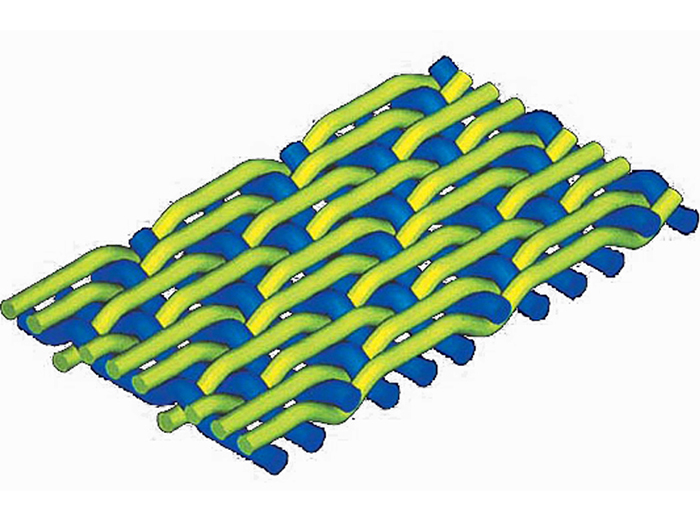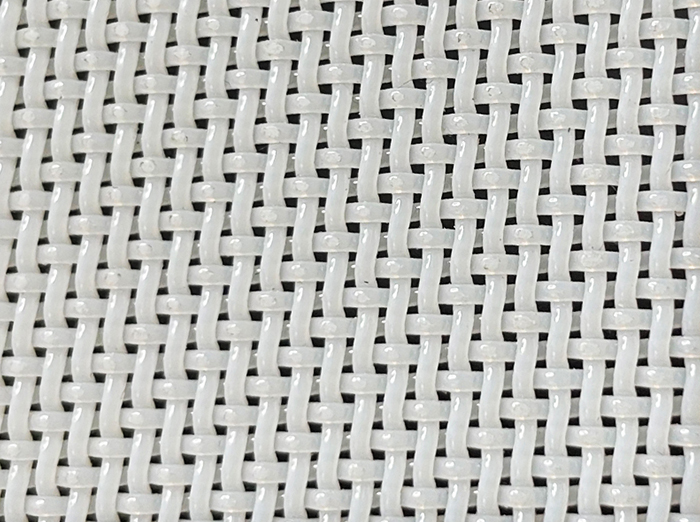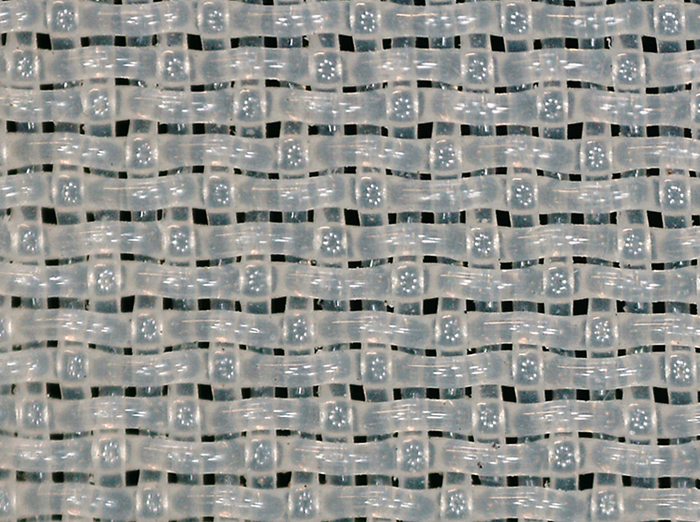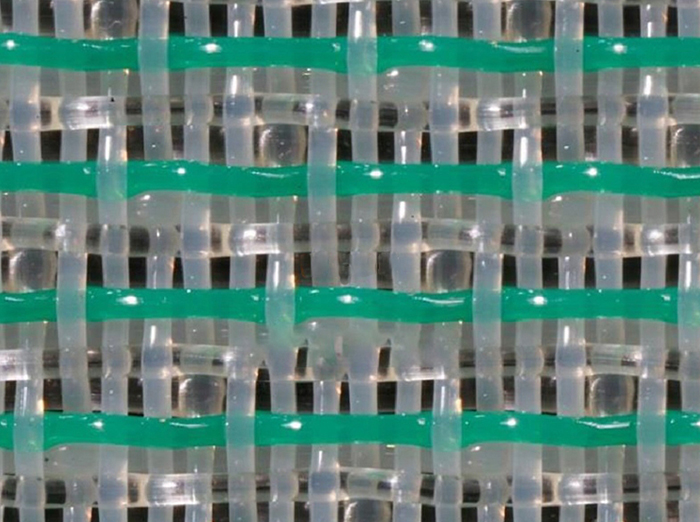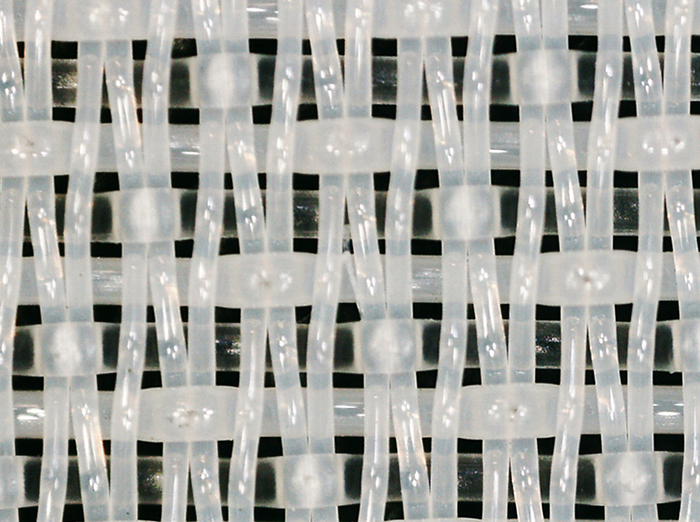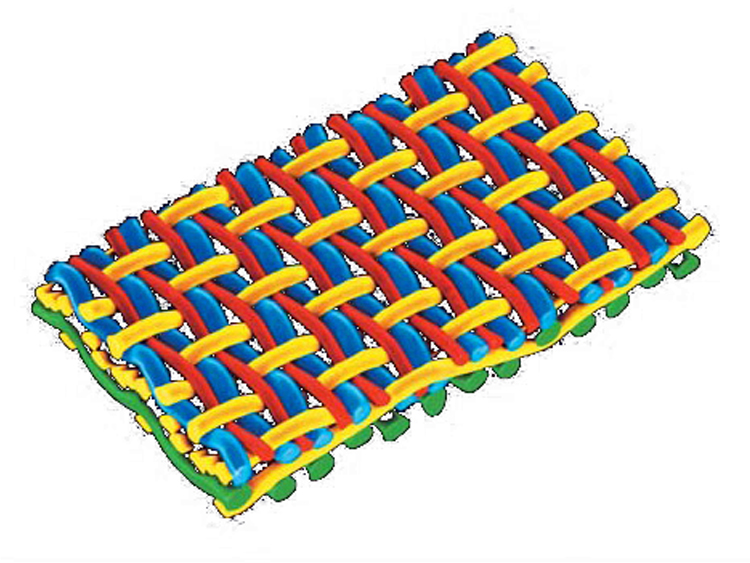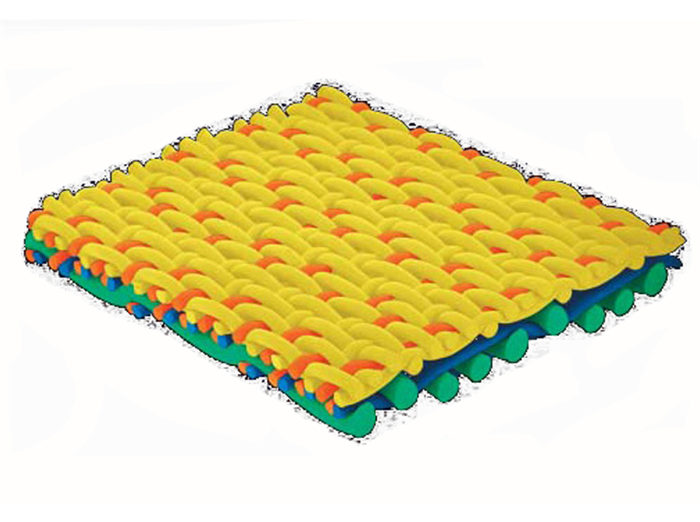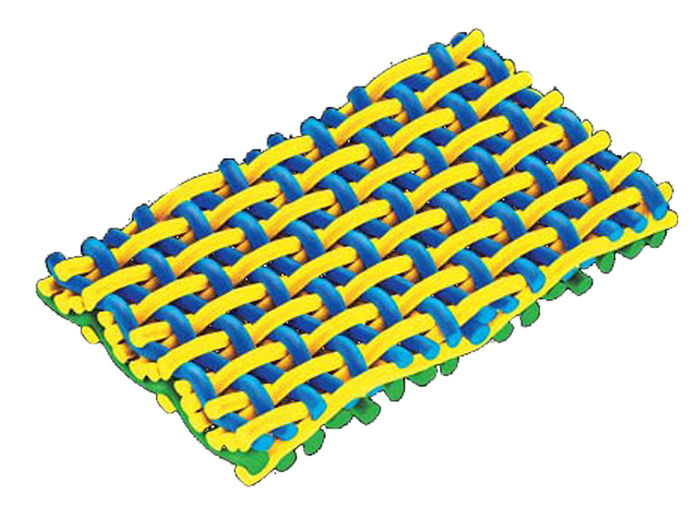
PFM Screen manufactures single layer forming fabrics (also known as fourdrinier wire, forming screen or single layer paper machine clothing) in three weave architectures — 4-shed 3/1 stain weave, 5-shed 1/4 satin weave, and 8-shed — to match the drainage, retention and speed requirements of each paper grade.
Description
PFM Screen's Single Layer Forming Fabrics are precision-woven polyester fourdrinier wires — the fundamental paper machine clothing for the forming section of Fourdrinier, crescent-former and tissue machines. Available in 4-shed, 5-shed and 8-shed weave architectures, they act simultaneously as high-speed conveyor and dehydrator: draining over 96% of water from the stock while retaining fiber and filler to form the paper sheet. Woven on European TEXO and Jurgens wide-width looms and endlessly seamed on the Austrian WIS automatic seaming machine, PFM Screen's single layer fabrics deliver tensile strength ≥600 N/cm MD and air permeability from 6,500 to 9,000 m³/m²h across 16 standard configurations plus unlimited custom specifications.
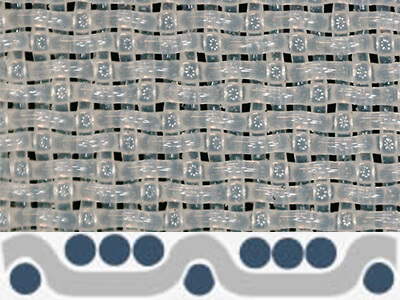 4-Shed 3/1 Stain Weave · Balanced drainage, stretch and anti-wear · For cultural paper, printing & packaging · Air permeability: 6,500–8,000 m³/m²h · Speed: 100–700 m/min | 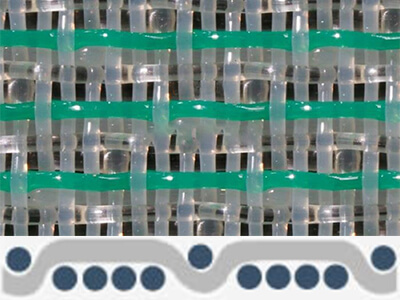 5-Shed 1/4 Satin Weave — Tissue Focus · Better stretch & fiber retention than 4-shed · Preferred for tissue, toilet paper & packing paper · Air permeability: 6,600–7,100 m³/m²h · Speed: 50–700 m/min | 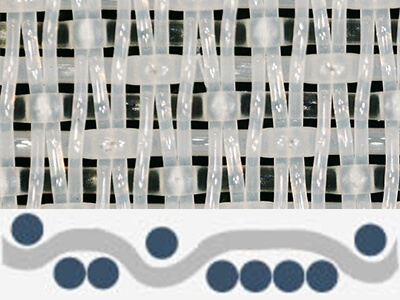 8-Shed Single Layer — Heavy Grades · Highest wear resistance in single layer family · Long service life; deeper mesh print pattern · For kraft, corrugated, bag paper & cardboard · Speed: 100–400 m/min |
The forming fabric is the most performance-critical component in the paper forming section — simultaneously determining drainage rate, fiber retention, wire marking severity, formation uniformity, and fabric service life. Selecting the wrong shed configuration, monofilament diameter or weave density directly increases operating cost through reduced paper quality, higher fiber loss and shorter fabric life.
01 High Drainage Capacity 6,500–9,000 m³/m²h air permeability drains >96% of water from the stock slurry in the forming zone | 02 Controlled Fiber Retention Engineered mesh aperture retains fine fillers and short fibers, reducing stock loss and improving sheet smoothness | 03 Dimensional Stability European heat-setting controls elongation to 0.60–0.68% at 50 N/cm, ensuring accurate running length across the full service life | 04 Flat Seam Performance Austrian WIS automatic seaming machine produces a flat, strong seam that minimizes paper machine mark and extends service life |
PFM Screen's single layer forming fabrics are used as replacement forming wires on Fourdrinier and crescent-former machines from all major OEM manufacturers. Fabric model selection is guided by machine type, paper grade and running speed:
| Machine Type | Formation System | OEM Examples | Speed Range | Recommended Shed |
|---|---|---|---|---|
| Fourdrinier — Cultural / Print | Open horizontal wire | Voith, Valmet, Andritz, GL&V | 100–700 m/min | 4-Shed |
| Crescent Former — Tissue | C-wrap crescent (roll + felt) | Toscotec, Voith, Andritz, Recard | 200–2,000 m/min | 5-Shed |
| Fourdrinier — Tissue | Open wire + suction boxes | Voith, Valmet, Kadant elements | 50–700 m/min | 5-Shed |
| Fourdrinier — Kraft / Corrugated | Open horizontal wire | Voith, Bellmer, Allimand, GL&V | 100–400 m/min | 8-Shed |
| Fourdrinier — Packaging / Bag | Open horizontal wire | Voith, A.Celli, Kadant | 100–500 m/min | 4-Shed or 8-Shed |
* OEM brand names are listed for compatibility reference only. PFM Screen is an independent forming fabric manufacturer with no certified partnership with the machine makers listed above.
Standard Specifications · Weave: 4-shed / 5-shed / 8-shed · Material: Polyester monofilament · Warp dia: 0.17–0.22 mm · Weft dia: 0.17–0.38 mm · Strength: 500–700 N/cm MD · 16 standard model configurations | Custom Options Available · Width: any dimension up to 11,000 mm+ · Length: any machine perimeter · Material: PA (nylon) for alkali resistance · Warp/weft density: adjustable per grade · Elongation-matched to your machine tension · Edge resin treatment for fray resistance |
Request a Forming Fabric Recommendation — 24-Hour Response Share your machine type, paper grade, running speed, fabric width and current shed configuration — PFM Screen will recommend the correct single layer forming fabric and quote within one business day. WhatsApp: +86 153 6967 9157Email: polyestermesh@pfmscreen.com |
Feature
High Drainage Index (DI) Air permeability of 6,500–9,000 m³/m²h ensures rapid water removal in the forming zone. The open mesh structure maintains a high Drainage Index (DI) without sacrificing fiber support, reducing the load on press and dryer sections downstream. | Controlled Elongation Heat-set polyester monofilament limits MD elongation to 0.60–0.68% at 50 N/cm — calibrated to your machine's tension range. This prevents over-stretching in service and ensures accurate length throughout the full service run without constant re-tensioning. | Grade-Matched Sheet Release The smooth polyester monofilament surface minimizes fiber embedment into the fabric body, enabling clean sheet pickup at the couch roll. The 5-shed satin weave produces an especially clean sheet release on tissue grades, reducing breaks and improving reel quality. |
Adjustable Fiber Support Index (FSI) FSI (Fiber Support Index) measures how well the fabric surface supports individual fiber crossing points. By adjusting mesh count and monofilament diameter, PFM Screen engineers FSI for your specific paper grade — higher FSI for fine printing papers, lower for packaging grades where drainage takes priority. | European Manufacturing Process Woven on Swedish TEXO 13.5 m and German Jurgens 16 m wide-width weaving machines. Heat-set for dimensional stability. Endlessly seamed on Austrian WIS automatic seaming equipment — producing a flat, strong, seamless joint that eliminates machine marking and extends fabric service life. | Abrasion-Resistant Monofilament High-tenacity polyester monofilament provides MD tensile strength of 500–700 N/cm. The 8-shed weave structure, with its longer weft float on the machine side, delivers the highest abrasion resistance in the single layer family — extending service life by 20–40% vs. 4-shed on abrasive kraft grades. |
| Property | Polyester (PET) — Standard | Polyamide/Nylon (PA) — Alkali Grade |
|---|---|---|
| Tensile Strength | 35–70 N/mm² | 28–46 N/mm² |
| Elongation | 16–40% | 20–70% |
| Moisture Absorption (24 hr) | 0.20% — excellent stability | 2.90% — dimensionally variable |
| Temperature Limit | Up to 140°C | 90–130°C |
| Acid Resistance | Excellent (organic acids, dilute mineral acids) | Poor (decomposes in hot HCl) |
| Alkali Resistance | Moderate (resists weak bases) | Excellent (unchanged in all alkali environments) |
| Recommended for | Standard paper machines, acid/neutral pH | Alkaline process or high-pH wash environments |
| Property | 4-Shed | 5-Shed | 8-Shed |
|---|---|---|---|
| Air Permeability (m³/m²h) | 6,500–8,000 | 6,600–7,100 | 8,000–9,000 |
| Typical Warp Density (pcs/cm) | 28–35 | 30–35 | 25–32 |
| Wear Resistance | Medium | Medium | High |
| Wire Mark Depth | Light | Light | Deeper |
| Fiber Retention | Good | Better | Good |
| Elongation at 50 N/cm | 0.60% | 0.60% | 0.65% |
| Speed Range | 100–700 m/min | 50–700 m/min | 100–400 m/min |
Need Help Selecting the Right Shed Configuration? PFM Screen's technical team will review your paper grade, machine speed and current forming fabric to recommend the optimal shed and monofilament specification. WhatsApp: +86 153 6967 9157Email: polyestermesh@pfmscreen.com |
Application
Single layer forming fabrics are versatile — covering a wide range of paper and board grades from lightweight tissue to heavy kraft. Shed selection drives the key trade-off between drainage rate, wire mark and wear life:
| Paper Grade | Recommended Shed | Basis Weight | Machine Speed |
|---|---|---|---|
| Cultural / Printing / Writing Paper | 4-Shed | 60–120 g/m² | 100–700 m/min |
| Tissue Paper | 5-Shed | 12–25 g/m² | 200–700 m/min (Fourdrinier) |
| Toilet Paper / Facial Tissue (crescent) | 5-Shed | 15–40 g/m² | 200–2,000 m/min |
| Packing / Packaging Paper | 4-Shed or 8-Shed | 80–150 g/m² | 100–500 m/min |
| Kraft Paper | 8-Shed | 60–120 g/m² | 100–400 m/min |
| Corrugated Medium / Cardboard | 8-Shed | 90–250 g/m² | 100–400 m/min |
| Bag Paper | 8-Shed | 50–100 g/m² | 100–350 m/min |
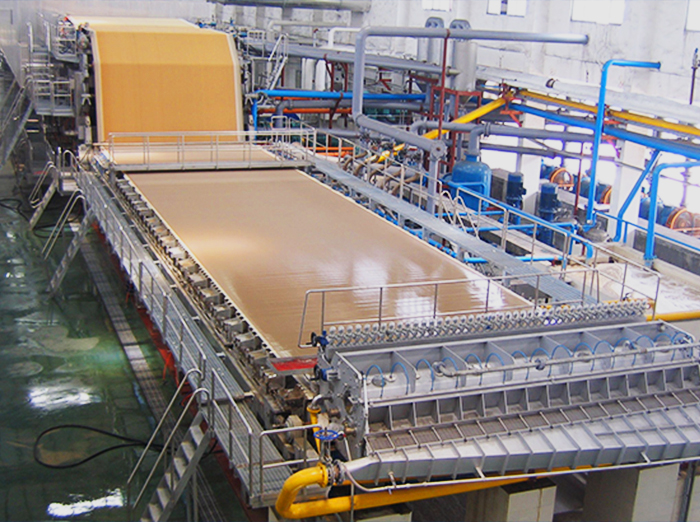
The single layer forming fabric runs continuously in the forming section — the first stage of the paper machine where the dilute stock slurry is dewatered from approximately 99% water to about 80% water before entering the press section:
| Stock Preparation | → | FORMING SECTIONThis Forming Fabric | → | Press Section | → | Dryer Section | → | Reel |
Stock consistency at headbox: ~0.3–1.5% fiber · Water drained in forming section: >96% · Paper dryness at couch roll: ~18–22% · Drainage elements: foil blades, suction boxes, forming roll, dandy roll
| OEM / Machine Model | Application | Fabric Suitability |
|---|---|---|
| Voith Fourdrinier / MasterJet | Printing, writing, packaging | 4-Shed (grades 27254, 31204 series) |
| Voith CrescenTer (tissue) | Tissue, toilet paper | 5-Shed (grades 30205, 30175 series) |
| Valmet / Metso Fourdrinier | Printing, writing | 4-Shed (grades 27254, 31215 series) |
| Andritz Fourdrinier | Packaging, kraft, cultural | 4-Shed or 8-Shed |
| Toscotec Crescent Former | Tissue, facial tissue | 5-Shed (grades 28205, 31215 series) |
| GL&V / Black Clawson Fourdrinier | Kraft, corrugated, bag | 8-Shed (grades 25358, 27388 series) |
| Bellmer / Allimand Fourdrinier | Packaging, kraft | 8-Shed (grades 25388, 27358 series) |
* OEM names listed for compatibility reference. PFM Screen is an independent manufacturer not affiliated with the machine OEMs above.
Find the Right Single Layer Forming Fabric for Your Machine Send us your OEM machine model, paper grade, machine speed, fabric width and length — PFM Screen will confirm fabric suitability and quote within 24 hours. WhatsApp: +86 153 6967 9157Email: polyestermesh@pfmscreen.com |
Specifications
| Model | Warp Dia (mm) | Weft Dia (mm) | Warp Density (pcs/cm) | Weft Density (pcs/cm) | MD Strength (N/cm) | Air Perm (m³/m²h) | Elongation at 50N/cm |
|---|---|---|---|---|---|---|---|
| 27254 | 0.20 | 0.25 | 30 | 22 | 600 | 8,000 | 0.60% |
| 27254-1 | 0.20 | 0.25 | 30 | 23 | 600 | 7,500 | 0.60% |
| 27254-2 | 0.20 | 0.25 | 30 | 24 | 600 | 7,000 | 0.60% |
| 27274 | 0.20 | 0.27 | 30 | 21.5 | 600 | 7,800 | 0.60% |
| 27274-1 | 0.20 | 0.27 | 30 | 22.5 | 600 | 7,300 | 0.60% |
| 31204 | 0.18 | 0.20 | 35 | 28 | 600 | 7,500 | 0.68% |
| 31204-1 | 0.18 | 0.20 | 35 | 30 | 600 | 7,000 | 0.68% |
| 31204-2 | 0.18 | 0.20 | 35 | 30.5 | 600 | 6,500 | 0.68% |
| Model | Warp Dia (mm) | Weft Dia (mm) | Warp Density (pcs/cm) | Weft Density (pcs/cm) | MD Strength (N/cm) | Air Perm (m³/m²h) | Elongation at 50N/cm |
|---|---|---|---|---|---|---|---|
| 28205 | 0.20 | 0.20 | 30 | 27.5 | 600 | 6,800 | 0.60% |
| 30205 | 0.17 | 0.20 | 32 | 28.5 | 500 | 7,100 | 0.60% |
| 30175 | 0.17 | 0.17 | 32 | 29.5 | 500 | 6,600 | 0.60% |
| 31215 | 0.20 | 0.21 | 35 | 32 | 600 | 7,000 | 0.60% |
| Model | Warp Dia (mm) | Weft Dia (mm) | Warp Density (pcs/cm) | Weft Density (pcs/cm) | MD Strength (N/cm) | Air Perm (m³/m²h) | Elongation at 50N/cm |
|---|---|---|---|---|---|---|---|
| 25358 | 0.22 | 0.35 | 28 | 19.5 | 700 | 9,000 | 0.65% |
| 25388 | 0.22 | 0.38 | 29.5 | 19 | 700 | 8,500 | 0.65% |
| 27358 | 0.22 | 0.35 | 29 | 20 | 700 | 8,500 | 0.65% |
| 27388 | 0.22 | 0.38 | 31.5 | 19 | 700 | 8,000 | 0.65% |
* All specifications subject to manufacturing tolerances. Custom monofilament diameters, mesh densities and dimensions available. MD = Machine Direction (warp). CD = Cross-Machine Direction (weft).
Q1: What is the difference between 4-shed, 5-shed and 8-shed single layer forming fabrics? The "shed" refers to the number of yarn heddle positions in the weaving cycle and determines the weave pattern. A 4-shed 3/1 stain weave is the most common configuration, balancing drainage, stretch and wear resistance — suitable for the broadest range of paper grades. A 5-shed 1/4 satin weave adds an additional heddle position, creating a slightly longer weft float that improves fiber retention and sheet release — making it the standard choice for tissue and toilet paper grades. An 8-shed single layer has the longest weft float sequence, maximizing machine-side contact area and wear resistance, but produces a deeper mesh print — accepted in heavy grades like kraft and corrugated where surface smoothness is less critical than fabric life. |
Q2: Which single layer forming fabric is best for tissue paper machines? For tissue paper, the 5-shed 1/4 satin weave single layer forming fabric is the standard recommendation. The satin weave provides better fiber retention (higher FSI) and cleaner sheet release than the 4-shed, which reduces sheet breaks and improves finished tissue quality. For crescent-former tissue machines running at 200–2,000 m/min (Toscotec, Voith, Andritz), PFM Screen's 30205, 30175 and 28205 series provide suitable air permeability (6,600–7,100 m³/m²h) and elongation control (0.60% at 50 N/cm) for stable high-speed operation. Contact PFM Screen with your machine speed and tissue grade for a specific model recommendation. |
Q3: What is the Fiber Support Index (FSI) and how does it affect paper quality? The Fiber Support Index (FSI) quantifies how many fiber crossing points on the paper sheet are supported by the forming fabric surface per unit area. A higher FSI results in better paper flatness, surface smoothness, printability and strength — because more fiber junctions are supported during the critical initial dewatering phase rather than sinking into mesh gaps. Single layer fabrics have a lower FSI than double or triple layer fabrics by design — they prioritize drainage rate over surface quality. For fine printing and writing papers where FSI matters, PFM Screen recommends upgrading to a 2.5-layer or triple layer forming fabric. For tissue, packaging and kraft grades, single layer FSI is adequate. |
Q4: Can I use polyamide (nylon) monofilament instead of polyester for a single layer forming fabric? Yes. PFM Screen offers single layer forming fabrics woven from PA (polyamide/nylon) monofilament for applications where the wash water or process chemistry is strongly alkaline. Nylon is unchanged in all alkaline environments, whereas polyester can hydrolyze under prolonged strong alkali exposure. The trade-off is that PA has higher moisture absorption (2.90% vs 0.20% for PET), which creates dimensional variability with changing humidity — requiring more careful tension control. PA single layer forming fabrics are available as custom orders. Share your chemical wash conditions and pH range with PFM Screen for a suitability assessment. |
Q5: How do I determine the correct forming fabric length for my Fourdrinier machine? The fabric running length should be determined by actual measurement of your machine's minimum and maximum perimeter positions, accounting for the forming roll, breast roll, return rolls and forming board. Single layer polyester forming fabrics typically elongate approximately 0.5% at the beginning of operation, settling to a lower elongation as the fabric beds in. The fabric length should be specified approximately 5–10 cm greater than the minimum installation length to allow tensioning adjustment. PFM Screen recommends providing the minimum and maximum roll positions (or the existing worn fabric's actual running length) for the most accurate replacement specification. Never size by the nominal machine specification alone — actual installation measurements are always preferred. |
Q6: What causes premature wear in single layer forming fabrics and how can I extend service life? The primary wear mechanisms in single layer forming fabrics are: (1) abrasion from foil blade edges and suction box covers — blunt or worn forming elements accelerate fabric wear significantly; (2) chemical attack from process water pH extremes or high chlorine levels in wash water; (3) mechanical damage from foreign objects entering the forming section (wires, staples, pulp stone fragments); (4) improper tension — both over-tension and under-tension cause accelerated wear patterns. To extend service life: ensure all forming table elements are smooth and properly set; maintain recommended fabric tension per PFM Screen's guidance; use appropriate wash water chemistry; and install a metal detector on the headbox approach system. Upgrading from 4-shed to 8-shed also extends life on abrasive kraft grades by 20–40%. |
Q7: Are PFM Screen's single layer forming fabrics compatible with vacuum foil blades, suction boxes and dandy rolls? Yes. PFM Screen's single layer forming fabrics are designed to run over standard Fourdrinier forming elements including vacuum foil blades (Kadant, GL&V, Bellmer and other OEM types), suction flat boxes, low-vacuum suction boxes, high-vacuum suction boxes, hydrofoil blades, forming rolls and dandy rolls. Fabric selection (monofilament diameter, mesh count) should be matched to the vacuum levels and blade materials of your specific forming section. High-vacuum forming elements require fabrics with adequate tensile strength and elongation control — PFM Screen's 31204 series (0.18 mm warp, strength 600 N/cm) is well suited to high-vacuum Fourdrinier sections running at up to 700 m/min. |
Q8: What is the minimum order quantity and lead time for a custom single layer forming fabric? PFM Screen accepts single-piece custom orders with no minimum order quantity. Standard lead time for a custom-dimensioned single layer forming fabric (from order confirmation to shipment) is typically 2–4 weeks, depending on fabric width, length and whether the specification requires a non-standard monofilament diameter. For replacement orders where the fabric specification is already on file, lead times can sometimes be reduced. Contact PFM Screen via WhatsApp (+86 153 6967 9157) or email (polyestermesh@pfmscreen.com) with your machine name, width, length and current fabric model — we will confirm specification, pricing and lead time within 24 hours. |
Get a Custom Single Layer Forming Fabric Quote — 24-Hour Response Send us your machine type, paper grade, fabric dimensions (width x perimeter), shed configuration and annual consumption — PFM Screen will respond with a full specification and pricing within one business day. WhatsApp: +86 153 6967 9157Email: polyestermesh@pfmscreen.com |