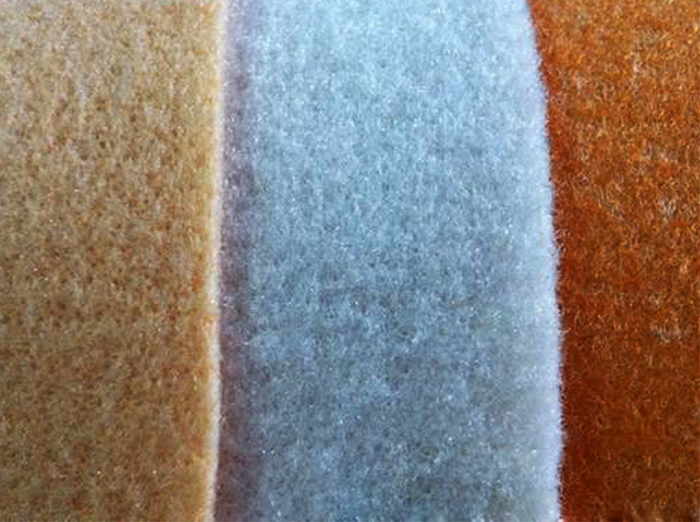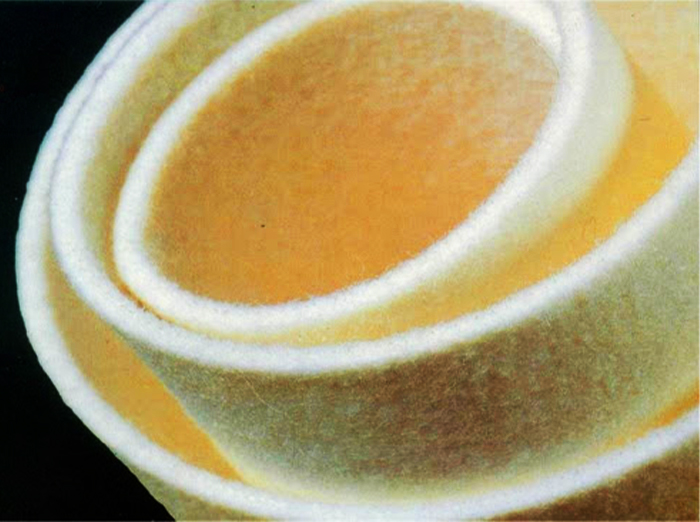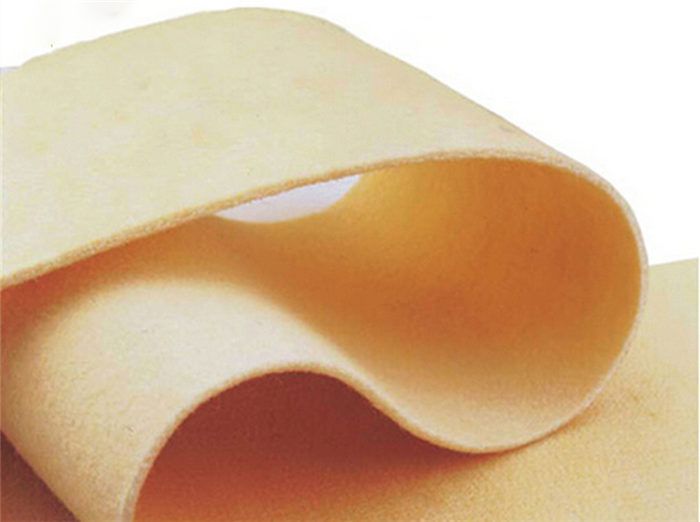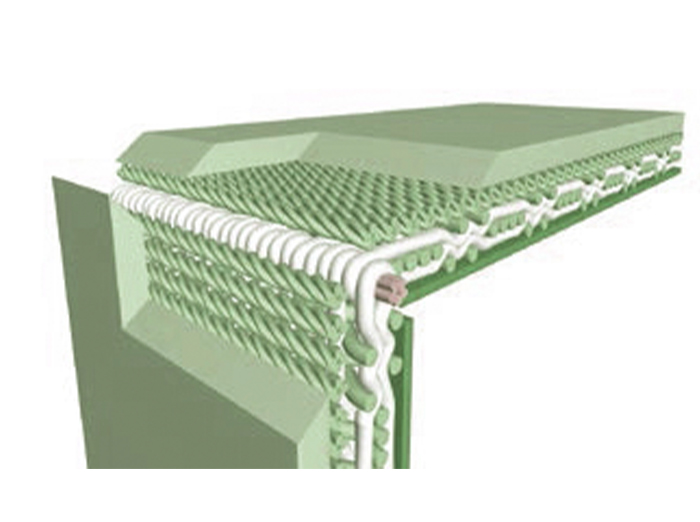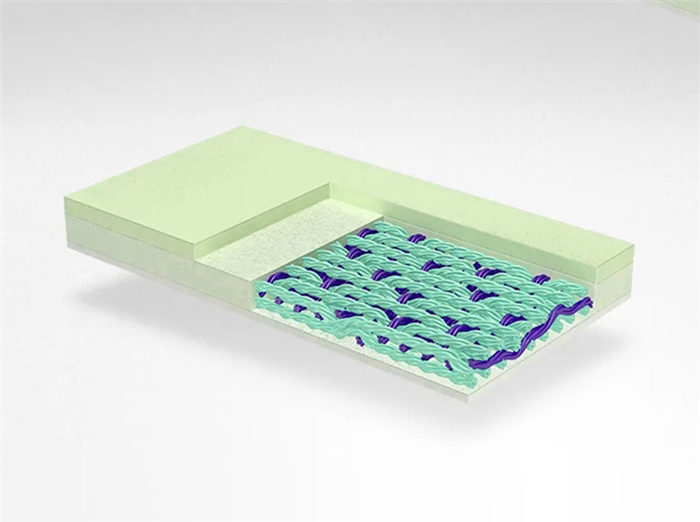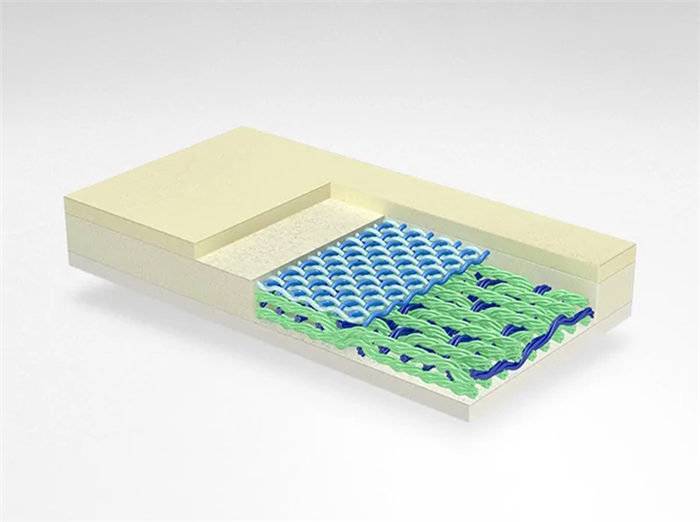
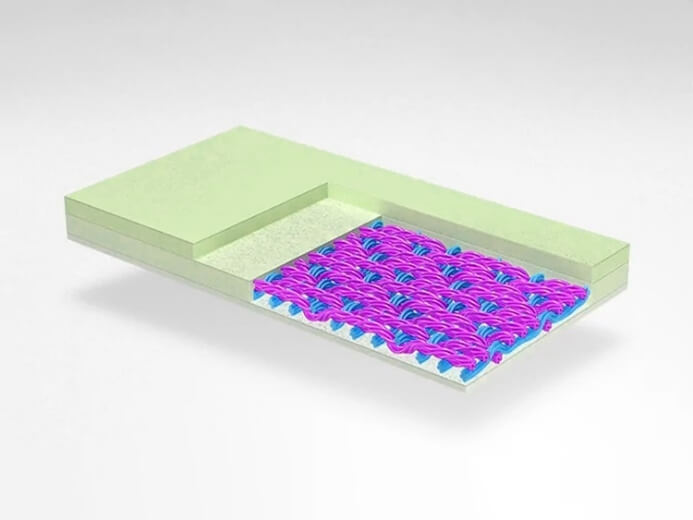
PFM Screen's Single Layer BOM Press Felt is a batt-on-mesh papermaking felt with a single-layer woven polyester mesh base onto which high-grade staple fiber batt is precision-needled from both faces. Designed for cylinder machines, fourdrinier machines, super-forming machines, and tissue machines operating at speeds up to 800 m/min and nip pressures up to 80 kN/m.
Description
PFM Screen's Single Layer BOM Press Felt is a classic batt-on-mesh papermaking felt designed for the press section of cylinder, fourdrinier, super-forming, and tissue paper machines. The felt delivers reliable mechanical dewatering, a mark-free paper surface, low elongation, and easy cleaning — making it the industry standard entry-level press felt for machines operating at up to 800 m/min with nip pressures up to 80 kN/m.
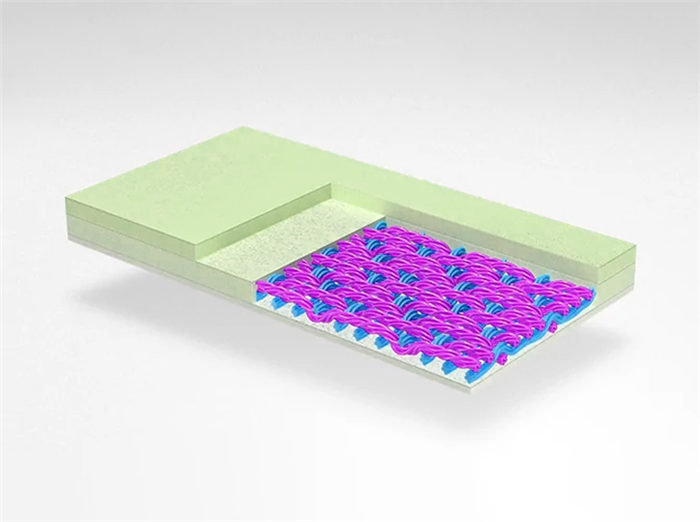
BOM = Batt-on-Mesh. This construction method bonds staple fiber batt directly onto a pre-woven base mesh by precision needling. The process interlocks batt fibers with the base yarns, forming a dimensionally stable felt that resists elongation, retains void volume through the press run, and recovers its structure during the return loop. BOM felts are the most widely used press felt construction worldwide.
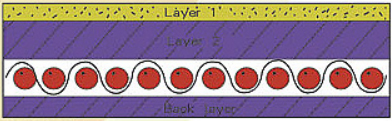 | Structure Overview ● Base layer: Single woven polyester mesh — monofilament or multi-filament ● Batt layers: Multi-layer fiber web, multiple fiber diameters, needled both sides ● Paper-contact face: Fine denier batt for smoothness & no-mark ● Drainage face: Coarser batt for drainage support ● Design: Customised per paper machine type, press type, and paper grade |
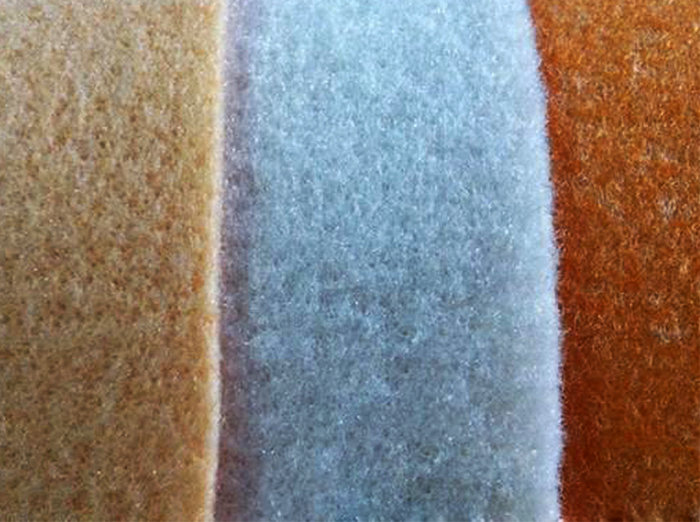
Forming BOM Felt Used in the forming section to drain free water from the wet sheet before pressing. | Press BOM Felt Standard press section felt for single-nip and plain roll presses on low-to-medium speed machines. | Top BOM Felt Top-position felt in multi-nip presses — extra-smooth face, mark-free surface finish. | 1.5 Layer Pulp / Paper Felt Intermediate structure for specialty pulp and paper grades needing higher durability than single base. |
| Property | Single Layer (This Page) | Double Layer | Triple Layer |
|---|---|---|---|
| Base structure | Single mesh | 1+1 composite | 1+2 / 2+1 / 1+1+1 |
| GSM range | 700–1200 g/m² | 950–1450 g/m² | 1450–1750 g/m² |
| Tensile strength | ≥2000 N/5cm | ≥3000 N/5cm | ≥4500 N/5cm |
| Elongation | ≤1% | ≤0.6% | ≤0.6% |
| Air permeability | 30–120 CFM | 30–110 CFM | 40–90 CFM |
| Max. NIP pressure | ≤80 kN/m | 60–200 kN/m | ≥200 kN/m |
| Max. machine speed | ≤800 m/min | ≤1000 m/min | ≤1000 m/min |
| Best press type | Plain roll / nip roll | Suction / vacuum / groove | Shoe press / high-nip |
| Typical paper grade | Tissue, writing, packaging | Newsprint, printing, board | High-grade, newsprint, board |
Need a Custom Single Layer BOM Press Felt? Get Your Quote Within 24 Hours. Share your machine type, press type, paper grade, and machine width — PFM Screen responds with a full specification and pricing within one business day. WhatsApp: +86 153 6967 9157Email: polyestermesh@pfmscreen.com |
Feature
01 Low Elongation ≤1% Minimal stretch under press load ensures consistent felt tension, stable sheet caliper, and predictable dewatering throughout the felt's service life. | 02 No-Mark Paper Surface Fine-denier batt on the paper-contact face produces a smooth, uniform impression — no mesh shadow, no felt mark, no caliper variation in the finished sheet. | 03 Easy to Wash Open mesh base and controlled void volume allow effective high-pressure shower cleaning, maintaining permeability and extending felt run length between changes. | 04 Long Service Life Precision needling bonds batt firmly to the base mesh — resisting surface fibre shedding, compaction, and delamination under continuous press operation. |
● Single-layer base fabric — simple, cost-effective, most widely used press felt construction worldwide ● Customisable mesh count — base weave density adjusted to control void volume and air permeability ● Multi-diameter batt layering — coarser fibres near base for drainage; finer fibres at paper face for surface quality ● Width tolerance ≤±2 cm — consistent width maintained from start to end of felt run | ● GSM tolerance ≤±4 g/m² — tight weight control ensures uniform nip pressure across the machine width ● Tensile strength ≥2000 N/5cm — suitable for drive loads in plain and nip-roll press configurations ● Monofilament or multi-filament base — monofilament for higher drainage; multi-filament for higher strength in demanding environments ● Endless or seamed joining — supplied endless for standard installations or with on-machine seam option on request |
≤1% Elongation Maintains felt tension stability over full press run | ≥2000 N/5cm Tensile Strength Withstands plain roll and nip-roll press loads | 30–120 CFM Air Permeability Broad range to match machine drainage requirements |
Application
Single Layer BOM press felts are engineered for the entry-level to mid-range press section, covering a broad range of machine types and paper grades. Their simple, versatile structure makes them the first choice for low-to-medium speed machines where cost efficiency, ease of maintenance, and mark-free performance are the primary requirements.
| Press / Machine Type | Compatible | Notes |
|---|---|---|
| Plain roll press | ✓ | Primary application — single base provides ideal void volume for plain roll drainage |
| Nip wire / nip roll press | ✓ | Widely used on cylinder and inclined wire machines at ≤80 kN/m |
| Cylinder machine press | ✓ | Standard choice for traditional cylinder (mould) machines producing tissue and board |
| Fourdrinier press section | ✓ | Suitable for first and second press positions on fourdrinier machines ≤800 m/min |
| Tissue machine press | ✓ | Models 47401 & 47420 series optimised for tissue; GSM 700–800 for low-basis-weight tissue |
| Super-forming machine press | ✓ | Compatible with forming and press positions on super-forming machines |
| Inclined wire machine press | ✓ | Forming felt and press felt positions on inclined wire specialty paper machines |
| Vacuum / suction press | △ | Marginal — consider upgrading to Double Layer BOM for suction press positions ≥80 kN/m |
| Shoe press | ✗ | Not recommended — shoe press loads ≥200 kN/m require Triple Layer BOM felt |
≤800 m/min Max. machine speed | ≤80 kN/m Max. NIP line load | ≥8 g/m² Min. paper basis weight | 14 Models Standard configurations available |
| Paper Grade | Basis Weight | Recommended Model Series | Notes |
|---|---|---|---|
| Tissue / sanitary paper | 8–35 g/m² | 47401, 47420 series | Low GSM felt (700–800 g/m²), fine batt for no-mark |
| Writing & printing paper | 50–120 g/m² | 17401, 47403, 47420 series | Smooth surface, mark-free; standard machine speeds |
| Newsprint | 40–52 g/m² | 47403 series | Medium permeability for high-moisture newsprint pulp |
| Technical / specialty paper | 40–150 g/m² | 47403, 47420 series | Customised batt composition for specialty substrates |
| Kraft / packaging paper | 60–150 g/m² | 47404, 47406, 47429 series | Higher GSM felt for heavier-weight packaging grades |
| Corrugating medium | 80–180 g/m² | 47404, 47406 series | Good drainage for high-freeness recycled fibre furnish |
| White paperboard / FBB | 150–400 g/m² | 47409, 47410, 47429 series | High GSM felt (800–1000 g/m²) for board machines |
| High-grade paperboard | 150–350 g/m² | 17401, 17402 series | Premium batt composition for surface-quality board |
PFM Screen's Single Layer BOM press felts are custom-engineered to fit all major paper machine OEM brands and configurations. Provide your machine model and PFM Screen will confirm fit and recommend the right felt model:
| OEM Brand | Machine Types Covered | Felt Position |
|---|---|---|
| Valmet (Metso / Tampella) | OptiFlo, SymFlo, OptiPress, TissueFlex, ValPress | 1st press, 2nd press, forming felt |
| Voith | DuoFormer, MasterJet, NipcoFlex, TissueF | 1st press, pick-up felt, top felt |
| Andritz | PrimeDry, PrimePress, Gap Former, OptiFlo | 1st press, 2nd press, forming felt |
| GL&V / Kadant | Fourdrinier and cylinder machines | All press positions |
| Chinese domestic OEMs | Traditional cylinder & fourdrinier machines | All press and forming positions |
Specifications
GSM 700–1200 g/m² GSM tolerance ≤±4 g/m² | Tensile Strength ≥2000 N/5cm MD direction, under standard test conditions | Elongation ≤1% Under standard press load conditions |
Air Permeability 30–120 CFM Adjustable by base mesh count and batt density | Width Variation ≤±2 cm Consistent across full machine width | Base Structure Single Layer Mesh Monofilament or multi-filament polyester |
| Model | GSM (g/m²) | Structure | Suitable Paper Grades |
|---|---|---|---|
| 17401 | 900–1100 | Single layer mesh | Writing & printing papers, paperboards, high-grade paperboards, tissue papers |
| 17402 | 900–1100 | Single layer mesh | Writing & printing papers, paperboards, high-grade paperboards, tissue papers |
| 17421 | 900–1100 | Single layer mesh | Writing & printing papers, paperboards, high-grade paperboards, tissue papers |
| 17422 | 900–1100 | Single layer mesh | Writing & printing papers, paperboards, high-grade paperboards, tissue papers |
| 47401 | 700–800 | Single layer mesh | Sanitary papers, tissue papers |
| 47403 | 700–1100 | Single layer mesh | Writing & printing papers, newspapers, technical papers, packaging papers |
| 47404 | 680–850 | Single layer mesh | Corrugating, kraft papers, packaging papers |
| 47406 | 700–900 | Single layer mesh | Corrugating, kraft papers, packaging papers |
| 47409 | 800–1000 | Single layer mesh | Kraft papers, white paperboards |
| 47410 | 800–1000 | Single layer mesh | Kraft papers, white paperboards |
| 47420 | 800–1000 | Single layer mesh | High-grade writing & printing papers, technical papers, tissue papers |
| 47421 | 800–1000 | Single layer mesh | High-grade writing & printing papers, technical papers, tissue papers |
| 47423 | 800–1000 | Single layer mesh | High-grade writing & printing papers, technical papers, tissue papers |
| 47429 | 800–1000 | Single layer mesh | High-grade packaging papers, kraft papers, paper boards |
* Custom GSM, width, length, and batt composition available on request. Contact PFM Screen for current model data and lead times.
Q1: What is a Single Layer BOM press felt, and what does BOM stand for? A Single Layer BOM press felt is a papermaking press felt in which batt fiber is needled onto a single-layer woven base mesh. BOM stands for Batt-on-Mesh — the manufacturing process in which staple polyester fiber (the batt) is mechanically bonded to the woven base fabric (the mesh) by repeated needle penetration. This process interlocks the fibers with the base yarns to create a stable, uniform felt structure. Single Layer BOM felts use one layer of base mesh, making them simpler, lighter, and more cost-effective than double or triple layer structures, but with lower void volume and NIP load capacity. |
Q2: Which paper machines and press types are Single Layer BOM press felts suitable for? Single Layer BOM press felts are designed for plain roll presses, nip roll presses, and forming positions on cylinder machines, fourdrinier machines, super-forming machines, and inclined wire machines — any press type operating at NIP loads up to 80 kN/m and machine speeds up to 800 m/min. They are the standard choice for tissue machines, cylinder board machines, and older fourdrinier configurations. For suction presses, groove presses, or machines running above 80 kN/m, a Double Layer BOM felt provides better performance. For shoe presses or high-nip configurations above 200 kN/m, a Triple Layer BOM felt is required. |
Q3: How does Single Layer BOM press felt prevent felt marks on the paper surface? PFM Screen engineers the paper-contact face of the felt using fine denier batt fibers, creating a smooth, dense surface layer. The single mesh base provides a consistent drainage plane without the texture or cross-marking that can occur with more open base structures. The combination of the fine-fiber face layer and the stable mesh prevents both felt-pattern marks and caliper variation across the sheet width. For extremely sensitive paper grades such as tissue and high-grade writing paper, models with even finer batt composition (e.g., 47420 and 47421 series) are recommended. |
Q4: What is the maximum elongation of PFM Screen's Single Layer BOM press felts, and why does it matter? PFM Screen's Single Layer BOM press felts have a maximum elongation of ≤1% under standard press load conditions. Low elongation is critical in press felts because it maintains stable felt tension across the machine width. Excess elongation causes the felt to sag, shift laterally, or create sheet caliper variation — all of which reduce paper quality and dewatering efficiency. At ≤1%, PFM Screen's felts maintain consistent geometry from the beginning to the end of the felt run, minimising unplanned stops for felt tensioning adjustments. |
Q5: What paper grades are produced with Single Layer BOM press felts? Single Layer BOM press felts cover a broad range of paper grades starting from ≥8 g/m² basis weight. Common grades include: tissue and sanitary paper (8–35 g/m²), writing and printing paper (50–120 g/m²), newsprint (40–52 g/m²), technical and specialty papers, kraft and packaging papers (60–150 g/m²), corrugating medium (80–180 g/m²), white paperboard, and high-grade coated and uncoated board. The 14 standard models in PFM Screen's single layer range each target specific grade clusters — see the model table above for grade-to-model mapping. |
Q6: When should I upgrade from Single Layer to Double Layer BOM press felt? Upgrade to Double Layer BOM when one or more of the following conditions apply: (1) machine speed exceeds 800 m/min; (2) NIP line load exceeds 80 kN/m; (3) the press is a vacuum suction press, groove press, or blind-hole press — all of which impose structural loads the single base cannot handle without marking or compaction; (4) the felt is compacting faster than expected (shorter than expected run life), which indicates the void volume of the single base is insufficient. The double layer's 1+1 composite base provides approximately 50% more void volume and 50% more tensile strength than the single layer equivalent. |
Q7: What are the standard dimensions and can I order a custom size? PFM Screen manufactures Single Layer BOM press felts in custom dimensions to fit any machine. Standard width tolerance is ≤±2 cm; length and joining method (endless, seam on request) are specified per order. PFM Screen does not list standard widths or lengths because press felts are always made to the exact machine dimensions. To order, provide: machine make and model, press position (1st press, 2nd press, etc.), felt width (pin-to-pin), felt length, and any specific permeability or GSM requirements. The engineering team will confirm the optimal model and issue a specification sheet within 24 hours. |
Q8: What is the MOQ and lead time for PFM Screen's Single Layer BOM press felts? There is no fixed minimum order quantity — PFM Screen accepts orders from a single felt to bulk production volumes. Standard lead time for custom-engineered Single Layer BOM press felts is 2–4 weeks after specification confirmation and drawing approval. Rush orders are accommodated where production scheduling permits. Contact PFM Screen via WhatsApp (+86 153 6967 9157) or email (polyestermesh@pfmscreen.com) with your machine specifications for a formal quotation within 24 hours. |
Ready to Order? Get Your Custom Specification & Quote Within 24 Hours Send us your machine type, press position, felt dimensions, paper grade, and machine speed — PFM Screen will respond with a full specification and pricing within one business day. No fixed MOQ. WhatsApp: +86 153 6967 9157Email: polyestermesh@pfmscreen.com |