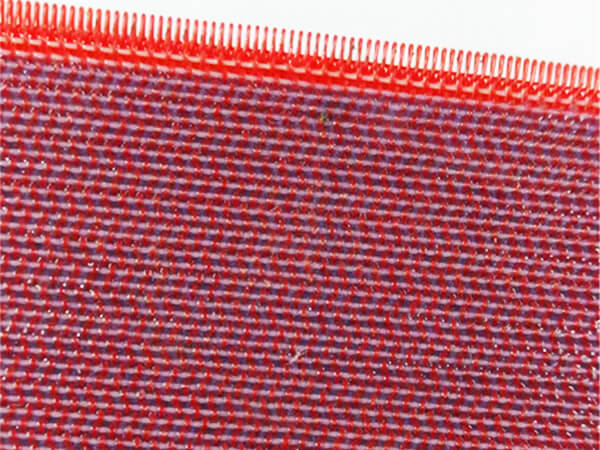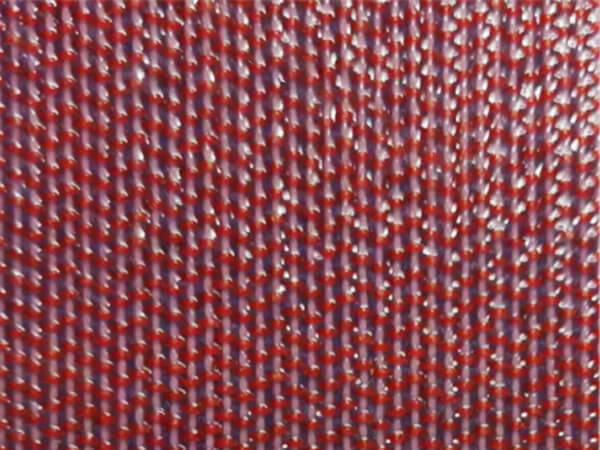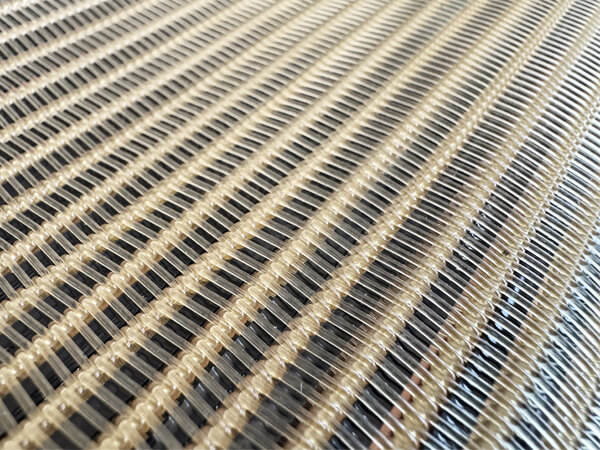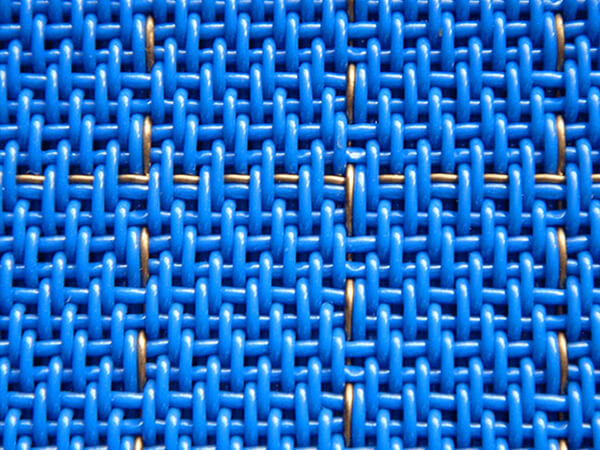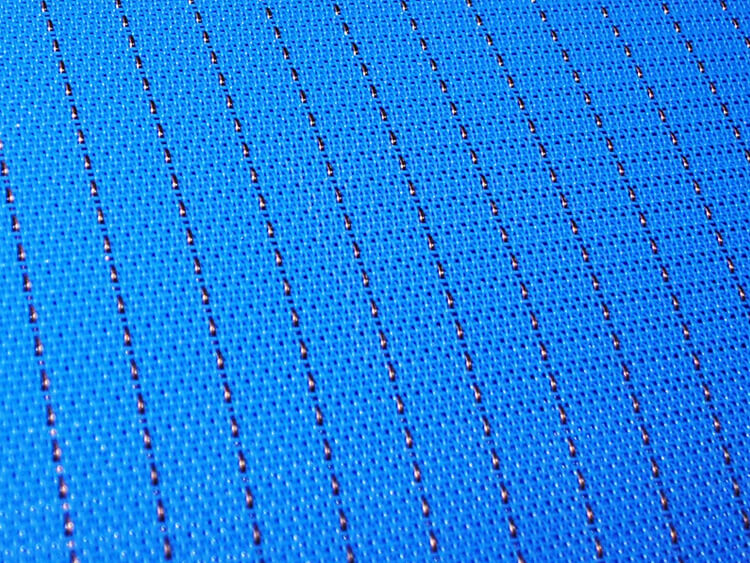
PFM Screen's Silicon Coating Polyester Press Infeed Belt — also known as an Intermediate Belt — is the critical transfer component at the entrance of continuous hot presses in MDF, HDF, particleboard, and OSB production lines. Woven from imported high-tenacity polyester monofilament in a spiral-joint construction and fully impregnated with durable silicone coating, it delivers anti-adhesion performance, 180°C continuous heat resistance, and wear resistance against wood fibres and adhesive resins that degrade standard infeed belts.
Description
PFM Screen's Silicon Coating Polyester Press Infeed Belt — also known as an Intermediate Belt — is the critical transfer component installed at the entrance of continuous hot presses in MDF, HDF, particleboard, and OSB production lines. Woven from imported high-tenacity polyester monofilament in a spiral-joint construction and fully impregnated with a durable silicone coating, it delivers outstanding anti-adhesion performance, sustained heat resistance at 180°C, and wear resistance against wood fibres, particles, and adhesive resins that would otherwise clog or degrade a standard infeed belt.
The belt sits between the pre-press system and the main ContiRoll or CPS continuous press. Its job is to receive the glued fibre or chip mat from the forming line and guide it smoothly into the press infeed wedge — maintaining uniform mat density, preventing blow-outs, and keeping adhesive from bonding to the belt surface. PFM Screen engineers the silicon coating layer, spiral joint strength, and belt flexibility to the exact speed, pressure, and temperature profile of your production line.
01 Smooth Mat Entry Guides the glued chip or fibre mat into the press infeed wedge without disruption or density variation | 02 Anti-Adhesion Surface Silicon coating prevents resin and adhesive from bonding — cutting cleaning stops from 2 per shift to near zero | 03 Heat Buffering Balances heat transfer during the temperature ramp to 200°C to prevent edge warping and core over-curing | 04 Anti-Deformation Support Prevents the partially pressed mat from deforming or cracking under continuous press pressure (10–30 MPa) |
Silicon Coating vs. Traditional Coatings ● Service life 30–50% longer than rubber-coated infeed belts under identical press conditions ● Stable Si–O molecular bond does not harden or crack at 180–200°C operating temperatures ● Friction coefficient 0.3–0.6: prevents mat slippage while protecting belt surface from abrasion ● UF, MDI, and melamine adhesives cannot bond to the silicone surface ● Elasticity reduces stress concentration at board edges at press speeds above 1 m/s | Measurable Production Improvements ● Board adhesion scrap rate reduced from 1.5% to below 0.3% ● Cleaning downtime cut from 2 stops per shift to near zero ● Overall production cost saving of 12–18% vs. uncoated belt alternatives ● MDF surface finish improved — less sanding loss from non-stick transfer surface ● For OSB: wear resistance significantly reduces abrasion from large-format strand particles |
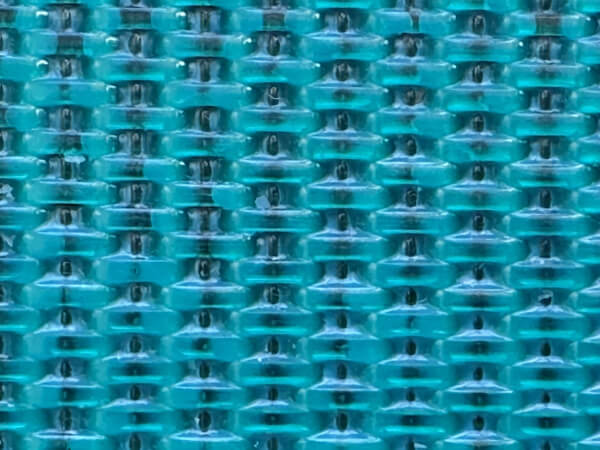
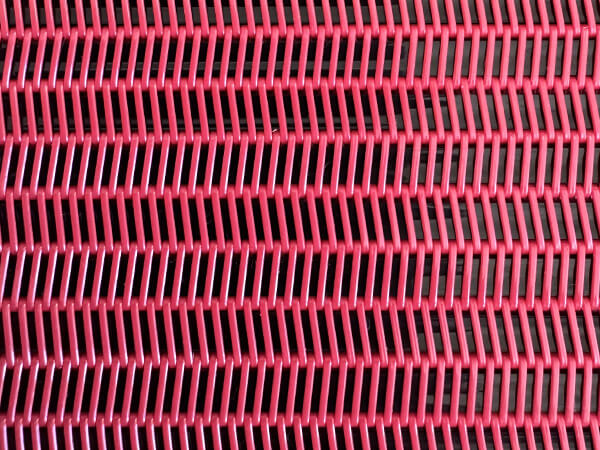
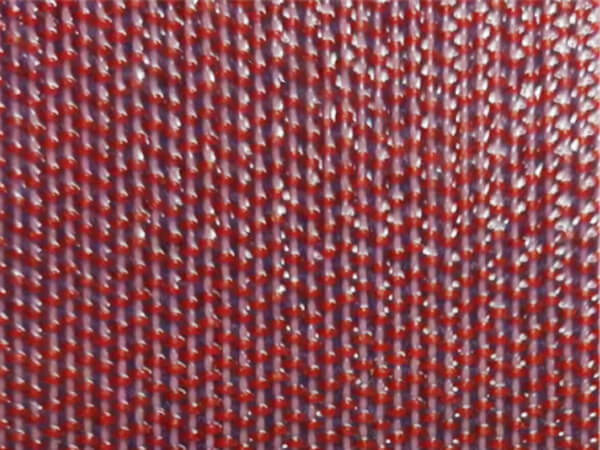 Mesh Ventilation Type Open-structure for steam pre-heater zones; spiral joint retains flexibility on small pulleys | 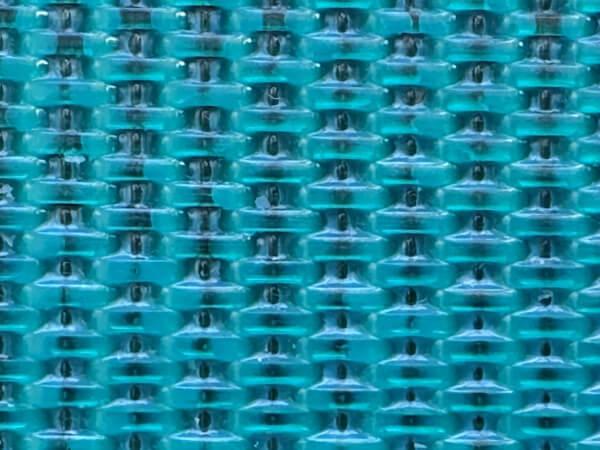 Woven Fabric Type Smooth woven surface for continuous press infeed — optimal contact with mat underside | 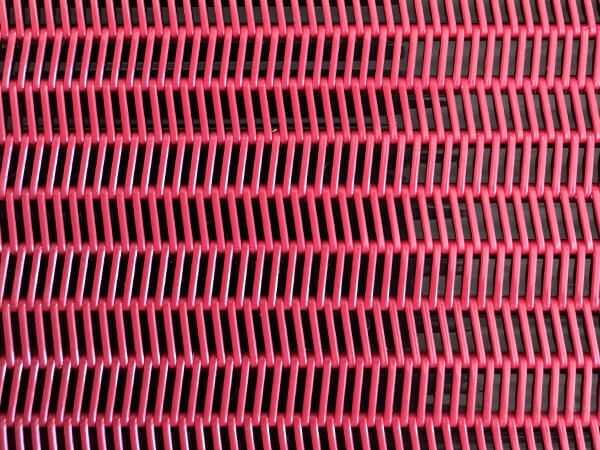 Spiral Belt Type High-strength spiral links withstand continuous press tension loads without elongation |
PFM Screen press infeed belts are supplied as open-end belts and spliced on-site using the existing belt path through the press system — without disassembling the machine frame, rollers, or press platens. This is a critical operational advantage in continuous press environments where a full machine teardown for belt replacement can cost 8–12 hours of production downtime. The spiral joint is constructed from high-strength polyester fibre cores that withstand the same tensile forces as the belt body — no weak splice point, no elongation under press tension. Typical on-site installation time with an experienced crew: 2–4 hours per belt. |
Tell Us Your Press Model — Get a Belt Specification and Quote in 24 Hours Share your press brand (ContiRoll / CPS / SWPM), belt width, panel type and current belt life — PFM Screen will engineer the right intermediate belt for your line. WhatsApp: +86 153 6967 9157Email: polyestermesh@pfmscreen.com |
Feature
180°C Continuous Operating Temp. | 0.3% Adhesion Scrap Rate Achieved | 1.9 mm Belt Thickness | 4000 mm Maximum Belt Width |
High-Tenacity Polyester Monofilament Woven from imported, dimensionally stable monofilament fibre that maintains uniform thickness and tensile strength under continuous press pressure of 10–30 MPa, preventing density variation in the finished board. | Durable Silicone Coating (Si–O Bond) The silicone molecular chain is thermally stable at 180–200°C. It does not harden, crack, or delaminate under repeated thermal cycling, delivering 30–50% longer service life vs. rubber or standard polymer coatings. | Anti-Adhesion Surface UF, MDI, and melamine resin adhesives cannot bond to the silicone surface. Eliminates adhesion-related board scrap and cleaning downtime that plagues conventional infeed belts at high press temperatures. |
Small-Pulley Flexibility The spiral-joint construction allows the belt to flex cleanly around small-diameter guide pulleys at the press infeed head without buckling, delamination, or surface cracking — a known failure mode for stiffer belt types. | No-Disassembly Installation Supplied as an open-end belt and threaded through the existing press path without removing hot platens, roller assemblies, or machine frames. Changeover time: 2–4 hours vs. 8–12 hours for conventional belt designs. | Wear Resistance for Abrasive Mat Materials For OSB production, large-format wood strands rapidly abrade uncoated belts. The silicone wear layer absorbs particle impact and resists surface cutting, significantly extending belt service life in high-abrasion applications. |
The silicone surface friction coefficient (0.3–0.6) is engineered to balance two competing requirements at the press infeed position: Sufficient grip: prevents the mat from slipping relative to the belt and causing density variation or blow-outs as it enters the high-pressure infeed wedge. Controlled release: low enough that the board surface releases cleanly from the belt after pressing without dragging fibres or leaving surface marks — critical for MDF and HDF laminate substrate quality. |
Need a Silicone-Coated Infeed Belt for Your Press Line? Share your press width, panel type, and current belt model — PFM Screen will confirm compatibility and send a specification sheet within 24 hours. WhatsApp: +86 153 6967 9157Email: polyestermesh@pfmscreen.com |
Application
PFM Screen's Silicone Coating Polyester Press Infeed Belt is installed at the entrance section of continuous press machines — between the forming belt / pre-press system and the main hot press — in wood-based panel facilities worldwide. It handles the full range of panel products and is engineered to match the specific infeed geometry, press speed, and panel density targets of each production line.
Mat Forming Chip/fibre scattering on forming belt | → | Pre-Press Zone Deaeration + pre-press belt | → | INFEED BELT THIS PRODUCT — Silicon coating transfer belt at press entrance | → | Continuous Press ContiRoll / CPS — high temp + pressure | → | Board Out Cooling + stacking |
MDF / HDF The anti-adhesion silicone surface reduces sanding loss by minimising fibre transfer between belt and board — critical for high-gloss laminate substrates and thin board production (down to 1.5 mm) at high press speeds. Resins: UF, MF, MDI | Particleboard (PB) Standard and industrial-grade particleboard at press speeds above 1 m/s. Silicon elasticity absorbs pressure spikes at panel edges, reducing edge density variation and blow-out risk. Resins: UF, PMDI | OSB Large-format wood strands would rapidly abrade conventional belts. The silicone wear layer withstands strand abrasion and the high friction loads unique to OSB mat feeding, significantly extending belt service life. Resins: MDI, PMDI | Laminated Panels / LVL Used in decorative laminate panel production where surface mark-free infeed is critical. The smooth silicone surface leaves no press belt imprint on the board face that could telegraph through the laminate layer. Including: LVB, LVL substrates |
PFM Screen engineers press infeed belts to the specific width, thickness, joint design, and coating specification required by each press platform. The table below covers the most common continuous press systems in global MDF, particleboard, and OSB production:
| Press Manufacturer | Press Model / Series | Belt Width Range | Panel Products | PFM Screen Notes |
| Siempelkamp | ContiRoll Gen. 7 / 8 / 9 / 9i / NEO | 4 ft to 12 ft (1220–3660 mm) | MDF, HDF, PB, OSB, LVL | Extended flexible infeed head geometry accommodated; ContiTherm pre-heater zone belts also available |
| Dieffenbacher | CPS / CPS+ / EVOjet | 4 ft to 10 ft (1220–3050 mm) | MDF, PB, OSB, THDF | Double-hinge infeed geometry; release agent applicator zone compatibility available |
| SWPM (Shanghai) | 4 ft / 5 ft / 6 ft continuous press | 1220–1830 mm | MDF, PB, OSB | Widely used in Chinese and SE Asian plants; short lead times for replacement belts |
| Metso / Valmet | Panelboard press lines | Custom to order | MDF, PB | Confirm press infeed geometry and pulley diameter before ordering |
| Other / Custom | Multi-opening press infeed sections | Up to 4000 mm | Any panel type | Send drawing or original belt sample for exact replacement specification |
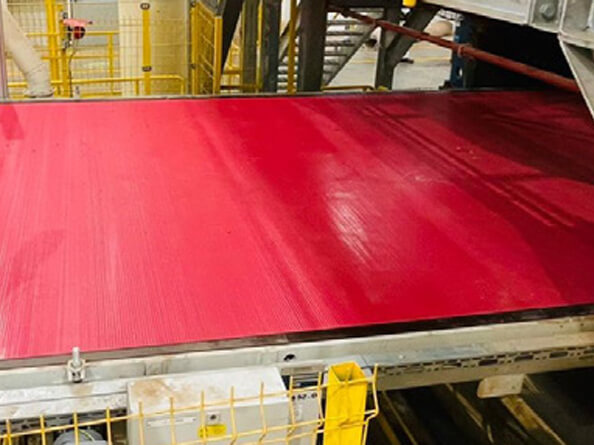 PFM Screen silicone-coated polyester press infeed belt in operation at the entrance of a continuous press for wood-based panel production |
Running a Siempelkamp, Dieffenbacher or SWPM Press? We Supply Belts for All These Platforms. Tell us your press model and belt width — we will confirm compatibility and quote lead time within one business day. WhatsApp: +86 153 6967 9157Email: polyestermesh@pfmscreen.com |
Specifications
| Parameter | Value / Specification |
| Belt Material | High-tenacity polyester monofilament (PET) — imported |
| Surface Coating | Silicone (Si–O bond) — fully impregnated, anti-adhesion, heat-stable |
| Belt Thickness | 1.9 mm (standard — confirm with PFM Screen for specific press requirements) |
| Operating Temperature | -40°C to +180°C continuous; short-term peaks to 200°C |
| Maximum Belt Width | 4000 mm (custom widths available for wider press platforms) |
| Joint Type | Spiral joint — high-strength polyester core; on-site installation without machine disassembly |
| Friction Coefficient | 0.3–0.6 (silicone-coated surface) |
| Press Compatibility | Siempelkamp ContiRoll, Dieffenbacher CPS / CPS+, SWPM, Metso Panelboard, and other continuous press systems |
| Panel Applications | MDF, HDF, Particleboard (PB), OSB, Laminated panels, LVL |
| Press Operating Pressure | 10–30 MPa (belt withstands full continuous press tension and pressure range) |
| Lead Time | 2–4 weeks after drawing / dimension confirmation (rush orders accommodated) |
| Minimum Order Quantity | No minimum — single belt accepted |
* All specifications subject to manufacturing tolerances. Confirm final dimensions, coating grade, and joint design with PFM Screen engineering before ordering.
Q1: What is the difference between a Press Infeed Belt and a Pre-press Belt in wood panel production? The pre-press belt handles deaeration and initial compression of the glued chip or fibre mat before it enters the main press. The press infeed belt (intermediate belt) is positioned immediately at the entrance of the main continuous press and is responsible for transferring the pre-compressed mat smoothly into the hot press infeed wedge at the correct speed and tension. The infeed belt operates under much higher temperatures (up to 200°C) and requires the anti-adhesion silicone coating that pre-press belts do not typically carry. |
Q2: Why is silicone coating preferred over rubber coating for press infeed belts? Silicone's Si–O molecular chain is thermally stable at 180–200°C, whereas rubber coatings soften, harden, or degrade under repeated thermal cycling in the press infeed zone. Silicone also has inherent anti-adhesion properties — UF, MDI, and melamine resins cannot bond to the silicone surface — which eliminates cleaning stops and scrap losses caused by adhesive build-up on rubber belts. Silicone-coated belts deliver 30–50% longer service life and reduce adhesion-related board scrap from 1.5% to below 0.3%. |
Q3: Is PFM Screen's press infeed belt compatible with Siempelkamp ContiRoll Generation 8 and 9? Yes. PFM Screen engineers press infeed belts to the exact width, thickness, and joint specification required by Siempelkamp ContiRoll Generation 7, 8, 9, 9i, and NEO presses. The ContiRoll's flexible infeed head geometry is accommodated through careful belt thickness calibration and joint design. Provide your press generation, belt width (4 ft to 12 ft), and panel type — PFM Screen will confirm the specification and quote lead time. Belts for the ContiTherm pre-heater steam zone are also available as a separate product. |
Q4: Can the belt really be installed without disassembling the press machine? Yes — this is a key design advantage of PFM Screen's spiral-joint infeed belt. The belt is supplied as an open-end belt and threaded through the existing belt path in the press infeed area using a lead rope. The spiral joint is closed on-site using standard jointing tools, without removing hot platens, roller assemblies, or machine frames. Typical installation time with an experienced maintenance crew is 2–4 hours per belt, compared to 8–12 hours for conventional belt designs that require partial machine disassembly. |
Q5: What is the expected service life of a silicone-coated press infeed belt? Service life depends on press speed, operating temperature, panel type, and mat resin system. As a general benchmark, silicone-coated polyester press infeed belts deliver 30–50% longer service life than traditional rubber-coated belts under equivalent press conditions. For MDF and PB production on Siempelkamp or Dieffenbacher presses running at 1–3 m/s, typical service life ranges from 6 to 18 months. OSB lines, where strand abrasion is higher, may see shorter intervals. PFM Screen can advise on expected belt life based on your specific press parameters. |
Q6: How do I order a replacement press infeed belt — what information do I need? To ensure the correct specification, please provide: (1) Press manufacturer and model (e.g., Siempelkamp ContiRoll Gen. 9, 8 ft); (2) Belt width in mm; (3) Belt length (outer circumference in mm, if known); (4) Belt thickness (1.9 mm standard, or confirm from existing belt); (5) Panel type produced (MDF / PB / OSB); (6) Current belt brand and model if replacing an existing belt. A sample piece or photo of the joint type is also helpful. PFM Screen will confirm the full specification and provide a drawing for approval before manufacturing. |
Q7: What is the maximum operating temperature of the silicone coating? PFM Screen's silicone-coated press infeed belts are rated for continuous operation from -40°C to 180°C, with short-term peaks to 200°C tolerated in the press infeed zone. The silicone molecular structure remains stable across this full thermal range — it does not soften, harden, or crack under repeated heating and cooling cycles. This makes it fully suitable for Siempelkamp ContiRoll (operating at 180–210°C) and Dieffenbacher CPS/CPS+ systems across all panel types. |
Q8: What is the minimum order quantity and lead time for custom press infeed belts? PFM Screen accepts orders from a single custom belt with no minimum order quantity. Standard lead time is 2–4 weeks after dimension and drawing confirmation, depending on belt width, length, and production scheduling. Rush orders can be accommodated — contact us to discuss urgency. Send your specifications via WhatsApp (+86 153 6967 9157) or email (polyestermesh@pfmscreen.com) and we will respond with a full quotation within 24 hours. |
Ready to Order? Get Your Custom Specification and Quote Within 24 Hours Share your press model, belt width, panel type, and annual consumption — PFM Screen will respond with a full engineering specification and competitive pricing within one business day. WhatsApp: +86 153 6967 9157Email: polyestermesh@pfmscreen.com |