
The reinforced edge is what makes the belt food-safe: the polyurethane (TPU) or polyvinyl chloride (PVC) encapsulation seals the belt edges so yarns cannot fray or fall into the product, while the open mesh delivers fast drainage and even exposure to water and cleaning agents — higher hygiene, higher efficiency and safer produce, all on one belt.
Produce travels on the moving belt through a series of cleaning stages without being transferred between machines. Water and contaminants pass through the open mesh at every stage, so the product is always carried on a clean, draining surface.
Step 1 Washing / Soaking Produce passes through wash tanks and sprays that loosen soil and residues. | Step 2 Spray Rinsing Spray bars rinse away remaining dirt through the open mesh. | Step 3 Draining Water drains freely through the belt before the next process stage. | Step 4 Air Drying Air knives blow remaining moisture away for a clean, dry product. |
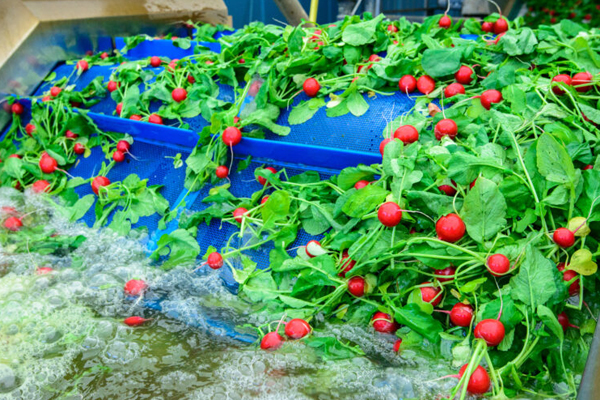
Plain woven belts fray at the edges over time — loose yarns can end up in the food. The reinforced edge encapsulates the belt edges in polyurethane or PVC, forming a hygienic barrier that delivers four critical advantages:
01 Blocks Contamination Seals the edge structure against bacteria, moisture and foreign particles | 02 Stops Fiber Fraying Encapsulates all edge yarns — no fibres can fall into the produce | 03 Enhances Drainage Open mesh lets water and cleaning solutions flow through for thorough cleaning | 04 Maintains Flexibility Sealed edges flex with the belt — no cracking or delamination in service |
PVC Sealed Edge ● Cost-effective rigid edge protection ● Excellent resistance to oils and greases ● Suitable for standard washing and conveying ● Available in solid or transparent finish | TPU Sealed Edge — Recommended for Food Processing ● FDA 21 CFR and EU EC 1935/2004 compliant for direct food contact ● Superior flexibility through wash and CIP cycles ● Resistant to hydrolysis and microbial growth ● Preferred for fruit, vegetable and ready-to-eat produce lines |
Tracking Guides Optional guides can be fitted to the inside face of the belt edges to ensure smooth tracking, preventing misalignment and improving the efficiency of the washing system. | Endless or Fastener Options Belts can be supplied endless, or with stainless steel fasteners for easier fitting and maintenance on your washing line. |
Inclined Flights Where the belt runs at an incline, flights can be added to stop products sliding back down the belt, keeping a smooth, continuous flow of produce. | Customizable Sizes Available in various widths and lengths to fit different washing systems and production needs — built to your exact machine dimensions. |
Fruit & Vegetable Processing Plants ● Initial washing to remove dirt, pesticides and contaminants ● Rinsing, draining and air-drying of produce ● Continuous operation with heavy loads | Packaging Facilities ● Cleanliness-critical packing lines ● Conveying washed produce to packing stations ● Hygienic, fray-free belt edges |
Food Service Operations ● Kitchens and food preparation areas ● Ensuring produce is thoroughly washed before use ● Easy to clean and maintain | |
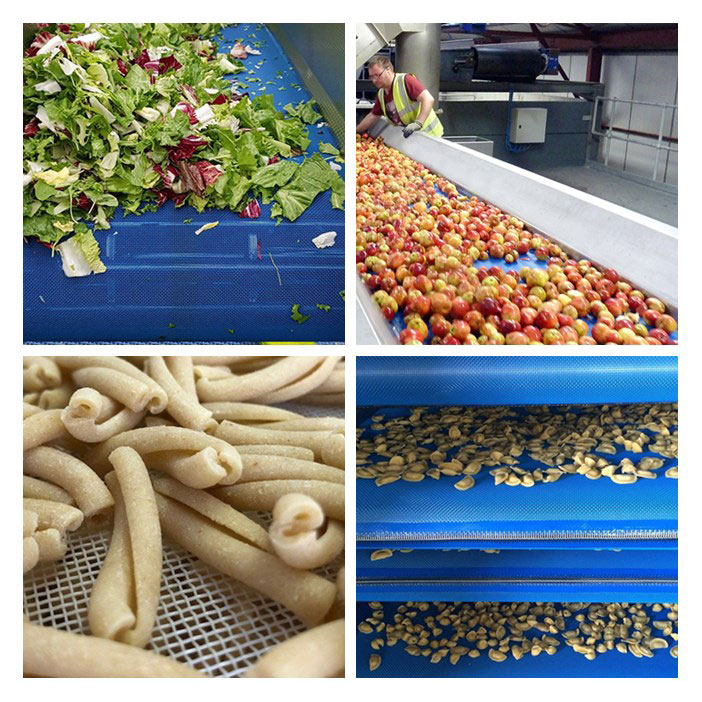
PFM Screen manufactures this washing belt as its reinforced polyester dewatering mesh conveyor belt — high-quality polyester mesh with TPU or PVC heat-sealed edge reinforcement, engineered for moisture, chemical and abrasion resistance in food washing. It withstands continuous use and heavy loads, resists hot water and steam, and its smooth surface minimizes contamination risk.
● High-quality polyester mesh — moisture, chemical & abrasion resistant ● Open mesh design for thorough cleaning and fast drainage ● TPU or PVC reinforced edges — no fraying, no contamination ● Durable under continuous use and heavy loads | ● Temperature resistant — hot water and steam washing ● Smooth surface for easy cleaning and low contamination risk ● Customizable sizes for any washing system ● Easy installation into existing production lines |
View Reinforced Polyester Mesh Conveyor Belt Product
Q1: Why use a TPU/PVC reinforced mesh belt for fruit and vegetable washing? The open mesh drains water and cleaning solutions through the produce for thorough cleaning, while the reinforced edges stop yarns from fraying into the product — combining washing efficiency with food hygiene. |
Q2: What is the difference between TPU and PVC edge reinforcement? TPU (polyurethane) edges are more flexible, hydrolysis-resistant and FDA/EU food-contact compliant — recommended for food processing. PVC edges are more rigid and cost-effective, suited to standard washing and industrial conveying. |
Q3: Is the belt safe for direct food contact? Yes. The TPU-edge version complies with FDA 21 CFR (USA) and EU EC 1935/2004 food contact regulations, and the smooth polyester surface is easy to clean for hygienic produce lines. |
Q4: What optional features are available? Tracking guides for smooth belt alignment, endless or stainless steel fastener joining, and inclined flights to stop products sliding back on gradient sections. |
Q5: Can the belt handle hot water or steam washing? Yes. The belt is temperature resistant and suitable for washing processes that involve hot water or steam. |
Q6: Can the belt match my existing washing machine? Yes. Belts are available in various widths and lengths, endless or with fasteners, and can be integrated seamlessly into your existing washing system or production line. |
Q7: How do I get a quote or sample? Send your produce type, belt width/length, edge type (TPU or PVC) and washing temperature to polyestermesh@pfmscreen.com or WhatsApp +86 153 6967 9157 for a factory-direct quotation. |
Get a Custom Fruit & Vegetable Washing Belt Specification Within 24 Hours Share your produce type, belt width/length, edge type (TPU or PVC) and washing temperature — PFM Screen will recommend the right belt for your washing line and send a factory-direct quotation. WhatsApp: +86 153 6967 9157 Email: polyestermesh@pfmscreen.com |
