PFM Screen's dryer fabrics are engineered for the dryer section of paper machines — holding the paper web in contact with 40–70 steam-heated drying cylinders at 80–140°C to evaporate remaining moisture and deliver a finished paper sheet. Available in two series: Spiral Dryer Fabrics (endless, seam-free) and Woven Dryer Fabrics (3-shed, 4-shed, 8-shed) — in standard PET, hydrolysis-resistant PET, and PPS (rated to 250°C) grades, with round or flat yarn options. Custom width and perimeter, 24-hour technical response.
Inquire Now WhatsApp: +86 153 6967 9157
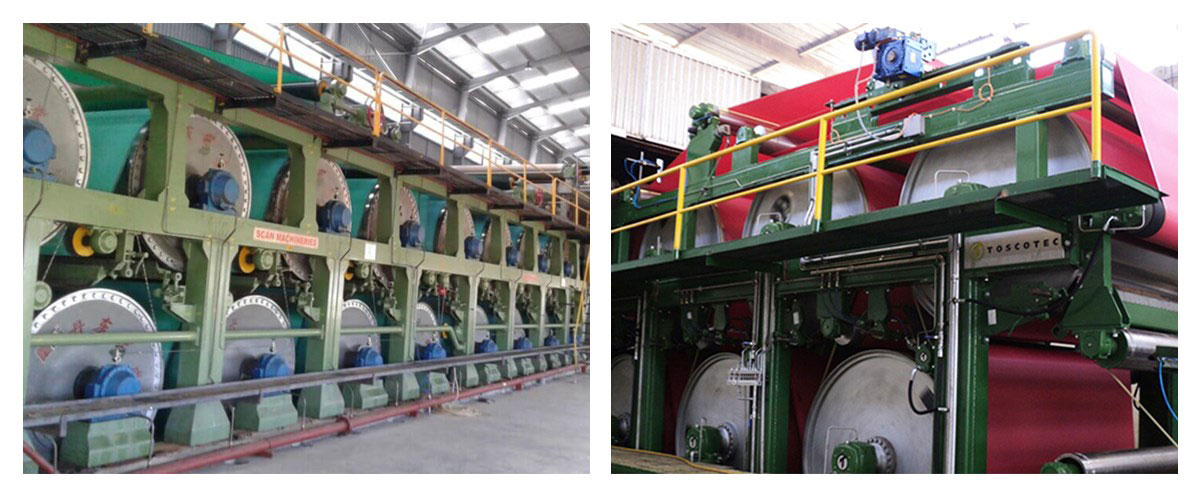
A dryer fabric (also called a dryer screen or dryer wire) is an endless belt used in the dryer section of a paper machine. After the press section raises the paper web's dry content to 38–55%, the sheet still contains 45–62% moisture — far too much for a finished paper product. The dryer section completes the drying process through evaporation, using a series of 40–70 steam-heated drying cylinders.
The dryer fabric performs two simultaneous functions:
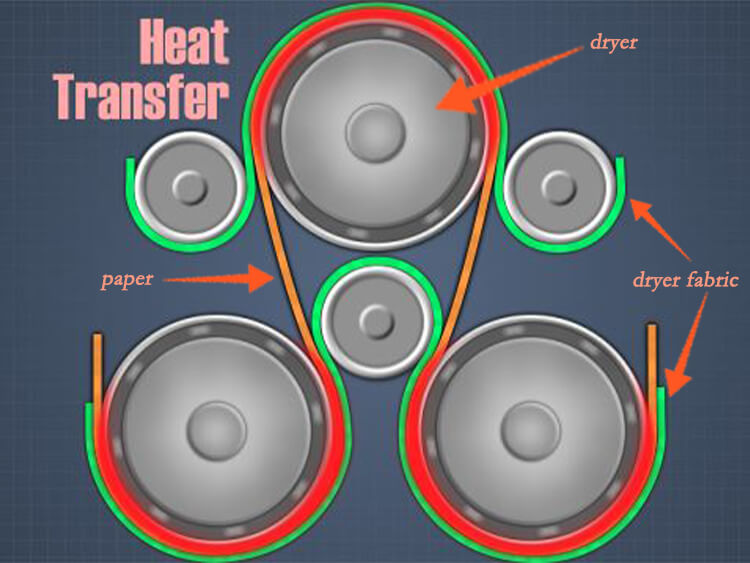
01 Moisture Removal via Evaporation Holds the paper web tightly against each steam-heated drying cylinder (80–140°C), maximising contact area and heat transfer to evaporate moisture. The paper passes through two dryer groups — reaching 80–85% dry after the first group and approximately 93% dry (7% moisture) by the end of the dryer section. | 02 Web Transport & Support Carries the paper sheet through the full dryer section at machine speed without breaks, distortion, or surface damage — maintaining sheet tension, flatness, and dimensional stability from entry to the reel. |
PFM Screen manufactures two dryer fabric series — Spiral Dryer Fabrics and Woven Dryer Fabrics — in standard PET, hydrolysis-resistant PET, and PPS (polyphenylene sulfide, rated to 250°C) grades, with round or flat monofilament yarn options. All fabrics maintain high strength, high durability, and high hydrolysis resistance throughout their service life.
2 Fabric Series Spiral + Woven Endless seam-free spiral and conventional woven — both series in full grade range | 250°C Max Temperature PPS Grade PPS (polyphenylene sulfide) for high-steam-pressure and hydrolysis-prone positions | 150–900 CFM Air Permeability Full Range Coverage From open spiral (high-CFM tissue) to dense woven flat-yarn (heavy board) | 30+ Years Manufacturing Proven Expertise Supplying paper mills in 50+ countries with dryer section fabrics |
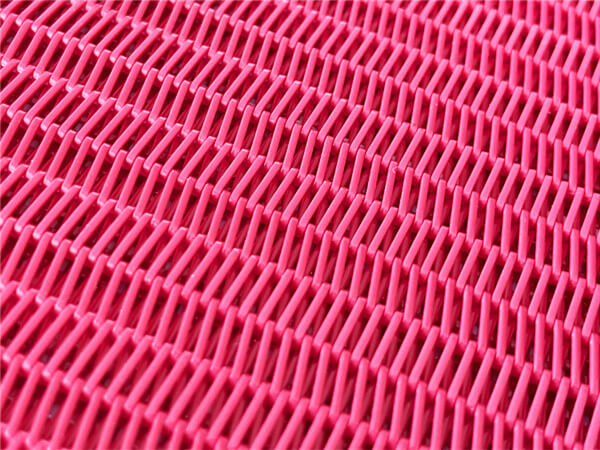 | Endless · No Conventional Seam · Air Perm: 150–900 CFM · Round or Flat Yarn Constructed from interlocking spiral loops of monofilament yarn, linked by a pin yarn inserted through adjacent loop openings. The spiral loop design completely eliminates conventional seams — avoiding seam-related paper marking, tension variation, and premature seam wear. Available in small-loop (5.2 mm), medium-loop (7–8 mm), and large-loop (8–12 mm) structures to match required air permeability. PPS grade versions rated to 250°C are available for hydrolysis-prone high-steam-pressure positions. Suitable for multi-cylinder Fourdrinier machines, cylinder paper machines, vacuum washers, and a wide range of non-paper drying applications including food drying, non-woven conveying, and textile drying. ✔ Loop sizes: small / medium / large | ✔ Air Perm: 150–900 CFM |
Round Yarn Spiral Circular cross-section monofilament. Standard option for general paper drying positions. Good air permeability and drainage. Suitable for normal machine speeds. | Flat Yarn Spiral — Recommended for High-Speed Rectangular cross-section monofilament. Smoother running surface, greater contact area with dryer cylinders, superior wear resistance, and improved drying performance. Preferred for high-speed paper machines. |
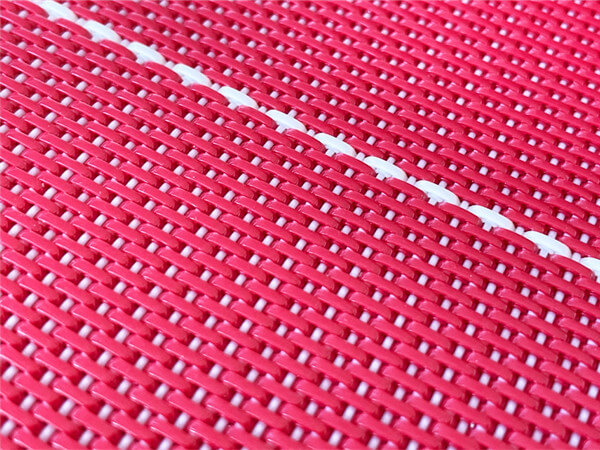 | Conventional Woven · 3-shed / 4-shed / 8-shed · Round or Flat Yarn · PET / PPS Woven in single, double, or 2.5-layer configurations using round or flat monofilament yarns. The weaving shed determines weave density and air permeability: 3-shed fabrics provide an open structure ideal for lightweight papers under 70 g/m²; 4-shed fabrics offer a denser weave with better contact area for papers heavier than 70 g/m²; 8-shed variants provide controlled permeability for specific positions. Flat yarn woven dryer fabrics are particularly suited to the fore heating box in the drying zone and for all quality paper grades. PPS (polyphenylene sulfide) edge reinforcement is available for severe operating conditions. Warp loop seam construction ensures secure, flat, and durable joining. Suitable for packing paper, cultural paper, board paper, and pulp board. ✔ Shed options: 3-shed (<70 g/m²) / 4-shed (>70 g/m²) / 8-shed |
3-Shed Woven Open weave structure. Best for lightweight paper (<70 g/m²). High air permeability, good drainage rate, easy to clean. | 4-Shed Woven Denser weave. Ideal for heavier paper (>70 g/m²). Better contact area and support. Standard choice for board and packing paper machines. | Flat Yarn Woven Rectangular monofilament. Fore heating box and quality paper grades. Improved runnability and wear resistance on high-speed machines. |
|  |
Not Sure Whether Spiral or Woven Is Right for Your Dryer Position? Send us your dryer section specifications — position, steam pressure, paper grade, machine speed, and any issues with current fabrics — and PFM Screen engineers will recommend the optimal fabric type, yarn, and material grade within 24 hours. WhatsApp: +86 153 6967 9157 Email: polyestermesh@pfmscreen.com Online Inquiry Form |
| Application / Position | Fabric Type | Yarn | Material Grade | Key Benefit |
|---|---|---|---|---|
| Standard paper drying | Spiral or Woven 4-shed | Round | 100% PET | Good drainage + heat transfer |
| High-speed machines | Spiral or Woven (any shed) | Flat | PET or PPS | Better runnability + wear resistance |
| Lightweight paper (<70 g/m²) | Woven 3-shed or Spiral | Round or Flat | PET | High air permeability + fast drying |
| Heavy paper / board (>70 g/m²) | Woven 4-shed / 8-shed | Flat | PET | Good contact area + dimensional stability |
| Hydrolysis-prone positions | Spiral or Woven | Round or Flat | Hydrolysis-resistant PET | Extended life in wet + high-temp conditions |
| High steam pressure (≥130°C) | Spiral or Woven PPS grade | Round or Flat | PPS (250°C rated) | Heat resistance to 250°C + hydrolysis resistance |
| Fore heating box | Woven flat-yarn | Flat | PET or PPS | Optimal initial heat transfer + paper smoothness |
| Food / Non-woven / Textile drying | Spiral Dryer Fabrics | Round or Flat | PET | No seam marks + easy cleaning + long life |
The dryer section is the most energy-intensive part of the paper machine — typically consuming 60–70% of total production energy. The paper web enters the dryer section from the press section at 38–55% dry content and must reach approximately 93% dry content (7% moisture) by the reel. This is achieved by passing the web around 40–70 steam-heated drying cylinders in two dryer groups:
01 First Dryer Group The paper web passes through a closed space with the dryer fabric, around steam-heated cylinders at 80–130°C. The dryer fabric holds the web tightly in contact with each cylinder, maximising heat transfer. The paper reaches 80–85% dry content by the end of the first group. | 02 Second Dryer Group The paper passes through a second set of heated drying cylinders along with the dryer fabric, losing approximately 93% of its original water content. The finished paper web exits at 93–95% dry content (5–7% moisture) and is wound onto the reel. |
Throughout this process, the dryer fabric maintains consistent contact between the paper web and each drying cylinder, ensures uniform tension to prevent sheet distortion, and resists the high-temperature, high-humidity dryer environment. High-quality dryer fabric selection directly reduces steam consumption, extends fabric life, and prevents web breaks — all critical factors in paper mill operating cost.
Q1: What is a dryer fabric in a paper machine?
A dryer fabric (also called a dryer screen or dryer wire) is an endless belt used in the dryer section of a paper machine. It holds the paper web in contact with 40–70 steam-heated drying cylinders at 80–140°C, removing remaining moisture through evaporation while transporting the sheet through the full dryer section without breaks or surface damage.
Q2: What is the difference between spiral dryer fabrics and woven dryer fabrics?
Spiral dryer fabrics are constructed from interlocking monofilament spiral loops joined by a pin yarn — completely eliminating conventional seams and avoiding seam-related paper marking or tension variation. Woven dryer fabrics use conventional 3-shed, 4-shed, or 8-shed weave patterns. Spiral fabrics are preferred where seam marks are unacceptable; woven fabrics offer more precise permeability control for specific paper grades.
Q3: What is PPS dryer fabric and when should I use it?
PPS (polyphenylene sulfide) dryer fabric uses PPS monofilament rated to 250°C, providing exceptional hydrolysis resistance and heat stability for high-steam-pressure dryer positions where standard PET fabrics degrade prematurely. PPS dryer fabrics are recommended when operating temperatures exceed 130°C or where high steam pressures cause hydrolysis failure in standard PET fabrics.
Q4: How do I select the right dryer fabric for my paper machine?
Dryer fabric selection depends on paper grade, basis weight (g/m²), machine speed, dryer position, steam pressure, and whether seam marks are a concern. Key guidance: 3-shed woven or spiral for lightweight paper under 70 g/m²; 4-shed woven for heavier paper over 70 g/m²; flat yarn for high-speed machines; PPS grade for hydrolysis-prone or high-temperature positions. Contact PFM Screen with your specifications for a 24-hour technical recommendation.
Q5: What is the difference between round yarn and flat yarn dryer fabrics?
Round yarn dryer fabrics use circular cross-section monofilament — the standard option for general drying positions with good air permeability and drainage. Flat yarn dryer fabrics use rectangular cross-section monofilament, which provides a smoother running surface, greater contact area with the dryer cylinder, superior wear resistance, and improved drying efficiency — preferred for high-speed paper machines and the fore heating box position.
Q6: Can PFM Screen dryer fabrics be used outside of papermaking?
Yes. PFM Screen dryer fabrics are also used in food drying, non-woven fabric conveying, printed textile drying, rotary screen printing, coal washing, and oven conveying — wherever high-temperature, dimensionally stable, easy-to-clean endless belt performance is required.
Single to triple layer polyester forming fabrics for the paper machine forming section Inquire Now | BOM press felts for all press positions — single, double, triple layer, multi-axial and seamed Inquire Now | Full paper machine clothing range — forming, press and dryer sections, all positions View All |
Ready to Order Your Dryer Fabrics? Get a Quote Within 24 Hours. Share your dryer section details: spiral or woven preference, dryer position, paper grade, machine width and perimeter, machine speed, steam pressure, and any known issues with current fabrics. PFM Screen engineers will recommend the optimal fabric type, yarn, and material grade, and provide a competitive quotation within 24 hours. WhatsApp: +86 153 6967 9157 Email: polyestermesh@pfmscreen.com Online Inquiry Form |
